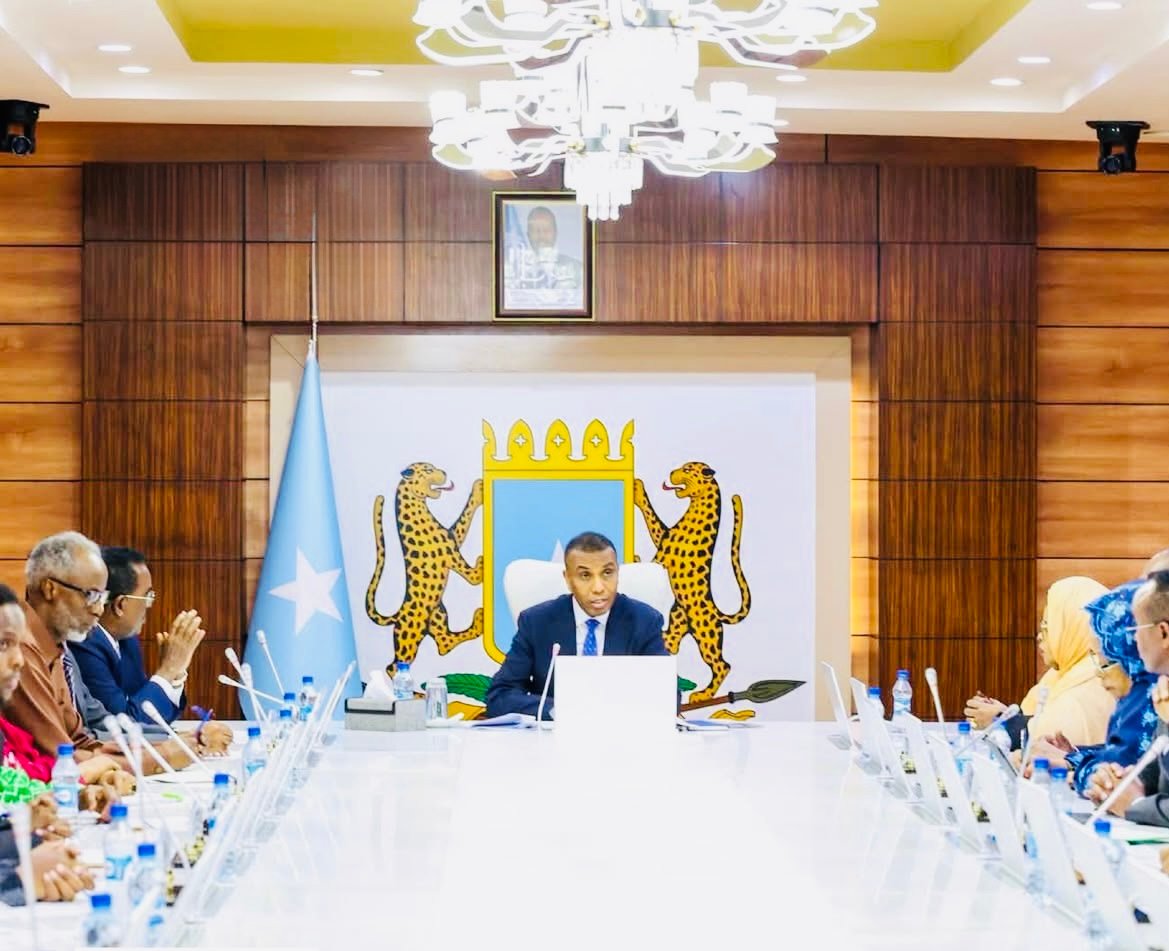
MOGADISHU — Somali Prime Minister Hamza Abdi Barre has chaired the first meeting of the National Disaster Risk Management Committee, urging government institutions to strengthen preparations for potential emergencies as the country continues to face severe climatic challenges.
The meeting brought together officials involved in disaster management and focused on improving Somalia’s ability to anticipate, prepare for and respond to natural disasters, particularly flooding that could accompany the upcoming Deyr rainy season.
Prime Minister Barre directed officials to strengthen flood preparedness, early-warning mechanisms, public awareness campaigns and coordination of emergency response efforts. He stressed the importance of taking preventive measures before disasters occur rather than relying solely on emergency assistance after communities have already been affected.
Somalia is currently dealing with ongoing drought conditions in several areas, while forecasts of potentially heavy seasonal rains have raised concerns about flooding in vulnerable communities. The combination of drought and sudden heavy rainfall can increase humanitarian risks, including displacement, damage to homes and infrastructure, disruption of roads and loss of livestock and livelihoods.
Authorities are expected to improve coordination between federal institutions, state authorities and humanitarian partners to ensure that information about weather and flood risks reaches communities in a timely manner.
The government is also seeking to strengthen public awareness so that communities in high-risk areas can take early precautions and respond quickly to warnings.
The establishment and first meeting of the National Disaster Risk Management Committee represents an effort to improve Somalia’s national disaster-response system and create a more coordinated approach to managing climate-related emergencies.
Officials say early preparation will be particularly important during the Deyr season, when heavy rainfall can rapidly increase the risk of flooding in areas already affected by drought and limited access to water and basic services.