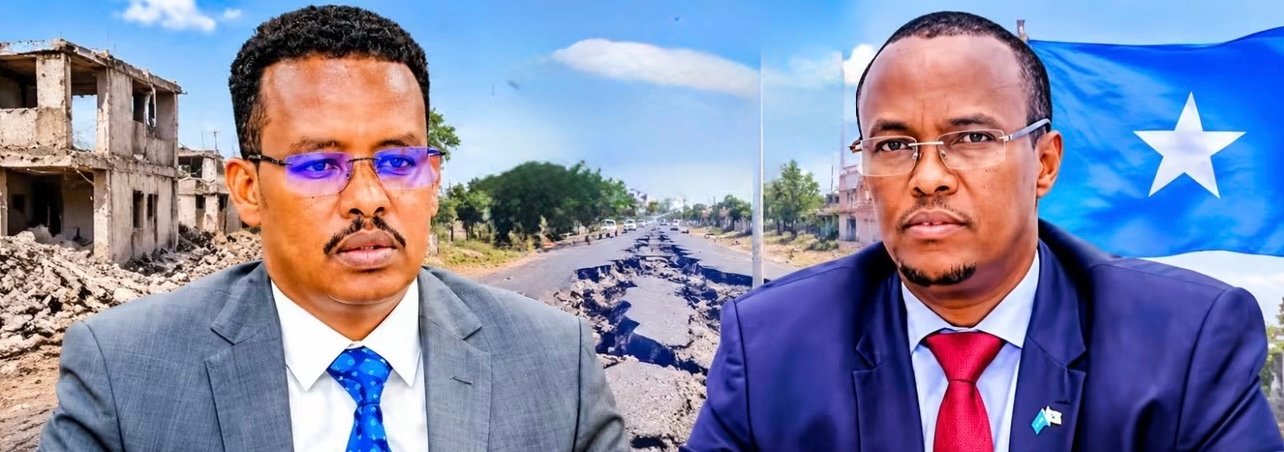
Recent political developments in Jowhar, the administrative capital of Hirshabelle State, have raised concerns about the future of Somalia’s federal system, national unity, and relations between the Federal Government and regional administrations.
Somali political commentator Abdiaziz Barrow has warned that the evolving political situation in Jowhar could represent a significant turning point in the country’s political history, potentially deepening divisions and undermining ongoing state-building efforts.
In a political analysis published on Facebook, Barrow described the developments as a troubling chapter in Somalia’s political transition. He argued that political rivalries, clan-based divisions, and competing interests could weaken the foundations of the federal system.
Jowhar has historically played an important role in Somalia’s political reconciliation and efforts to rebuild national institutions following decades of conflict.
However, Barrow warned that the latest developments could turn the city into a symbol of political fragmentation rather than national reconciliation.
His analysis identified four major challenges that could emerge from the changing political landscape.
1. Growing Threats to Somalia’s Federal System
According to Barrow, one of the most serious potential consequences of the political developments in Jowhar is the weakening of Somalia’s federal governance structure.
He warned that continued disagreements between the Federal Government and regional administrations could accelerate political fragmentation and undermine cooperation among federal member states.
Barrow suggested that unresolved disputes could encourage other regions to reconsider their relationships with the central government, potentially intensifying disagreements over federalism, constitutional authority, and regional autonomy.
He also expressed concern that growing political divisions could strengthen separatist sentiments in parts of the country.
Although these scenarios remain predictions rather than established developments, his analysis underscores the importance of political dialogue and constitutional cooperation in preserving Somalia’s unity.
2. Potential Political Setback for President Hassan Sheikh Mohamud
The second major concern raised by Barrow relates to the possible political consequences for President Hassan Sheikh Mohamud and his administration.
He argued that the developments in Hirshabelle could undermine the Federal Government’s broader political strategy and weaken the influence of the Justice and Solidarity Party (JSP).
Barrow questioned whether Hirshabelle President Ali Gudlawe Hussein and his deputy would maintain their political alignment with the federal leadership.
According to his assessment, competing interests and longstanding political rivalries could create significant challenges for Villa Somalia.
He further suggested that the emerging political situation in Hirshabelle could benefit opposition figures associated with former Somali President Sharif Sheikh Ahmed.
Barrow was particularly critical of Gudlawe’s leadership, alleging that personal and clan interests had taken precedence over institutional development.
These allegations reflect the commentator’s political views and have not been independently verified.
The analysis also raised questions about the relationship between Hirshabelle’s deputy leadership and President Hassan Sheikh Mohamud, suggesting that previous political disagreements could influence future alliances.
Barrow predicted that deteriorating relations between Hirshabelle’s leadership and the Federal Government could become a major political setback for Villa Somalia.
3. Concerns Over Possible New Armed Movements in Hiiraan
Another major issue highlighted in the analysis concerns political tensions in Somalia’s Hiiraan region.
Barrow warned that unresolved grievances, perceived political exclusion, and disagreements over regional administration could contribute to further instability.
He referred to reports and political discussions suggesting that new armed movements could emerge in parts of Hiiraan.
According to the commentator, influential political figures may be seeking to mobilize support around longstanding grievances involving governance, political representation, and regional authority.
He argued that the situation could become increasingly complicated if local disputes become intertwined with broader political competition between Mogadishu and regional actors.
However, reports concerning the formation of new armed groups, their leadership, and alleged political sponsors have not been independently confirmed.
The concerns highlight the importance of dialogue among federal authorities, regional leaders, traditional elders, and local communities to prevent political disagreements from escalating into violence.
4. Fears of Increasing Foreign Interference
The fourth challenge identified by Barrow involves the potential expansion of foreign influence in Somalia’s domestic political affairs.
He warned that deepening political divisions could create opportunities for external actors seeking to advance their strategic interests through alliances with competing Somali political groups.
According to the analysis, such developments could complicate Somalia’s efforts to strengthen independent national institutions and establish a stable political system.
Barrow argued that foreign involvement, combined with internal political fragmentation, could weaken national decision-making and undermine the country’s sovereignty.
He also expressed concern that political leaders and communities might underestimate the long-term consequences of continued division.
The commentator called for greater political responsibility, compromise, and renewed commitment to Somalia’s national interests.
Jowhar’s Historical Role in Somalia’s State-Building Process
Jowhar occupies an important place in Somalia’s modern political history.
The city has served as a center for political negotiations, administrative development, and efforts to restore government institutions during periods of national instability.
Its contribution to Somalia’s reconciliation and state-building initiatives has made it symbolically significant in discussions about federalism and national governance.
The latest political developments have therefore attracted attention beyond Hirshabelle, raising broader questions about the direction of Somalia’s political transition.
Disagreements between federal and regional authorities have remained a recurring challenge as Somalia continues efforts to strengthen its constitutional framework and governance institutions.
The situation in Jowhar illustrates how regional political developments can have wider implications for national stability.
Calls for Political Dialogue and National Reconciliation
In concluding his analysis, Barrow urged Somali political leaders to prioritize national interests over personal rivalries, clan divisions, and short-term political calculations.
He warned that failure to address emerging disputes through dialogue and compromise could have lasting consequences for Somalia’s political future.
The commentator emphasized that preserving national unity requires responsible leadership, inclusive political engagement, and a shared commitment to strengthening government institutions.
He also called for greater awareness of the risks associated with political fragmentation and foreign interference.
While the predictions outlined in his analysis remain uncertain, they reflect concerns about Somalia’s continuing challenges in balancing federal authority, regional autonomy, and national political stability.
As political developments continue to unfold in Jowhar, attention is likely to focus on whether Somalia’s leaders can resolve their differences through negotiation or whether disagreements will deepen existing political divisions.
For Somalia, the central challenge remains whether political competition can be managed within a functioning federal framework without undermining the country’s unity, security, and long-term state-building ambitions.
Source: Political analysis by Abdiaziz Barrow.
Original commentary: https://www.facebook.com/share/p/1CgbC1W5Xx/?mibextid=wwXIfr
Editor’s Note: This report is based on political commentary and reflects the author’s assessments, allegations, and predictions. Claims concerning political motives, emerging armed groups, and potential alliances have not been independently verified and should not be treated as established facts.