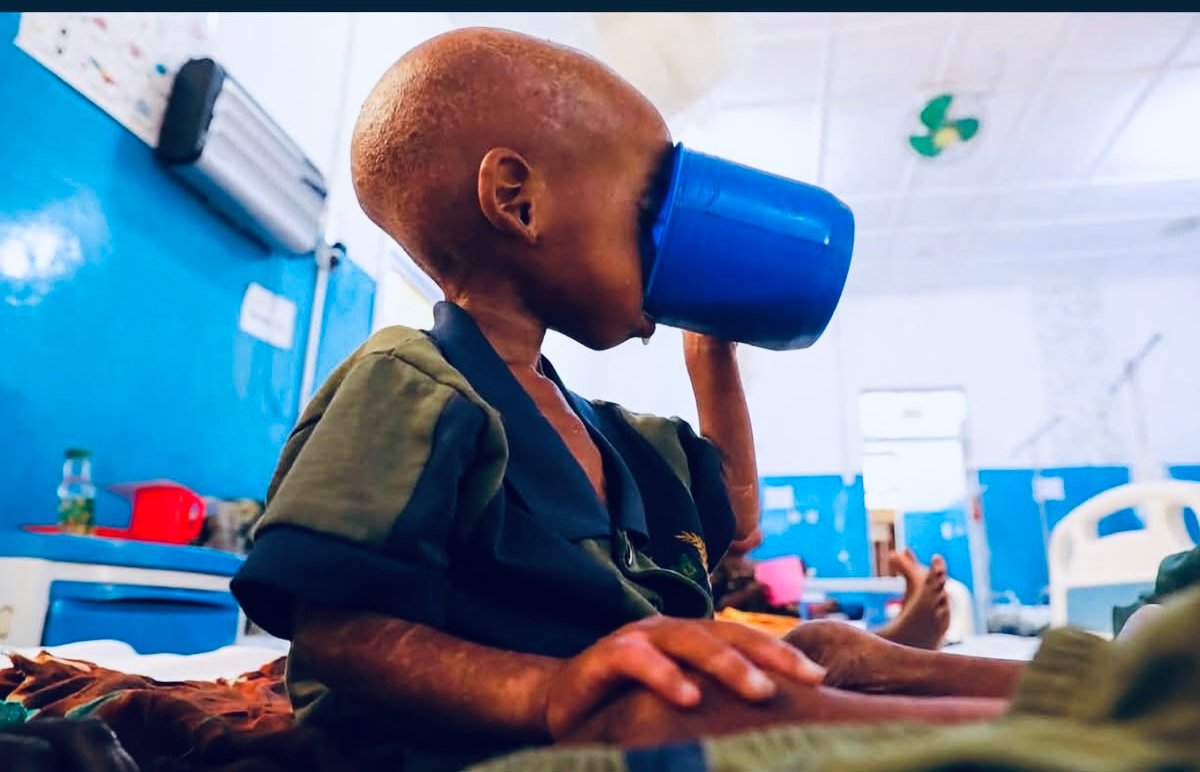
MOGADISHU — Somalia’s worsening hunger and malnutrition crisis is placing millions of children at greater risk as major reductions in humanitarian funding force health and nutrition facilities to close, UNICEF has warned.
Nearly 1.9 million children are projected to suffer from malnutrition in Somalia this year, including almost 500,000 children facing severe acute malnutrition, the most dangerous form of the condition. UNICEF said the number of children admitted to stabilization centres with severe acute malnutrition and related complications rose by 32 percent during the first six months of 2026 compared with the same period last year.
The crisis has been aggravated by major reductions in humanitarian assistance. UNICEF said 205 health and nutrition facilities have already closed, while as many as 618 facilities could shut nationwide under severe funding scenarios. Such closures are forcing mothers and children in remote communities to travel longer distances to receive treatment, increasing the risk that severely malnourished children will arrive too late for life-saving care.
The humanitarian situation is being driven by several overlapping factors, including prolonged drought, conflict, displacement, rising food prices and broader economic pressures. The World Food Programme has also warned that around six million people in Somalia are facing acute food insecurity, while its available resources are far below the levels seen during the 2022 crisis.
UNICEF has urged international donors to restore humanitarian funding, warning that further reductions could have devastating consequences for children who depend on nutrition programmes, health services and emergency assistance.
The crisis has also renewed public debate inside Somalia over governance, national resources and the responsibilities of political leaders. Critics frequently question why Somalia continues to depend heavily on international humanitarian assistance while some Somali politicians and business figures are accused of accumulating significant wealth and investing in property outside the country.
However, claims that Somali political leaders personally own numerous apartments and shopping malls in Kenya have not been independently established by the sources reviewed for this report. Such allegations should therefore be treated cautiously unless supported by verifiable property records or credible investigations.
The widening gap between humanitarian needs and available funding has left aid agencies warning that Somalia could face an even more serious emergency if additional resources are not mobilized. UNICEF has described the current situation as a critical moment, stressing that children are already paying the price of reduced assistance.