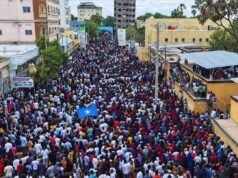
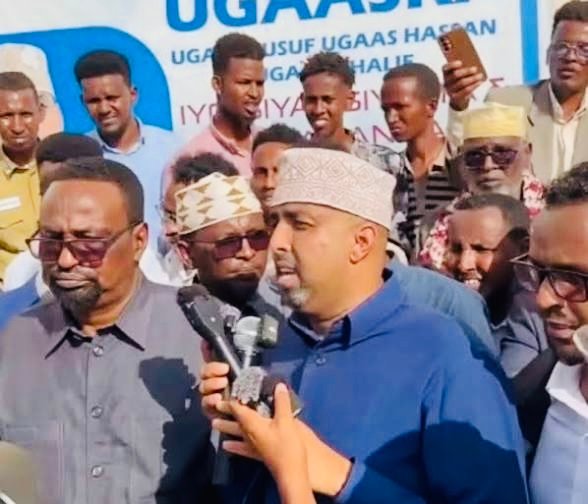
BELEDWEYNE — Political and community discussions have intensified over the position of the Hawadle community in Somalia’s evolving political landscape, particularly amid continuing disagreements surrounding the Hirshabelle administration and its relationship with the federal government.
Many Hawadle elders, intellectuals and community figures have reportedly expressed opposition to aspects of the federal government’s political approach, raising questions about decisions they say could have implications for the political representation and interests of communities in Hirshabelle.
The debate has also focused on who has the authority to speak on behalf of the wider Hawadle community. Some participants have argued that individual politicians or political figures cannot independently determine the community’s political direction or make decisions on its behalf without broader consultation.
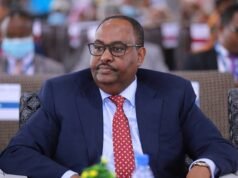
Among those mentioned in the debate are Qoono, Osoble and Afrah. Supporters of broader consultation say political positions affecting the community should involve traditional leaders, elders, intellectuals, political representatives and other sections of the community.
The discussion has also drawn attention to the role of traditional leadership. Some participants have highlighted the position of Ugaas Yusuf Ugaas Hassan Ugaas Khalif, saying that traditional institutions could play an important role in facilitating consultation and dialogue on issues affecting the community.
The debate is taking place against the backdrop of wider political disagreements in Somalia over federal relations, governance, elections and the distribution of political authority between the federal government and federal member states.
Hirshabelle, which includes Hiiraan and Middle Shabelle regions, has previously been at the center of political disputes involving questions of representation, administration and relations between local communities and political authorities.
For the Hawadle community, the current debate has increasingly centered on political representation and whether major decisions should be made individually or through a broader consultative process involving community stakeholders.
The individuals mentioned in the debate have not issued a unified public statement addressing all of the claims attributed to them. As discussions continue, it remains unclear whether the different political and community positions can be brought together around a common approach.
The developments highlight the continuing importance of traditional leadership, community consultation and political representation in debates over the future direction of Hirshabelle and Somalia’s federal political system.