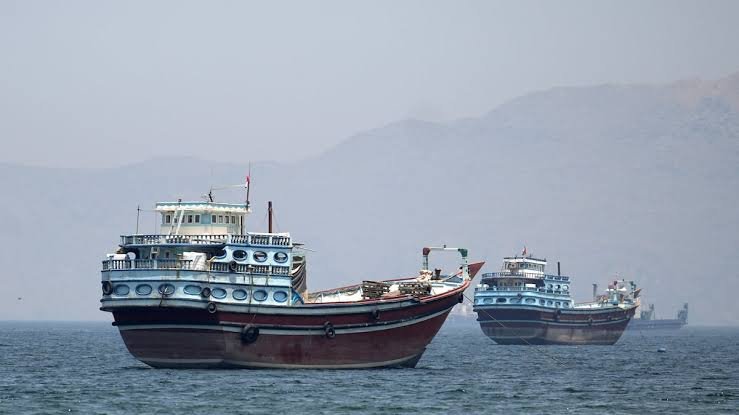
MUSCAT — Oman’s Air Force has evacuated 10 crew members from the Panama-flagged oil tanker On Peace after the vessel reportedly came under attack while sailing near the strategically vital Strait of Hormuz, according to information attributed to Omani authorities.
Oman’s Ministry of Defence said the incident occurred approximately 9 nautical miles (17 kilometres) from Limah, a coastal area in the Musandam Governorate. The reported attack caused a fire aboard the tanker and left several crew members injured.
The injured sailors were evacuated and transported to Khasab Hospital, where they received medical treatment. The condition of the injured crew members has not been fully disclosed.
No organization has publicly claimed responsibility for the incident so far, leaving the circumstances surrounding the attack unclear.
Indian Nationals Among the Crew
India’s Ministry of External Affairs said that 12 of the 19 people aboard the tanker were injured after what it described as a projectile or missile struck the vessel while it was passing through the Strait of Hormuz.
Of the 19 crew members, 17 were Indian nationals, according to the Indian government. Eleven of the injured were also reported to be Indian citizens.
New Delhi expressed strong concern over the growing number of attacks and security incidents involving commercial vessels operating in the region. Indian officials called for an immediate end to attacks against merchant shipping and emphasized the importance of protecting civilian sailors and maintaining freedom of navigation.
India is one of the world’s largest sources of seafarers for the international maritime industry, meaning that disruptions to shipping routes in the Middle East can have a direct impact on Indian nationals working aboard commercial vessels.
Indian authorities have also said that at least 10 Indian seafarers have been killed since the wider conflict involving the United States, Israel and Iran began in late February, further increasing concerns in New Delhi over the safety of its citizens working at sea.
Strait of Hormuz Under Increasing Pressure
The latest incident comes as security conditions around the Strait of Hormuz remain highly volatile.
The waterway is one of the most important energy corridors in the world, linking the Persian Gulf with the Gulf of Oman and the Arabian Sea. Large volumes of crude oil, petroleum products and liquefied natural gas pass through the strait every day.
Since the escalation of the regional conflict, commercial shipping companies have faced increased risks, including reported attacks, threats, delays and restrictions on maritime movement.
Maritime tracking and security services have reported several additional incidents involving oil tankers and other commercial vessels during the past week. The incidents have increased concerns among shipping companies and governments over the safety of crews and vessels operating in the area.
Oil Exports Continue Despite Security Risks
Despite the worsening security environment, oil exports from the Middle East have remained relatively resilient.
Preliminary data from commodities-data company Kpler showed that the seven-day average of Middle Eastern crude-oil exports reached approximately 18.3 million barrels per day on September 30. That compares with an average of roughly 18 million barrels per day during the 12 months before the conflict.
The figures suggest that, despite heightened risks, oil producers and shipping operators have continued moving substantial volumes of crude through the region.
However, concerns over future disruptions remain significant. Any prolonged closure or severe restriction of the Strait of Hormuz could have major consequences for international energy markets because of the waterway’s importance to global oil and gas supplies.
Global Oil Prices Remain Elevated
The security situation has also contributed to continued volatility in energy prices.
Brent crude was reported at approximately $101.51 per barrel on Tuesday, compared with around $72.48 per barrel before the conflict began.
Analysts have warned that further attacks on commercial vessels, particularly tankers carrying crude oil or petroleum products, could increase insurance costs, shipping expenses and pressure on global fuel prices.
For governments and shipping companies, the immediate priority remains protecting commercial vessels and their crews while maintaining the flow of energy supplies through the region.
Investigation Underway
The circumstances surrounding the reported attack on the On Peace, including the type of weapon used and the identity of those responsible, have not been independently established.
Omani authorities are expected to continue investigating the incident, while the international maritime community is closely monitoring developments around the Strait of Hormuz.
The attack has renewed concerns that the broader regional conflict could increasingly affect commercial shipping, global energy supplies and international trade, particularly if similar incidents continue.
The situation remains developing, and further information is expected as authorities investigate the incident and provide additional details.