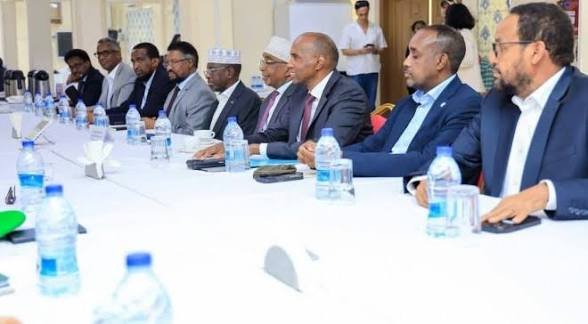
MOGADISHU — The Somali Future Council, an opposition political coalition, on Monday rejected the Federal Government of Somalia’s proposed timetable for the 2027 national elections, accusing President Hassan Sheikh Mohamud of making unilateral political decisions that could undermine national unity and the country’s federal system.
In a statement, the coalition expressed strong opposition to the announced electoral schedule for both houses of the Federal Parliament and the presidency, arguing that the timetable had been introduced without an inclusive political agreement among Somalia’s major stakeholders.
Opposition Raises Concerns Over Electoral Legitimacy
The Somali Future Council said the election timetable should emerge from broad political consultations involving the Federal Government, Federal Member States, opposition groups, and other relevant stakeholders.
According to the coalition, proceeding with major electoral decisions without sufficient consultation risks deepening existing political disagreements and weakening confidence in the electoral process.
The group accused President Hassan Sheikh Mohamud of pursuing decisions without the consensus it considers necessary to protect Somalia’s federal political arrangements.
These accusations represent the opposition coalition’s position and do not, by themselves, establish that the announced timetable violates Somalia’s constitutional framework.
Concerns Over National Unity and Federalism
The coalition warned that disagreements over the election timetable could further strain relations between the Federal Government and political stakeholders who believe that electoral arrangements require broader negotiations.
Somalia’s federal system assigns important responsibilities to both national and state-level institutions, making cooperation and political consultation central issues in debates over elections and governance.
The opposition’s objections reflect wider disagreements about how national elections should be organized, which institutions should oversee the process, and how competing political interests should be accommodated.
Calls for Inclusive Political Dialogue
The Somali Future Council’s statement places renewed attention on the need for negotiations over electoral arrangements ahead of the proposed 2027 elections.
An inclusive political dialogue could provide an opportunity for the Federal Government, opposition representatives, and other stakeholders to discuss the timetable, applicable electoral rules, and mechanisms for resolving disputes.
However, the information available in the supplied statement does not establish whether the government intends to revise its timetable or initiate further consultations.
Political Uncertainty Ahead of 2027 Elections
The dispute highlights the political challenges surrounding Somalia’s preparations for its next national elections.
Questions over the electoral timetable, political participation, constitutional arrangements, and the relationship between federal and state institutions are likely to remain important subjects of public debate.
The Federal Government’s response to the Somali Future Council’s objections will be significant in clarifying its position on consultation and the implementation of the announced schedule.
For now, the opposition coalition maintains that electoral arrangements should be based on an inclusive political agreement rather than decisions made without the participation of key stakeholders.