MOGADISHU — Somalia’s failure to build a strong national army and achieve lasting institutional stability over the past two decades has been attributed to a lack of political commitment and national responsibility rather than a shortage of knowledge, resources or international support.
In a strongly worded commentary reflecting on Somalia’s political and security situation between 2006 and 2026, the author noted that the country has experienced six presidents, 11 prime ministers and approximately 1,760 members of parliament during the 20-year period.
Hundreds of ministers have also served in successive governments, while billions of dollars have reportedly been spent on what has been described as rebuilding the Third Somali Republic.
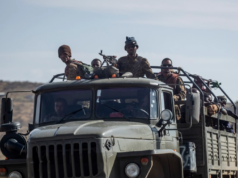
Despite these enormous political and financial investments, Somalia has yet to establish a sufficiently strong and self-reliant national security force capable of replacing foreign troops, whose prolonged presence has become a central part of the country’s security arrangements.
The commentary questioned how successive administrations, despite having significant time, financial resources and international assistance, failed to develop a national army capable of independently protecting the country. It also highlighted the growing concerns surrounding the eventual departure of foreign forces that have supported Somalia’s security for nearly two decades.
The author argued that Somalia’s difficulties cannot simply be explained by a lack of education, institutional capacity or external obstacles.
Citing successful Somali businesspeople who have built major companies despite lacking formal education, the commentary argued that leadership, determination and the ability to recruit qualified professionals are more important than personal academic qualifications.
It also pointed to Gulf Arab countries, which have transformed their economies and institutions despite having limited resources and technical expertise during their early years of state-building.
On economic and human capacity, the author maintained that Somalia possesses significant potential in terms of population, financial resources, education and intellectual talent. The commentary noted that Somali professionals, entrepreneurs and investors have contributed to the development of other countries, raising questions about why similar capabilities have not been effectively mobilised at home.
The author further rejected the argument that foreign powers have been the primary obstacle to Somalia’s development, maintaining that the country has received considerable international assistance and support since the mid-20th century.
Instead, the commentary identified lack of commitment and political integrity as the country’s central problem.
It accused sections of the political leadership of prioritising personal interests over national development, arguing that public resources have been wasted while citizens continue to face insecurity, poverty and dependence on foreign assistance.
The commentary called for a fundamental change in political culture, urging Somali leaders and citizens to develop a stronger sense of national responsibility, honesty and accountability.
It argued that international assistance alone cannot rebuild a country whose own leadership and institutions lack the determination to deliver meaningful change.
The author concluded that Somalia’s recovery ultimately depends on Somalis taking responsibility for their own future, strengthening national unity and committing themselves to building effective institutions.
The central message was that Somalia does not necessarily lack the people, knowledge or resources required for development; rather, it lacks the collective political will and commitment to put those resources to work for the benefit of the nation.