By HAN News Desk
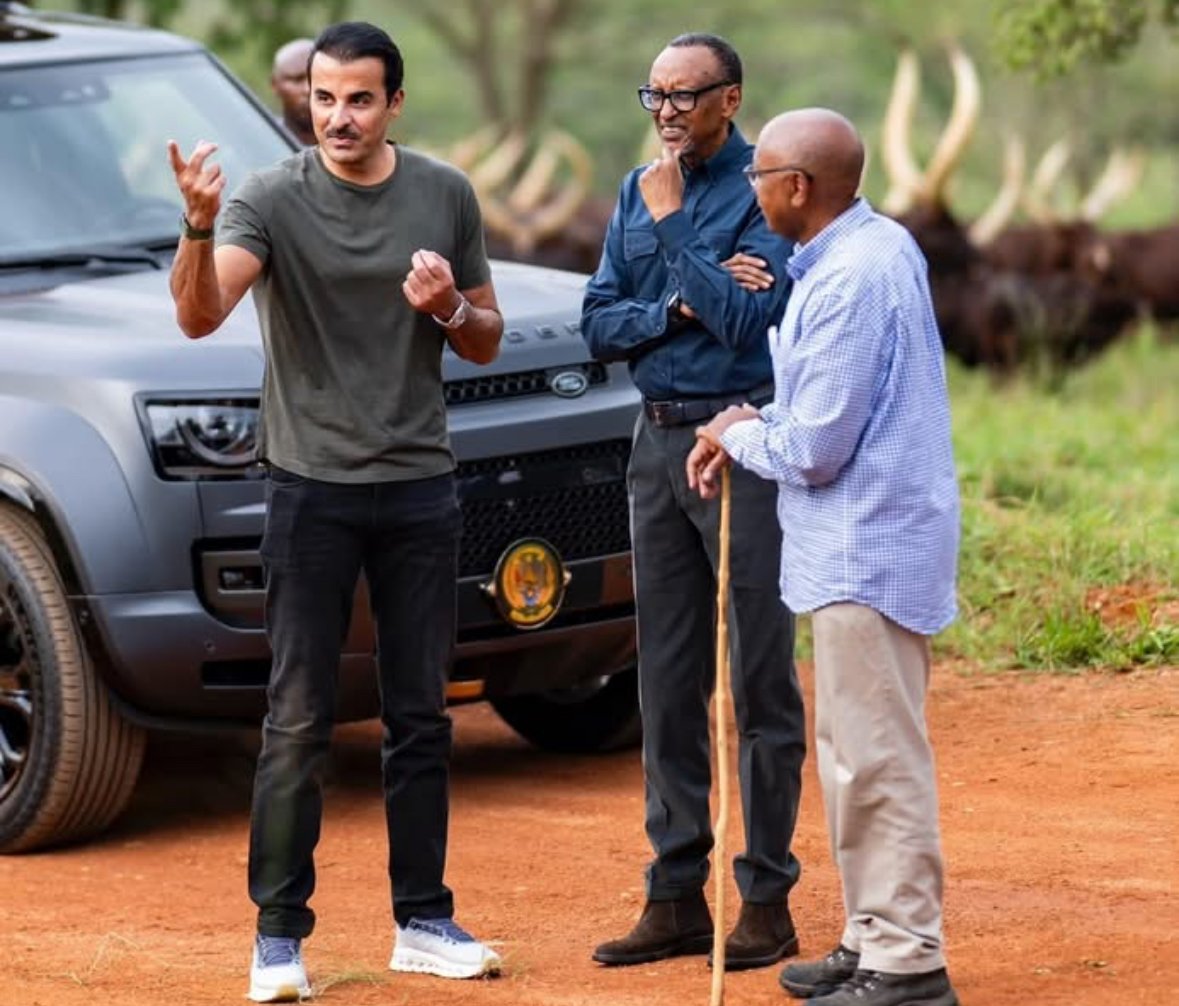
KIGALI – Rwanda’s President Paul Kagame welcomed Qatar’s Emir, Sheikh Tamim bin Hamad Al Thani, with a traditional gift of Inyambo cattle, a breed revered for its cultural and historical significance in Rwanda. The presentation took place during a visit to the president’s agricultural estates, highlighting Rwanda’s rich farming heritage as well as its longstanding diplomatic ties with Qatar.
Speaking during the event, President Kagame described the gift as a symbol of friendship, respect, and enduring partnership between the two nations. “This gift represents the strong cooperation and deep ties that exist between Rwanda and Qatar, as well as the personal relationship between our two leaders,” he said.
The Inyambo cattle are renowned for their elegant appearance, large horns, and ceremonial importance in Rwandan culture, historically serving as a symbol of wealth, prestige, and social status. By offering such a culturally significant gift, President Kagame underscored the depth of Rwanda’s diplomatic gesture, combining both tradition and modern statecraft.
Sheikh Tamim bin Hamad Al Thani, who appeared in casual attire rather than the traditional formal dress associated with Qatari royalty, toured the farms alongside President Kagame, observing Rwanda’s agricultural practices firsthand. The informal approach of the Emir was noted by several observers as a sign of mutual respect and the relaxed, personal nature of the meeting.
Analysts say the visit and exchange of gifts are part of broader efforts to strengthen Rwanda-Qatar relations, particularly in areas of investment, trade, and cultural cooperation. Qatar has increasingly engaged with African nations in recent years, focusing on infrastructure, energy, and tourism projects, while Rwanda has sought to position itself as a hub for regional diplomacy and economic development.
The meeting also comes amid Rwanda’s ongoing efforts to highlight its agricultural innovation and modern farming techniques, attracting foreign investment while preserving traditional practices. By combining cultural heritage with contemporary development, the event served as a symbolic demonstration of Rwanda’s evolving international profile.
Observers noted that such diplomatic gestures, including gifts of culturally significant items, often help reinforce trust and goodwill between countries, paving the way for deeper collaboration across political, economic, and social spheres.