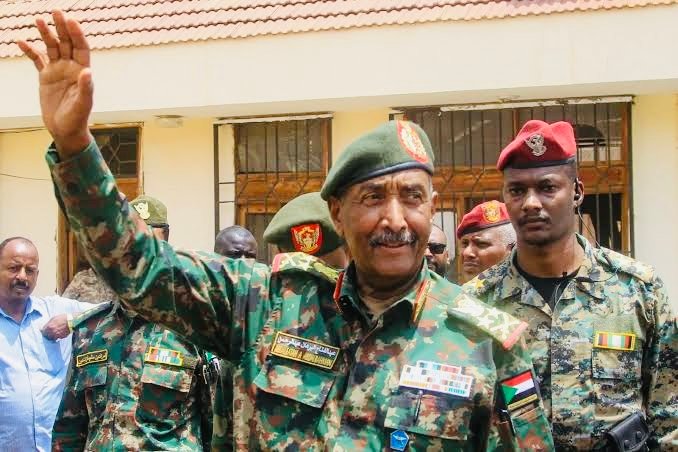
KHARTOUM — Sudan’s Transitional Sovereignty Council Chairman and army chief, Gen. Abdel Fattah al-Burhan, has outlined a proposed framework for ending the country’s war with the Rapid Support Forces (RSF), calling for a permanent ceasefire, a single national army, a Sudanese-led political dialogue, a new constitution and internationally monitored elections.
In an article published by Foreign Policy, al-Burhan argued that previous externally mediated ceasefire efforts had failed to deliver lasting peace. He said future negotiations should be primarily driven by Sudanese actors, while international partners could provide monitoring, humanitarian assistance and implementation support.
A central part of his proposal is the establishment of one national army and the removal of weapons and armed groups operating outside state institutions. He said a ceasefire should be followed by measures to remove fighters and weapons from civilian areas, with UN assistance in monitoring the process.
Al-Burhan also rejected treating the RSF as politically or legally equal to the Sudanese state. He argued that any settlement should preserve the authority of state institutions rather than create a permanent power-sharing arrangement between the army and the RSF.
On the political track, al-Burhan called for a Sudanese-Sudanese dialogue to determine the country’s future system of government. He said a new constitution should be drafted by Sudanese and that the transition should eventually lead to free and fair elections monitored internationally.
He also urged the international community to help cut what he described as foreign funding and supply networks supporting the RSF. According to al-Burhan, continued external support could allow armed groups to use ceasefires to regroup and rearm.
Al-Burhan identified four priorities for international support: backing his proposed ceasefire plan at the UN Security Council, cutting RSF funding and supply routes, supporting UN monitoring of any future ceasefire, and allowing Sudanese people to determine their own political future.
His proposal comes amid competing diplomatic efforts to end the war and disagreements over the sequencing of a ceasefire, humanitarian access, security arrangements and a civilian-led political transition.