
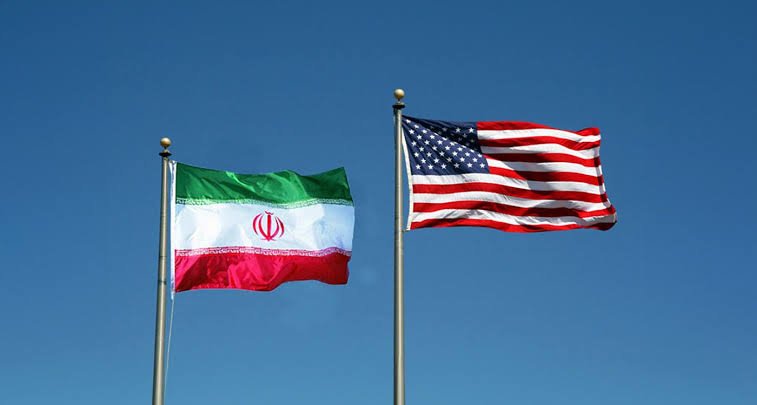
WASHINGTON/TEHRAN — A draft framework agreement under negotiation between the United States and Iran includes provisions addressing Tehran’s nuclear program, sanctions relief and security in the strategically vital Strait of Hormuz, according to a senior Iranian official cited by Reuters.
The proposed memorandum of understanding, which has not been officially confirmed by either government, outlines a series of reciprocal steps aimed at easing tensions between the longtime adversaries while creating a pathway toward a broader and more comprehensive agreement.
Under the reported terms, Iran would immediately reopen the Strait of Hormuz to all commercial shipping and ensure the uninterrupted flow of maritime trade through the waterway, one of the world’s most important energy transit routes. In return, the United States would begin lifting maritime restrictions affecting Iranian ports once the memorandum is signed, with full implementation expected within 30 days.
According to the Reuters report, Tehran would also commit not to develop, acquire or possess nuclear weapons. Pending a final agreement, Iran would maintain the current status of its nuclear program, refraining from further uranium enrichment activities and avoiding expansion of its nuclear facilities.
The draft framework reportedly leaves open future negotiations on reducing Iran’s stockpile of highly enriched uranium. That issue would be addressed as part of a more comprehensive agreement expected to follow the initial understanding.
The two sides are expected to conclude negotiations on key issues related to uranium enrichment and the future of Iran’s nuclear program within 60 days, with those provisions forming a central component of a final accord.
The reported framework further states that Washington would refrain from imposing new sanctions on Iran while negotiations continue. Should a formal agreement be reached, U.S. and United Nations sanctions imposed on Tehran would be gradually lifted according to a mutually agreed timetable.
Additional measures reportedly under discussion include temporary relief from U.S. oil-related sanctions, allowing Iran to increase crude exports and access revenues generated from international sales. The United States is also said to be considering the release of approximately $25 billion in Iranian assets that remain frozen abroad.
The reported proposals come amid renewed diplomatic efforts to prevent further escalation in the Middle East and to revive a framework governing Iran’s nuclear activities after years of tensions, sanctions and regional security concerns.
Neither Washington nor Tehran has publicly confirmed the details of the reported draft. However, the Reuters report suggests that intensive diplomatic contacts are continuing as both sides seek to bridge remaining differences and secure a new agreement that could reshape relations between the two countries and reduce uncertainty in global energy markets.
Analysts say any breakthrough would have significant implications for regional stability, international shipping, global oil prices and the broader non-proliferation framework, given Iran’s central role in Middle Eastern geopolitics and the strategic importance of the Strait of Hormuz.