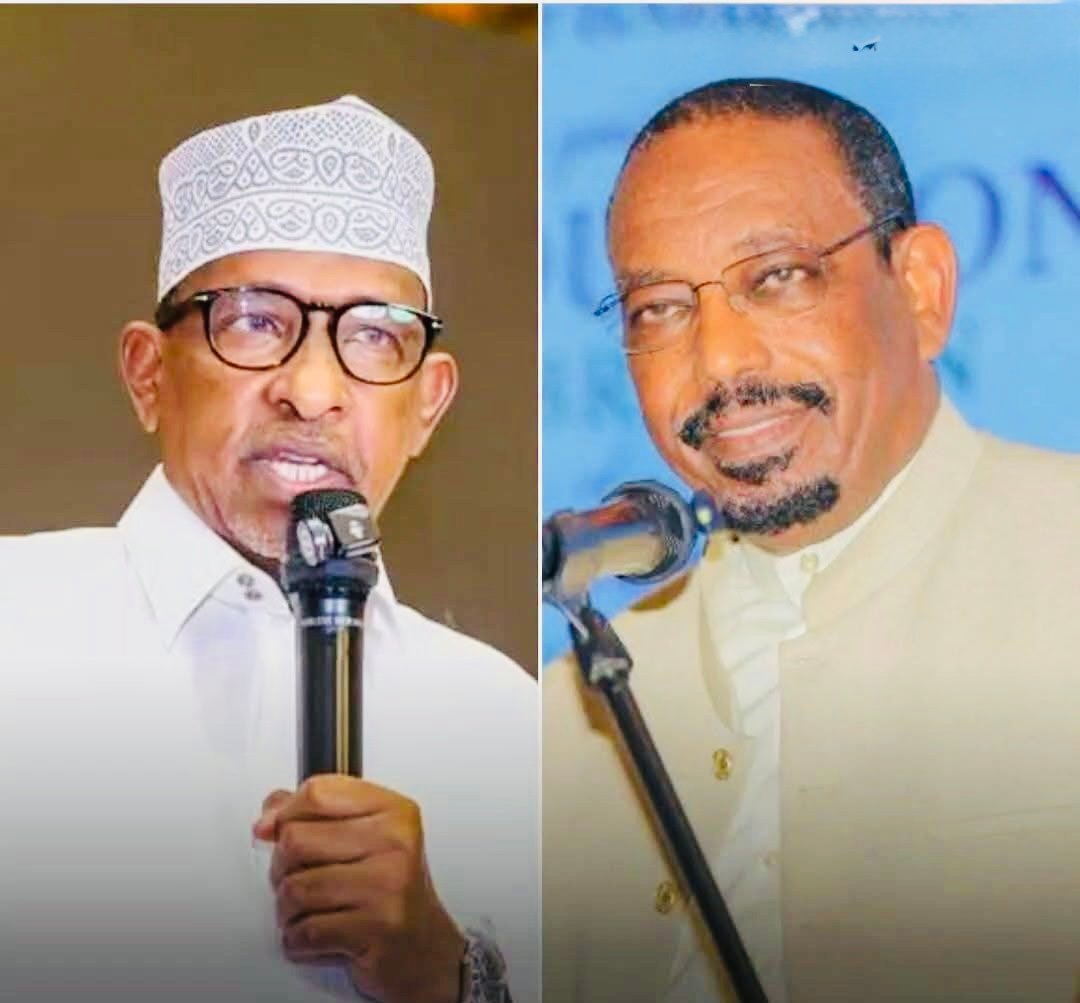
NAIROBI — A growing political standoff between Cabinet Secretary Aden Duale and former Deputy Speaker Farah Maalim has intensified debate over who holds greater political influence in Northern Kenya, particularly among pastoralist communities.
Both Duale and Maalim are veteran figures in Kenyan politics and have maintained strong political networks in the region for decades. Their latest exchanges have therefore attracted significant attention from political leaders, community figures and supporters across Northern Kenya.
Duale, a prominent politician from Garissa County, has held several senior positions in the Kenyan government. His long experience in national politics, combined with his connections within government and established political networks, has made him one of the region’s most influential national-level figures.
Maalim, also from Garissa, has an equally long political history. He has served in Parliament for several terms and was Deputy Speaker of the National Assembly. He has built his political reputation around his experience, outspoken positions and connections with communities in Northern Kenya.
The latest confrontation has raised a broader question: does political influence in Northern Kenya come primarily from access to national government, or from grassroots support and long-standing community relationships?
Supporters of Duale point to his senior government positions and national political networks as evidence of his influence. Maalim’s supporters, meanwhile, emphasize his decades of political engagement and his continued ability to mobilize and speak to regional concerns.
However, determining who has the deeper influence across Northern Kenya is complicated. The region is politically diverse, with different counties, communities, clans and local political leaders maintaining their own alliances and interests.
The dispute could also have implications beyond the two politicians themselves, particularly if their competing positions begin to influence wider political alliances in Garissa and other parts of Northern Kenya.
Political observers are now watching closely to see whether the confrontation remains a personal political dispute or develops into a broader regional contest for influence.
For now, both men remain significant voices in Northern Kenyan politics, but there is no definitive evidence that either controls the majority of political support among the region’s pastoralist communities.
The growing standoff is likely to keep Northern Kenya’s political landscape under close scrutiny as national and regional political alliances continue to evolve.