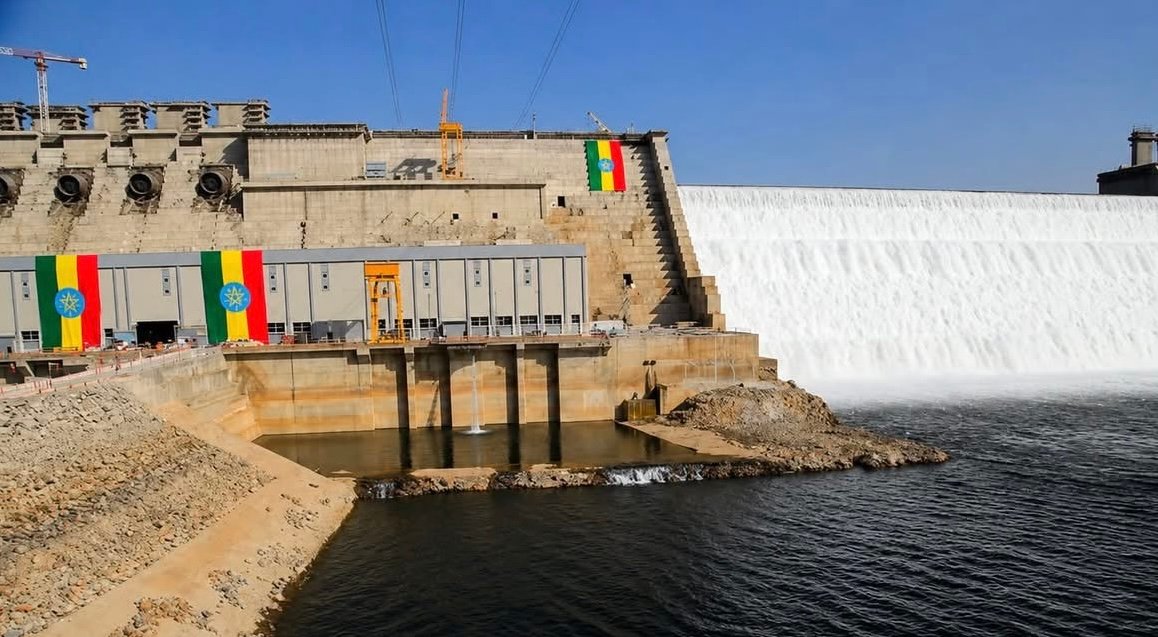
CAIRO — Egypt’s Ministry of Water Resources and Irrigation has warned that Ethiopia’s continued operation of the Grand Ethiopian Renaissance Dam (GERD) without a legally binding agreement has created challenges for Nile water management, requiring Egyptian authorities to frequently adjust the operation of dams and water infrastructure.
The assessment was presented during a meeting of the Permanent Committee for Nile River Flow Regulation, chaired by Egyptian Minister of Water Resources and Irrigation Hani Sewilam, which reviewed water availability, river flows, and preparations for the country’s peak water demand period.
According to the ministry, the committee examined developments related to the GERD, which Cairo says is being operated unilaterally in the absence of an agreement covering the dam’s filling, operation, and mechanisms for data exchange among the three Nile Basin countries — Egypt, Ethiopia, and Sudan.
Egyptian officials said the lack of coordinated operating rules and regular information-sharing has contributed to changes in Nile River flow patterns, making downstream water planning more complex. The ministry stated that Egyptian authorities must continuously update operational plans for dams, canals, and irrigation networks to respond to changing water conditions.
The committee also reviewed rainfall levels in the Nile Basin, including inflows from the Blue Nile, White Nile, and Atbara rivers. Officials reported that Nile inflows during June were above average, while early July flows were below normal levels.
However, the ministry said it remains too early to determine the overall outlook for the 2026 flood season. A clearer picture is expected after the first 10 days of August, when a major portion of the seasonal Blue Nile floodwaters is expected to arrive in Egypt.
The meeting also discussed international climate forecasts, including possible effects of El Niño and La Niña weather patterns on rainfall trends in East Africa. Officials stressed that climate predictions must be combined with real-time monitoring of river flows and rainfall across the Nile Basin to improve water forecasting.
Minister Sewilam said Egypt’s water strategy depends on continuous monitoring of hydrological conditions, climate indicators, and flexible management of water facilities to respond to different scenarios.
He highlighted the importance of the Aswan High Dam as a central component of Egypt’s water security system, citing its large storage capacity and ability to regulate water supplies during periods of drought or increased demand.
Sewilam instructed relevant agencies to continue daily monitoring of rainfall, river inflows, and climate forecasts, while strengthening coordination between government institutions responsible for water management.
The GERD dispute remains one of Africa’s most significant transboundary water issues, with Ethiopia viewing the dam as a key development project for electricity generation, while Egypt has repeatedly raised concerns over potential impacts on its Nile water supply and called for a binding agreement on its operation.