By HAN News Desk
ADDIS ABABA — Ethiopian Prime Minister Abiy Ahmed has once again renewed his call for deeper regional integration in the Horn of Africa and emphasized the urgent need for Ethiopia to secure peaceful access to the Red Sea, describing the matter as vital to his country’s long-term survival and economic future.
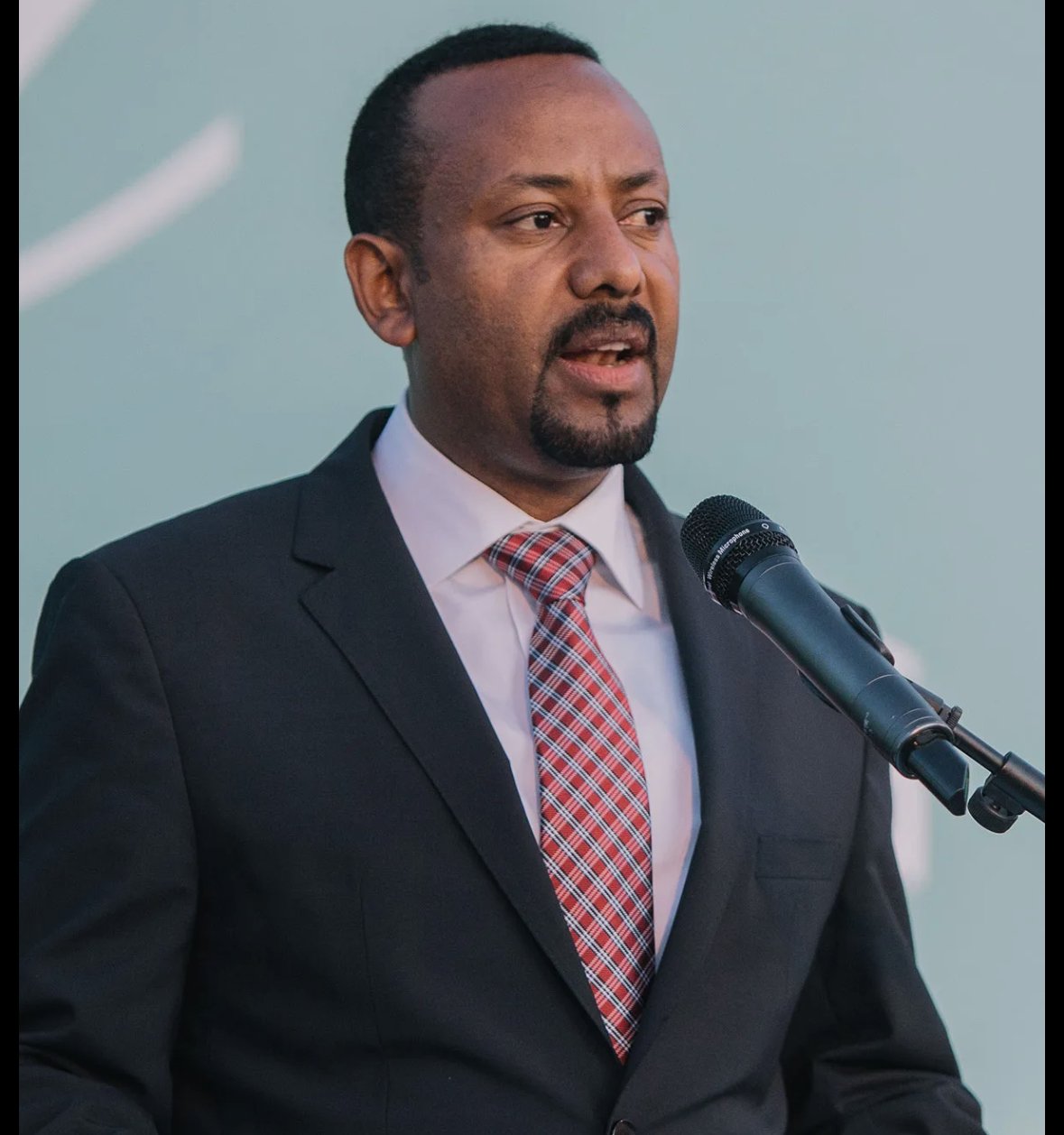
The Prime Minister made the remarks while presenting his government’s performance report to the Ethiopian Parliament, where he took part in an extensive question-and-answer session with members of the House of People’s Representatives.
Speaking at length about regional diplomacy, Abiy noted that countries in the Horn of Africa share interconnected histories, cultures, and languages, but remain divided due to external interference and conflicting interests. He stressed that neighboring states should prioritize cooperation over rivalry and conflict.
“Our region is indivisible,” Abiy told lawmakers, urging Ethiopia, Somalia, Djibouti, Sudan, and Kenya to pursue collaboration free from foreign agendas and geopolitical manipulation.
A significant portion of the Prime Minister’s address focused on Ethiopia’s efforts to obtain maritime access. He described the issue as both a national security and economic necessity for the landlocked country, which lost its coastline in 1993 following Eritrea’s independence.
Abiy acknowledged that Ethiopian leaders and citizens have long held sentiments regarding the port of Assab in Eritrea. However, he noted that Ethiopia’s formal and public pursuit of sea access gained clear momentum over the past year as part of a broader national discussion.
Ethiopia, home to nearly 130 million people, depends heavily on foreign ports—primarily Djibouti—for over 90 percent of its import and export trade. Abiy argued that this dependency creates economic vulnerabilities and strategic risks that require long-term solutions.
The Prime Minister was careful to underline that Ethiopia seeks a peaceful and mutually beneficial arrangement rather than any form of coercion or military action.
“We do not want to take anything by force,” Abiy said. “This matter can be resolved through the principles of trade, peace, and dialogue.”
He added that Ethiopia is willing to negotiate creative arrangements with neighboring countries, including long-term port leasing agreements, land or economic exchange partnerships, and offering stakes in major Ethiopian national assets such as the Grand Ethiopian Renaissance Dam (GERD) or Ethiopian Airlines in return for maritime access.
Throughout his speech, Abiy returned to the theme of regional unity, arguing that the Horn of Africa should function as an interconnected bloc rather than fragmented states vulnerable to external influence.
He called on governments in Somalia, Djibouti, Sudan, Kenya, and Eritrea to view Ethiopia’s request not as a threat, but as an opportunity for economic integration, joint infrastructure development, and long-term stability.
Abiy’s remarks come amid increasing regional and international attention to Ethiopia’s sea access ambitions, which have sparked debate and concern among neighboring countries, particularly Somalia and Eritrea, who are wary of any implications for sovereignty and territorial integrity.
Despite these sensitivities, Abiy maintained that dialogue remains the only path forward.
“Our future is tied together,” he concluded. “We must choose cooperation over confrontation.”