
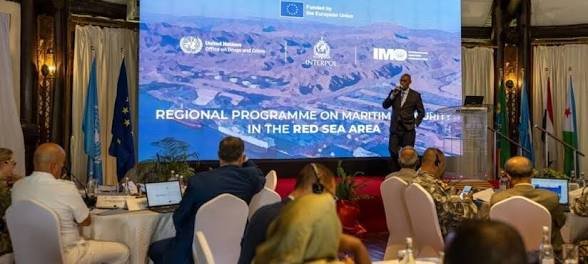
NAIROBI — Ethiopia’s participation in a high-level regional dialogue on Red Sea and Gulf of Aden security has attracted attention after an Ethiopian Maritime Authority official took part in discussions focused on maritime law enforcement and regional maritime security.
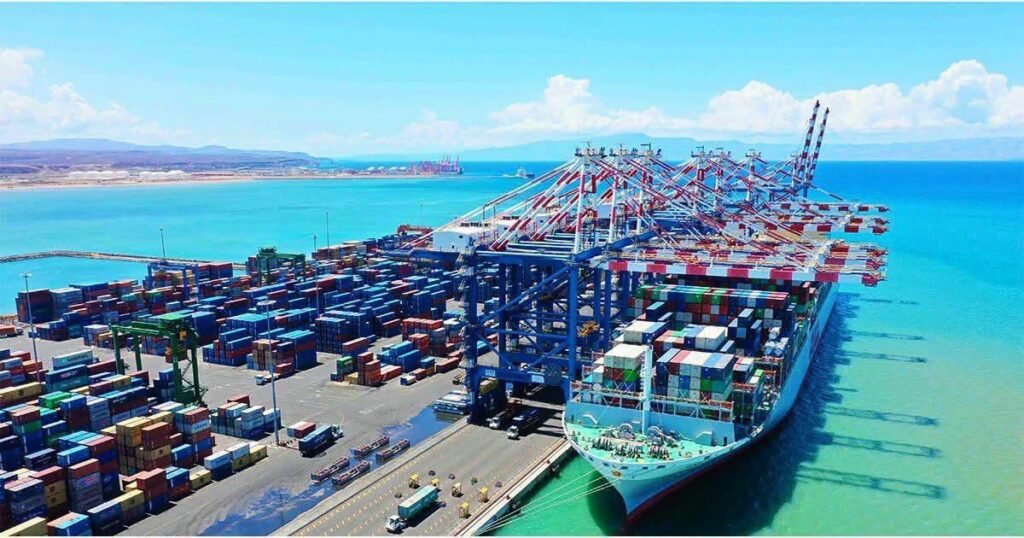
The question drawing particular interest is why a landlocked country with no coastline has a Maritime Authority and is actively involved in regional maritime-security affairs.
Ethiopia has no direct access to the sea, but its economy is heavily dependent on maritime trade through neighboring countries, particularly Djibouti, whose ports handle a significant share of Ethiopia’s international imports and exports.
During the two-day Maritime Law Enforcement Dialogue in Nairobi, Ethiopian Maritime Authority official Capt. Kibru Mesfin called for stronger cooperation between maritime authorities, security institutions and law-enforcement agencies across the region.
His participation highlights Ethiopia’s broader strategic interest in the security of the Red Sea, Gulf of Aden and surrounding maritime corridors, despite the country having no coastline.
Why Does Ethiopia Have a Maritime Authority?
Ethiopia’s maritime institutions are primarily connected to the country’s dependence on international shipping and its use of foreign ports.
As a landlocked state, Ethiopia relies on transportation corridors that connect its territory to seaports in neighboring countries. Any disruption caused by piracy, armed attacks, trafficking or wider regional instability can therefore directly affect Ethiopian trade.
Security problems in the Red Sea can increase shipping costs, delay cargo and disrupt supply chains, making maritime security an important economic issue for Addis Ababa.
Ethiopia Seeks a Greater Role in Regional Maritime Security
At the Nairobi meeting, Ethiopian officials emphasized the importance of information-sharing and cooperation with Somalia, Djibouti and Yemen.
Participants discussed threats including piracy, illegal fishing, human trafficking, migrant smuggling, terrorism and narcotics trafficking.
Ethiopia also discussed the possibility of establishing a National Maritime Information Centre, which would strengthen the country’s ability to collect and exchange information related to maritime security.
The proposal has raised further interest because Ethiopia would not be monitoring its own territorial waters. Instead, such a system would primarily support the country’s maritime trade interests and cooperation with coastal states and international partners.
Somalia and Djibouti’s Strategic Position
For Somalia and Djibouti, maritime security has a more direct national dimension because both countries have coastlines along strategically important waters.
Somalia has one of Africa’s longest coastlines and sits along major international shipping routes in the Indian Ocean and Gulf of Aden. Djibouti, meanwhile, is located near the Bab el-Mandeb Strait, one of the world’s key maritime chokepoints.
Yemen also plays a central role because of its location on the opposite side of the Red Sea and its proximity to the Bab el-Mandeb.
The participation of all four countries therefore reflects the increasingly interconnected nature of security and trade in the Horn of Africa and Red Sea region.
A Strategic, Not Territorial, Maritime Role
Ethiopia’s involvement does not mean the country has acquired a coastline or territorial waters. Rather, its maritime role is linked to trade, port access, logistics, maritime law enforcement cooperation and regional security.
The Nairobi discussions demonstrate how maritime security has become an issue extending beyond coastal states. For Ethiopia, keeping sea routes and port connections secure is directly linked to the country’s economic and national-security interests.
The debate over Ethiopia’s Maritime Authority therefore reflects a wider regional question: how should landlocked countries participate in maritime security when their economies depend heavily on access to the sea?