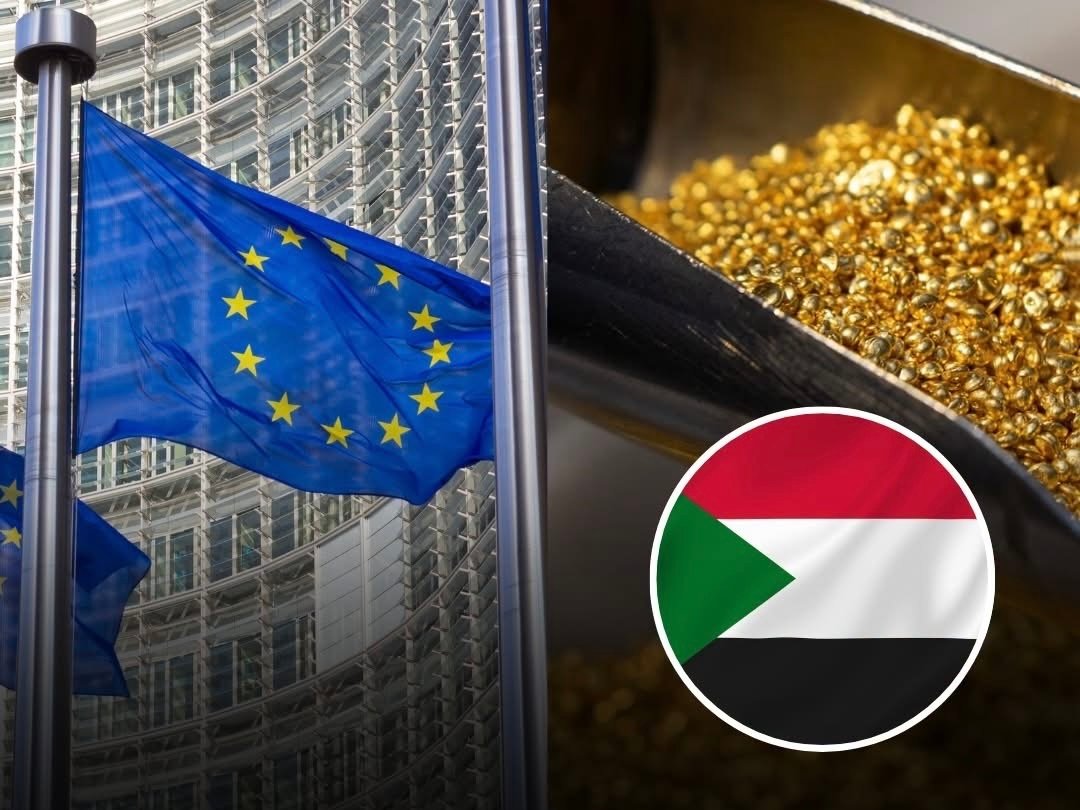
BRUSSELS – The European Union has introduced new sanctions targeting Sudan’s gold sector, including restrictions on gold imports and limits on the sale and trading of Sudanese gold within EU member states, as part of efforts to pressure actors involved in the country’s ongoing conflict.
The measures come as Sudan’s gold industry remains a critical economic lifeline during a devastating civil war that has severely damaged other sectors of the economy. The EU said the restrictions are aimed at addressing concerns that revenues from gold exports are being used to support armed groups and sustain the fighting.
Sudan’s official gold exports have declined significantly in recent years. Government figures indicate that the country exported around 14.7 tonnes of gold in 2025, compared with 22.9 tonnes in 2024. However, analysts and officials believe that large quantities of Sudanese gold continue to leave the country through informal and smuggling networks, making the true scale of exports difficult to measure.
Gold remains one of Sudan’s most valuable resources, accounting for more than 58 percent of the country’s export value. With agricultural production, industry, and other economic activities disrupted by war, gold has become increasingly important for generating foreign currency and financing imports.
The struggle for control over gold mines, processing facilities, and trade routes has become a major factor in Sudan’s conflict. Both the Sudanese Armed Forces (SAF) and the paramilitary Rapid Support Forces (RSF) have sought influence over gold-producing areas and commercial networks, using revenues from the sector to strengthen their military capabilities.
Since fighting erupted in April 2023, Sudan has experienced one of the world’s worst humanitarian crises, with millions displaced and widespread destruction of infrastructure and public services. The conflict has also severely affected the country’s economy, increasing reliance on natural resources such as gold.
The EU sanctions are part of a broader international effort to limit financial flows linked to the conflict and encourage accountability among individuals and entities accused of contributing to Sudan’s instability.
Economic experts warn, however, that reducing illicit gold trade will remain challenging due to extensive smuggling networks, weak state controls in mining regions, and the involvement of powerful armed actors in the sector.
As the war continues, Sudan’s gold industry remains at the center of both the country’s economic survival and the struggle for power between rival military factions.