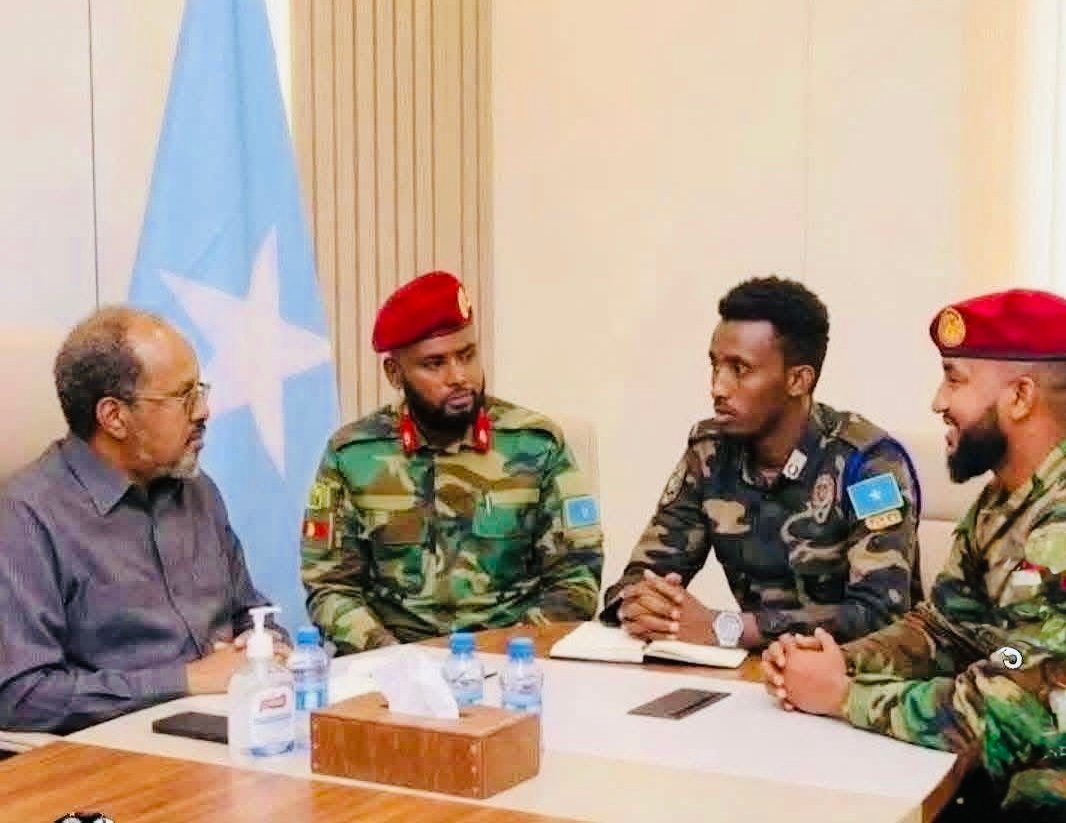
MOGADISHU — Questions are being raised over the appointment of senior security officials at Somalia’s presidential palace, Villa Somalia, following allegations that several key military and security positions are held by individuals with close family ties to President Hassan Sheikh Mohamud.
The three officers identified in the allegations include:
- Brigadier General Maslax – Reportedly the President’s uncle and Commander of the 77th Brigade, which is based at Villa Somalia.
- Brigadier General Abdifitaah Hassan Sheikh – The President’s son, reportedly serving as Commander of the Presidential Special Protection Unit.
- Captain Abdihakim Ceeldheer – Reportedly the President’s uncle and Commander of the Haramcad Special Police Unit.
The allegations further suggest that these officers joined the security forces around the time President Hassan Sheikh Mohamud was re-elected approximately four years ago.
Three Major Concerns
1. Allegations of Nepotism and Family-Based Appointments
The reported concentration of strategic security positions among individuals with close family connections to the President has raised concerns about potential nepotism, political influence and the concentration of state power within the presidency.
2. Declining Confidence Among Security Officials
Appointments perceived to be based on family relationships rather than professional qualifications, military experience and merit could undermine morale and confidence among other officers within Somalia’s security institutions.
3. Concentration of Security Power Around the Presidency
The alleged arrangement has also raised questions about the independence of national security institutions, the distribution of command authority and the accountability of those entrusted with protecting the country’s leadership and institutions.
Questions Over the Future of Somalia’s Security Institutions
Somalia’s security institutions are expected to operate according to professionalism, competence, integrity, merit and constitutional accountability.
The appointment of senior military and security officials should be guided by transparent procedures and national interests rather than personal or family connections.
The broader question facing Somalia is whether its security institutions are being developed as professional national institutions accountable to the state and its people, or whether strategic positions are becoming increasingly concentrated among individuals with close ties to the country’s political leadership.
The issue calls for transparency, institutional accountability and public confidence in Somalia’s national security leadership.