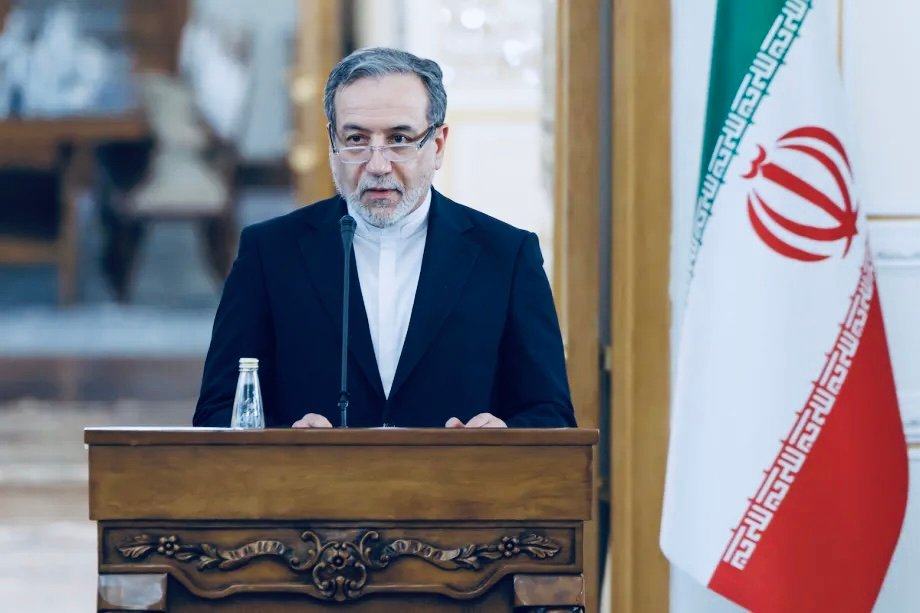
TEHRAN — Iranian Foreign Minister Abbas Araghchi said Tuesday that Iran had “won both the war and diplomacy,” claiming that opponents who initially demanded Tehran’s unconditional surrender later turned to negotiations.
Speaking at an event, Araghchi said Iran had resisted for days against what he described as an exceptionally powerful military force backed by another major army and supported by most Western countries, as well as several other states inside and outside the region.
“Those who were seeking unconditional surrender, shortly after the war began, begged for negotiations,” Araghchi said, according to remarks reported by Iranian media and cited by Anadolu.
The foreign minister said Tehran initially rejected calls for a ceasefire and continued its military response until, he claimed, the opposing side accepted a ceasefire and negotiations based on Iran’s terms.
“We fought with strength, and we negotiated with strength,” Araghchi said, adding that several foreign ministers had told him that Iran had succeeded both militarily and diplomatically.
Araghchi presented the sequence of events as evidence that Iran’s resistance had strengthened its position at the negotiating table. His comments reflect Tehran’s broader effort to portray its military and diplomatic response as a strategic success rather than a setback.
The Iranian foreign minister’s remarks came after US President Donald Trump called on Iran to give up and “raise the white flag.” Trump’s statement added to tensions between Washington and Tehran and followed a period of heightened military and diplomatic confrontation.
Iranian officials have repeatedly rejected demands for unconditional surrender and maintained that any negotiations must respect Iran’s sovereignty and national interests.
Araghchi also emphasized the importance of combining military strength with diplomacy, arguing that Iran was able to negotiate from a position of strength after resisting military pressure.
The Iranian government has sought to present its position as one of resistance while keeping diplomatic channels available. Tehran has also disputed claims regarding the extent of backchannel negotiations, with Iran’s Islamic Revolutionary Guard Corps previously dismissing some reports of secret talks as false.
The competing statements highlight the deep divide between Washington and Tehran over the outcome of the confrontation. While US officials have emphasized pressure on Iran and demanded concessions, Iranian leaders have portrayed their resistance as proof that military pressure cannot force Tehran into unconditional surrender.
Araghchi did not provide detailed information about the negotiations he referred to, including the identities of all parties involved or the specific conditions agreed upon.
His comments are likely to remain part of the broader dispute over how the conflict should be assessed, with Iran emphasizing its resistance and diplomatic gains while its opponents continue to argue that Tehran faced significant military and strategic pressure.