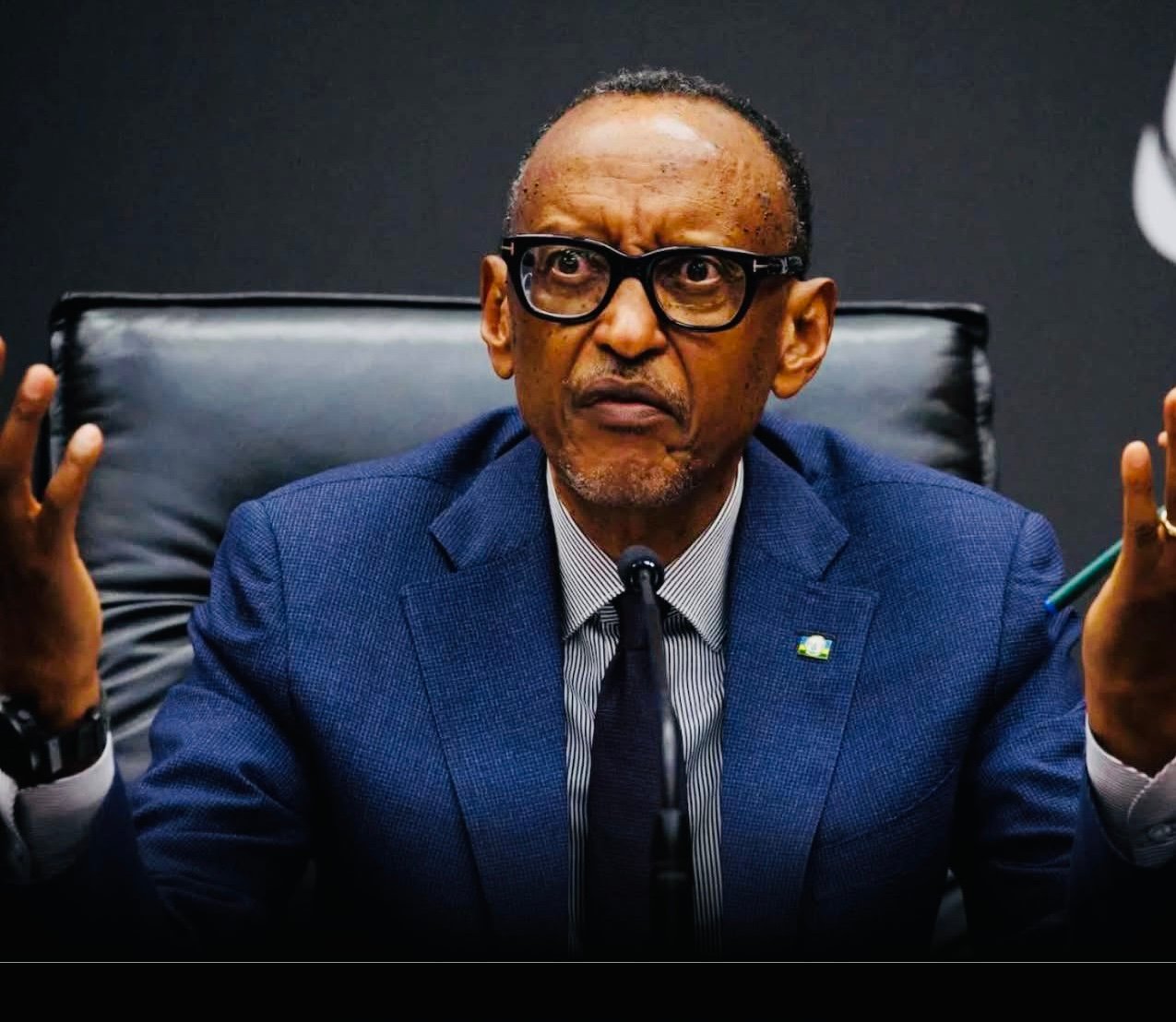
KIGALI — Rwanda’s President Paul Kagame has renewed calls for a unified African currency backed by the continent’s natural resources, arguing that Africa’s economic sovereignty remains constrained by the global financial system.
Speaking at a business forum in Kigali, Kagame said Africa’s vast reserves of minerals, energy resources and arable land should translate into stronger financial leverage.
He described the current global monetary order as a system that limits African control over its own economic future.
Kagame argued that as long as African economies remain dependent on external currencies, key decisions will continue to be shaped outside the continent.
He said Africa remains “rich in resources but weak in financial influence,” calling for deeper economic integration.
The idea of a single African currency has been debated for more than six decades.
In 1963, Ghana’s first president Kwame Nkrumah called for a unified African currency, a central bank and a common monetary zone during the founding of the Organisation of African Unity in Addis Ababa.
Although widely welcomed in principle, the proposal was never implemented.
Decades later, Libya’s former leader Muammar Gaddafi revived the idea, proposing a gold-backed African currency often referred to as the “gold dinar.”
The plan attracted limited interest but failed to materialize and ended after his death in 2011.
Kagame’s remarks have revived a debate that has repeatedly resurfaced across African political and economic forums.
Supporters of monetary integration argue that a common currency could strengthen intra-African trade and reduce dependence on external financial systems.
They also say it could increase the continent’s bargaining power in global markets.
However, critics caution that significant differences in inflation, debt levels and economic structures across African states make such a project difficult to implement.
The proposal remains one of Africa’s longest-running economic ambitions, still unresolved more than 60 years after it was first raised.