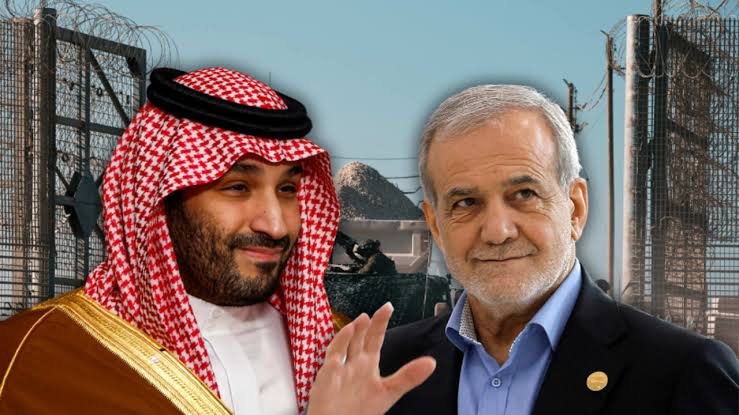
TEHRAN — Iranian President Masoud Pezeshkian has said that Iran is not engaged in any war with Saudi Arabia, stressing that Tehran does not consider its relationship with the kingdom to be one of direct military confrontation.
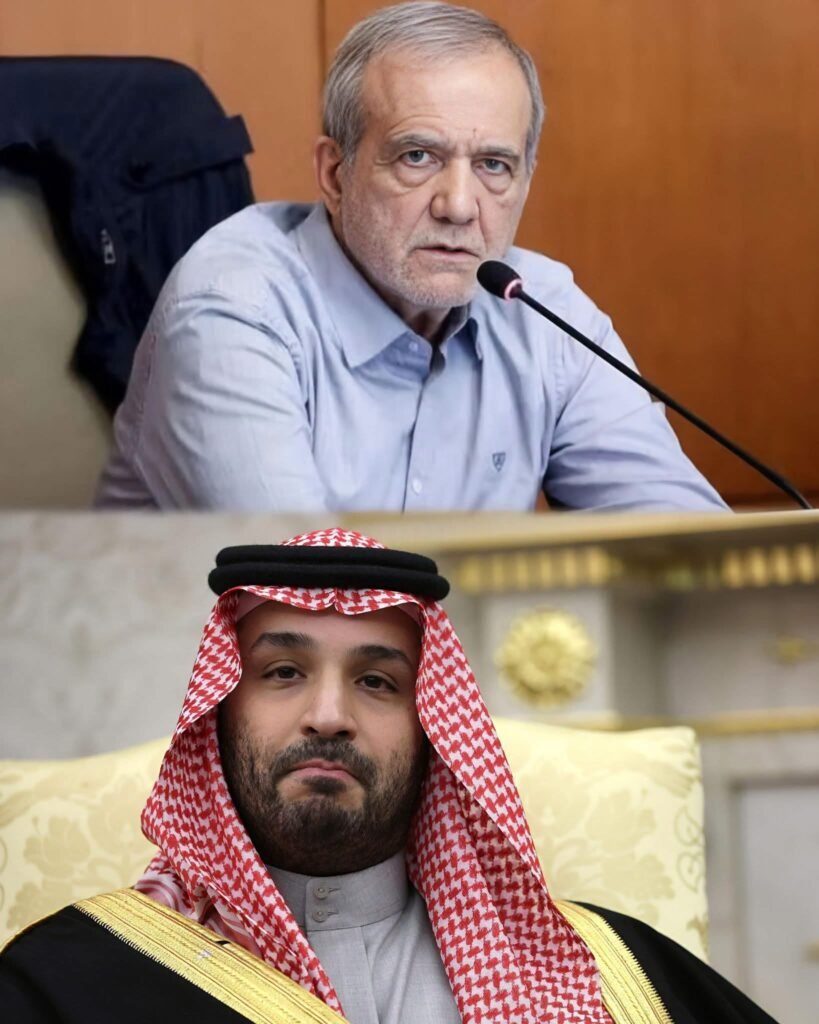
Pezeshkian also sought to draw a distinction between Iran’s foreign policy and the actions of Yemen’s Houthi movement, saying the group has its own affairs and makes decisions independently.
The comments come against the backdrop of years of rivalry between Iran and Saudi Arabia, during which the two countries supported opposing sides in several regional conflicts and competed for political and strategic influence across the Middle East.
Tehran distances itself from Houthi decisions
Pezeshkian’s remarks appear aimed at clarifying Iran’s position toward Saudi Arabia and rejecting the characterization of the relationship as a direct conflict between the two governments.
The Iranian president said the Houthis have their own issues and are independent in managing their affairs, indicating that decisions taken by the movement should not automatically be attributed to Tehran.
The issue is particularly sensitive because Saudi Arabia has been deeply involved in Yemen’s conflict. Riyadh led a military coalition that intervened in Yemen in 2015 in support of the internationally recognised government against the Houthi movement, which seized control of the capital, Sanaa.
Iran has been accused by Saudi Arabia and its allies of providing political, military and technological support to the Houthis. Tehran has acknowledged political ties with the movement but has repeatedly rejected allegations that it directly controls Houthi military decisions.
Iran-Saudi relations
Pezeshkian’s comments also come against the backdrop of efforts by Tehran and Riyadh to improve relations after years of intense regional rivalry.
Iran and Saudi Arabia agreed in 2023 to restore diplomatic relations under a China-brokered agreement, reopening embassies and pledging to improve bilateral ties.
The rapprochement marked a significant shift in Middle Eastern diplomacy after years in which the two countries were seen as leading rivals competing for influence in countries including Yemen, Syria, Iraq and Lebanon.
Despite the diplomatic thaw, tensions have continued over regional security, Yemen and the wider confrontation involving Israel, Iran and armed groups allied with Tehran.
Yemen remains a major regional flashpoint
The Houthi movement remains one of the most powerful armed actors in Yemen and has repeatedly asserted its own political and military agenda.
The group has also carried out attacks and threatened maritime traffic in the Red Sea, linking some of its actions to the war in Gaza. Those developments have raised concerns over regional escalation and the security of one of the world’s most important shipping routes.
For Saudi Arabia, stability in Yemen remains a major national-security concern because of the countries’ long shared border.
Pezeshkian’s statement therefore comes at a sensitive moment, as Tehran seeks to maintain its regional alliances while avoiding a direct confrontation with Saudi Arabia and other Gulf states.
His remarks reinforce Iran’s position that its relations with regional movements such as the Houthis should not automatically be interpreted as evidence that Tehran is waging a direct war against its regional rivals.