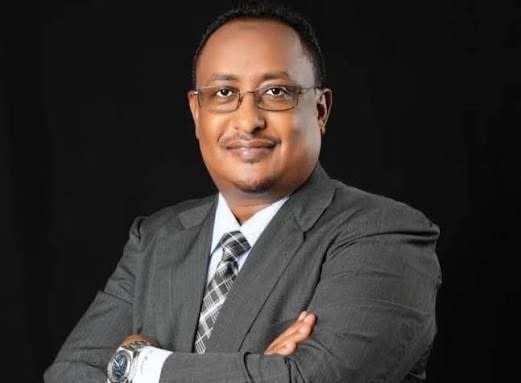
MOGADISHU — Somali politician Hassan Mohamed Hussein Muungaab announced late Tuesday that he had concluded a contentious and costly local council electoral process, marking the end of months of political maneuvering led by President Hassan Sheikh Mohamud.
The process, long in preparation, had been framed by federal authorities as a cornerstone of Somalia’s broader political reform agenda. Officials at Villa Somalia — the presidential compound — invested considerable political capital in pushing the initiative forward, presenting it as a step toward decentralization, grassroots governance, and eventual universal suffrage.
Yet the final phase of the process has ignited a new wave of political controversy.
Muungaab confirmed that district-level leadership, including council chairpersons, had been appointed, prompting swift backlash from opposition politicians and constitutional experts. Critics argue that the method of appointment runs counter to constitutional provisions endorsed by Somalia’s federal parliament, raising questions over legality and institutional integrity.
“The procedure followed appears inconsistent with the constitutional framework governing local governance,” said a Mogadishu-based legal analyst, speaking on condition of anonymity due to the sensitivity of the issue. “There is growing concern that due process was not fully respected, which could undermine confidence in the outcome.”
Opposition figures have also criticized the financial cost of the process, describing it as excessive at a time when Somalia faces pressing economic and humanitarian challenges. While the government has not released official figures, insiders describe the exercise as resource-intensive, adding to concerns over transparency and fiscal accountability.
Some stakeholders further allege that the process lacked inclusivity, with limited participation from key political actors, civil society groups, and local communities. Such concerns, they say, risk weakening public trust in institutions that the government is seeking to strengthen.
Government supporters, however, have defended the initiative, arguing that Somalia’s prolonged transition requires flexible and sometimes unconventional approaches. They maintain that establishing functioning district administrations is critical for delivering basic services, improving security coordination, and extending state authority in areas recovering from conflict.
“The priority is to ensure that local administrations are operational,” a government-aligned official said. “Perfect processes may not always be possible in the current context, but progress cannot be delayed indefinitely.”
The dispute highlights deeper fault lines within Somalia’s federal system, where tensions frequently emerge over constitutional interpretation, division of powers, and the sequencing of political reforms. Analysts note that disagreements between federal authorities and other political stakeholders have repeatedly complicated efforts to advance governance reforms.
Since the collapse of central authority in 1991, Somalia has struggled to rebuild effective state institutions. Efforts to transition from clan-based indirect elections to a one-person, one-vote system have faced persistent security threats, political rivalries, and logistical constraints.
The latest controversy comes at a critical juncture, as the government seeks to demonstrate progress toward democratic transformation while maintaining political cohesion.
Observers warn that unresolved disputes over the legality and credibility of the local council process could have broader implications for Somalia’s reform trajectory. Without consensus among key stakeholders, they caution, future electoral initiatives may face similar challenges, potentially slowing efforts to consolidate stability and strengthen democratic governance.