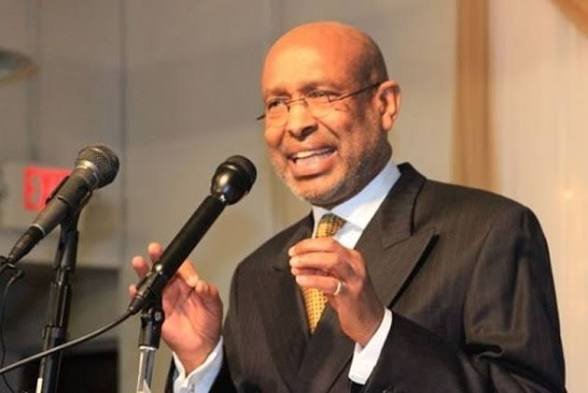
MOGADISHU — Professor Ahmed Ismail Samatar has spoken about several meetings and private discussions he says he held with Somali President Hassan Sheikh Mohamud, saying the issue of Somaliland and the underlying grievances between northern and southern Somalia was not discussed in the depth he expected.
Samatar said he had shared meals and held discussions with President Hassan Sheikh on several occasions, but said the president did not, during those meetings, raise in detail questions about Somalia’s future should the country remain united or eventually separate.
According to Samatar, the discussions also did not focus extensively on how Somalia could address what he described as longstanding grievances among people in northern Somalia or correct political and historical issues that have contributed to the dispute between Mogadishu and Hargeisa.
A Question of Unity or Separation
Samatar’s comments place renewed attention on one of Somalia’s longest-running political disputes: whether Somaliland and Somalia can eventually reach a new political settlement or whether Somaliland will continue pursuing international recognition as an independent state.
Somaliland declared that it had restored its independence from Somalia in 1991. Mogadishu, however, continues to regard Somaliland as part of the Federal Republic of Somalia and rejects its independence claim.
For more than three decades, the two sides have pursued various dialogue efforts, but negotiations have failed to produce a comprehensive settlement addressing the fundamental disagreement over sovereignty.
“If We Remain Together, Grievances Must Be Addressed”
A central element of Samatar’s argument is that the debate should go beyond the simple question of unity versus separation.
He suggested that if Somalis are expected to continue living within a single political system, there must be a serious effort to understand and address the grievances held by communities in northern Somalia.
That could involve discussions about political representation, power-sharing, governance, historical grievances and how national institutions should operate in a way that gives different regions confidence in the political system.
At the same time, Samatar’s comments do not establish that President Hassan Sheikh has rejected such discussions or that his government has a secret plan concerning Somaliland. They reflect Samatar’s account of what was and was not discussed during his meetings with the president.
Somaliland’s Position
Somaliland maintains that its relationship with Somalia cannot simply be restored to the pre-1991 political arrangement without addressing the history that led to its declaration of independence.
Somaliland officials have repeatedly argued that the union between the former British Somaliland protectorate and Italian-administered Somalia produced political and historical grievances that eventually contributed to the collapse of the relationship.
The Somali federal government takes a different position, emphasizing the country’s territorial integrity and arguing that Somaliland remains part of Somalia.
A Broader Regional Issue
The dispute is no longer purely an internal Somali political issue. Somaliland’s strategic location on the Gulf of Aden and the importance of the Berbera port have attracted increasing international and regional attention.
Ethiopia’s interest in obtaining reliable access to the sea has further complicated the issue, while Türkiye, Egypt, Eritrea and other regional actors maintain significant interests in Somalia and the wider Horn of Africa.
As a result, developments between Mogadishu and Hargeisa increasingly intersect with questions surrounding maritime access, regional security and geopolitical competition.
Samatar Calls for a Deeper Debate
Samatar’s remarks could add momentum to a broader discussion over whether Somalia’s approach to Somaliland should focus not only on preserving territorial unity but also on addressing the political and historical grievances that have contributed to the separation.
The central question remains whether a future political settlement can provide a framework acceptable to both sides.
If Somalia is to remain united, supporters of dialogue argue that there must be meaningful mechanisms for addressing grievances and building trust. If Somaliland continues to pursue independence, the challenge will be finding a peaceful political and diplomatic process through which the competing claims can be addressed.
For now, Samatar’s account offers a perspective on his interactions with Hassan Sheikh, but it does not by itself provide evidence of a secret government plan regarding Somaliland. The broader dispute remains unresolved, with Mogadishu defending national unity and Somaliland continuing to pursue its claim to statehood.