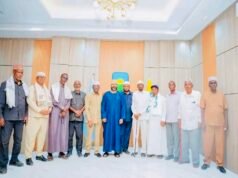
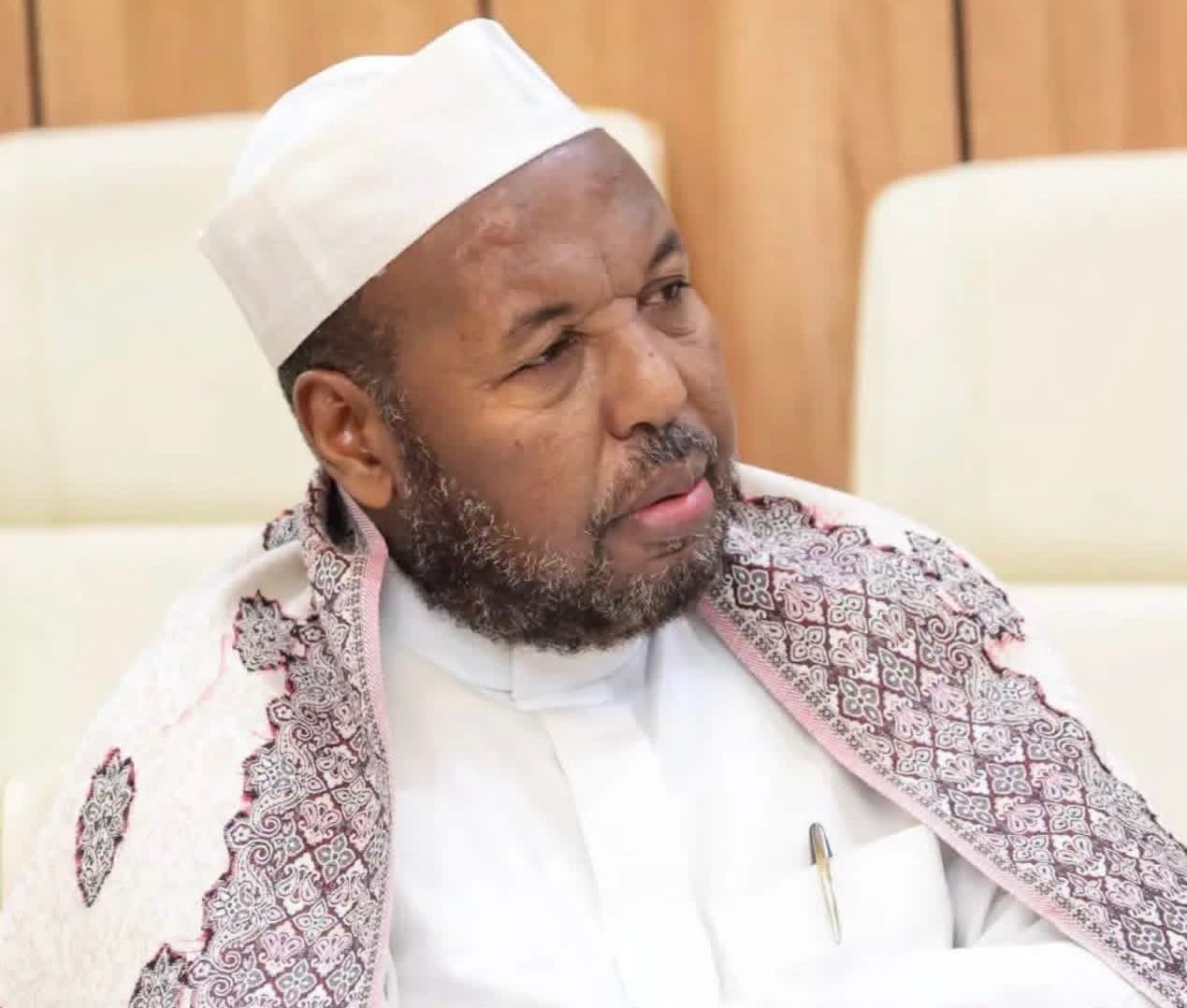
MOGADISHU — A proposal by prominent Somali cleric Sheikh Ali Wajiis to establish a separate federal administration for Hiiraan has reignited a deeply rooted political dispute over the future of Hirshabelle State, raising fresh questions about power-sharing, federal authority and the political relationship between Hiiraan and Middle Shabelle.
Wajiis has argued that Hiiraan should have its own administration while Middle Shabelle retains its existing status, presenting the proposal as a potential way to ease years of political tension within Hirshabelle.
The proposal comes at a politically sensitive moment, as disagreements over regional leadership, representation and the distribution of political power continue to fuel tensions among political leaders, traditional elders and other stakeholders.
A State Under Persistent Political Strain
Hirshabelle was established in 2016 by bringing together Hiiraan and Middle Shabelle as a single federal member state. Since then, however, the administration has faced repeated political disputes over leadership, representation and the balance of power between its constituent regions.
Supporters of Wajiis’s proposal argue that the repeated disputes demonstrate the limitations of the current arrangement. They say separate administrations could give Hiiraan and Middle Shabelle greater control over their political affairs and reduce competition over regional authority.
But opponents warn that separation could create a new set of political and administrative disputes, including disagreements over territorial boundaries, resources, security responsibilities and representation at the federal level.
Federal Government Faces Renewed Scrutiny
The proposal has also revived scrutiny of the Federal Government’s role in Hirshabelle politics.
Successive Somali administrations have faced criticism from regional political actors who accuse Mogadishu of exercising excessive influence over the formation and leadership of federal member states.
Critics argue that political arrangements in Hirshabelle should be negotiated through broad consultation involving local communities, traditional elders and political leaders rather than being driven primarily by federal authorities.
Federal officials and their supporters, however, have maintained that the national government has a legitimate responsibility to support the country’s federal institutions and facilitate political agreements.
The dispute reflects one of Somalia’s most persistent political challenges: finding a workable balance between federal authority and the autonomy of regional administrations.
Gudlawe at the Center of Political Debate
The political controversy has also placed Hirshabelle President Ali Gudlawe at the center of competing narratives over federal and regional alliances.
Some of Gudlawe’s opponents have alleged that political and clan considerations have influenced federal support for his leadership. Those allegations remain contested and have not, by themselves, established that government decisions were made on a clan basis.
Supporters of the regional leadership reject such characterizations and frame the political competition as part of the broader struggle over governance and political authority.
The dispute has nevertheless deepened mistrust among rival political groups and added to calls for a more transparent and inclusive political process.
Lessons From Previous Administrations
The controversy also recalls political disputes that emerged during the administration of former President Mohamed Abdullahi Mohamed Farmaajo, when federal-regional relations were frequently tested by disagreements over political appointments, regional leadership and the distribution of authority.
Critics of successive federal governments argue that Hirshabelle has repeatedly become a battleground for competing political interests in Mogadishu and the regions.
For them, the latest proposal is not simply a debate about administrative boundaries. It is a reflection of deeper concerns over political representation and whether the existing federal arrangement adequately protects the interests of both Hiiraan and Middle Shabelle.
A Choice Between Separation and Reform
Wajiis’s proposal has now placed a fundamental question at the center of the political debate:
Should Hiiraan seek a separate federal administration, or should Hirshabelle be restructured through a political settlement acceptable to all sides?
Those advocating separation say years of unresolved disputes show that the current arrangement has failed to produce lasting political stability.
Those opposing separation argue that creating another federal entity could deepen Somalia’s already fragmented political system and potentially transfer existing disputes into a new administrative framework.
They instead call for an inclusive political process bringing together the Federal Government, Hirshabelle authorities, opposition figures, traditional elders, community representatives and civil society.
Such a process would need to address the core grievances surrounding political representation, power-sharing, regional leadership and federal intervention.
A Test for Somalia’s Federal Model
The debate over Hiiraan and Hirshabelle extends beyond one regional administration. It touches on a central question confronting Somalia’s federal system: how can political disputes rooted in history, representation and competing interests be resolved without further fragmenting the country?
For supporters of reform, the answer lies in negotiated power-sharing and stronger political institutions. For advocates of separation, the repeated crises within Hirshabelle are evidence that a fundamentally different administrative arrangement may be necessary.
Whatever path is ultimately pursued, the debate is likely to remain politically sensitive. Any decision affecting the status of Hiiraan and Middle Shabelle would require broad consultation and could have implications well beyond Hirshabelle, potentially influencing Somalia’s wider debate over federalism, regional autonomy and political representation.
Sheikh Ali Wajiis’s proposal has therefore transformed an old political grievance into a renewed national debate—one that could test both the cohesion of Hirshabelle and the future direction of Somalia’s federal system.