
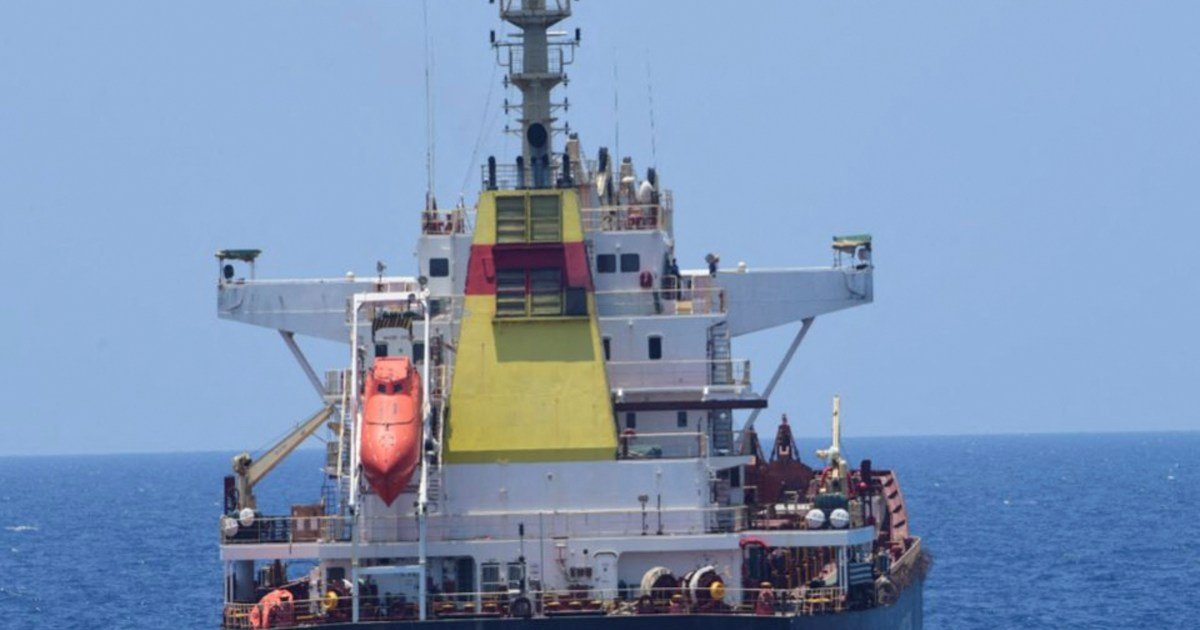
Piracy Resurges as Tanker Seizure Exposes Somalia’s Maritime and Economic Fragility
MOGADISHU — The hijacking of a fuel tanker off Somalia’s coast has reignited concerns over a resurgence of piracy, highlighting persistent gaps in maritime security and intensifying economic pressures in a country heavily dependent on imported energy.

Security officials say armed pirates seized the tanker Honour 25 late Wednesday while it was sailing roughly 30 nautical miles offshore. The vessel, carrying 17 crew members and about 18,500 barrels of fuel, was reportedly overpowered by six gunmen in a swift operation that underscores the continued vulnerability of shipping routes along the Horn of Africa.
Authorities in Puntland have not confirmed the crew’s condition or whether ransom demands have been issued, leaving uncertainty over the fate of both the vessel and its cargo.
The incident signals a worrying shift after years of declining piracy, once credited to sustained international naval patrols and tighter shipboard security. Yet the reappearance of attacks on both fishing vessels and commercial shipping suggests that the structural drivers of piracy — weak coastal governance, limited enforcement capacity, and economic hardship — remain firmly in place.
Analysts caution that the seizure could reflect the quiet reactivation of dormant pirate networks, particularly in coastal regions where surveillance and rapid response mechanisms remain limited.
The timing of the hijacking is especially consequential. The Honour 25 was bound for Mogadishu, where fuel shortages are already driving sharp price increases. Ongoing regional tensions involving the United States, Israel, and Iran have disrupted supply chains, pushing fuel costs higher and placing additional strain on households and businesses.
Any prolonged disruption of this shipment risks worsening inflationary pressures, with cascading effects on transport, electricity, and essential goods — a familiar pattern in Somalia’s fragile economic landscape.
The tanker’s route illustrates the growing complexity of regional maritime logistics. After departing from Berbera earlier this year and passing through the United Arab Emirates, the vessel entered one of the region’s most strategically sensitive corridors — increasingly exposed to both geopolitical tensions and opportunistic criminal activity.
The attack raises broader questions about the durability of maritime security gains in the region. The reduced visibility of international naval missions, coupled with shifting global priorities, may be creating space for piracy to re-emerge in adaptive forms.
For Somali authorities, the immediate priority remains securing the safe release of the crew. Beyond that, the incident underscores a deeper challenge: addressing the root causes of piracy while rebuilding credible, long-term maritime security capacity.