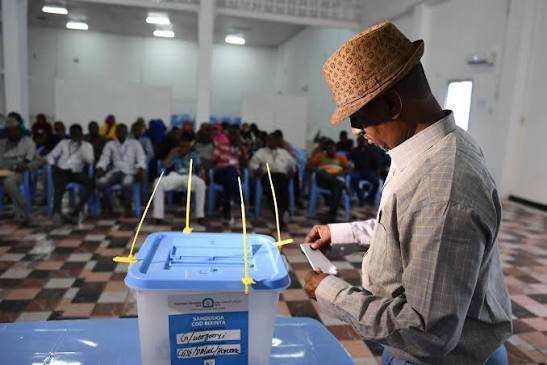
MOGADISHU – Somalia is once again at the center of a crucial national debate over the future of its electoral system, as political leaders, opposition figures, and international partners increasingly discuss how the country can move from its clan-based power-sharing model toward a more democratic, party-based political system.
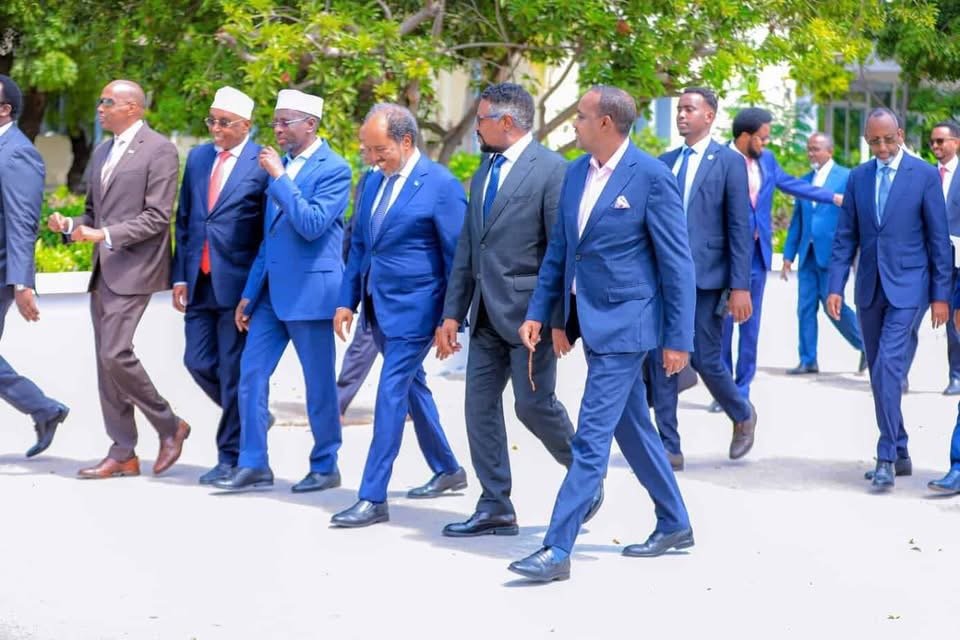
The discussion comes at a critical moment for Somalia, which has spent decades rebuilding state institutions after the collapse of the central government in 1991. While the country has made significant progress in restoring governance and security, questions remain about how to establish an electoral framework that balances Somalia’s complex social realities with its democratic aspirations.
President Hassan Sheikh Mohamud has repeatedly emphasized that Somalia should move toward direct elections in which citizens elect their representatives through the ballot box, rather than returning to the indirect electoral model that has characterized much of the country’s recent political history.
“We must continue the journey toward a democratic system that gives citizens a direct voice in choosing their leaders,” Somali officials have said in support of the reforms.
For many analysts, the debate is not simply about how elections are conducted but about the broader future of Somalia’s political system.
Under the current arrangement, clan representation remains a central pillar of political power and governance. The model has often been viewed as a practical mechanism for maintaining political balance among Somalia’s diverse communities. However, critics argue that it can limit political competition, weaken accountability, and slow the development of national political institutions.
Supporters of electoral reform believe that stronger political parties could help address these challenges.
Political parties, they argue, offer a framework that allows voters to choose candidates based on policies, governance programs, and national visions rather than primarily on clan affiliations. Such a system could encourage issue-based politics and strengthen democratic participation.
Advocates also say party-based politics can improve accountability. In a functioning party system, governing parties can be held responsible for their performance, while opposition parties can present alternative policies and compete for public support through elections.
“A strong party system creates clearer lines of political responsibility and allows citizens to judge governments based on results,” said one political observer familiar with Somalia’s reform efforts.
International experience is frequently cited by those advocating for political parties as the foundation of Somalia’s future democratic system.
South Africa, for example, emerged from a deeply divided political environment and developed a competitive party system that helped establish broadly accepted national institutions. Although challenges remain, the country’s experience is often viewed as evidence that strong political parties can contribute to long-term stability.
Kenya has similarly worked to strengthen national political parties despite the continued influence of ethnic and regional identities. Political competition in the country increasingly takes place through organized parties and electoral coalitions.
Nigeria, Africa’s most populous nation, has also faced challenges linked to ethnic and regional divisions. Over time, however, national political parties have become central actors in the country’s democratic process, helping create a broader framework for political competition.
Somalia’s situation remains more complex than many of these examples due to ongoing security concerns, fragile institutions, and the continuing process of state-building.
As a result, many Somali political stakeholders argue that any transition must be gradual rather than abrupt.
Rather than eliminating clan representation overnight, supporters of reform propose a phased approach in which political parties gradually assume a larger role while maintaining mechanisms that ensure inclusivity and political stability.
Analysts say such a transition could allow Somalia to preserve social cohesion while laying the foundations for a more modern democratic system.
The challenge, they note, will be building public trust, strengthening electoral institutions, and ensuring that political competition remains peaceful and inclusive.
For Somalia, the debate over elections ultimately reflects a broader national question: how to build a democratic state capable of representing all citizens while navigating the realities of a society still recovering from decades of conflict and political fragmentation.
If managed carefully, many observers believe a stronger party-based political system could serve as a bridge between Somalia’s current transitional arrangements and its long-term goal of achieving a fully functioning democratic order.