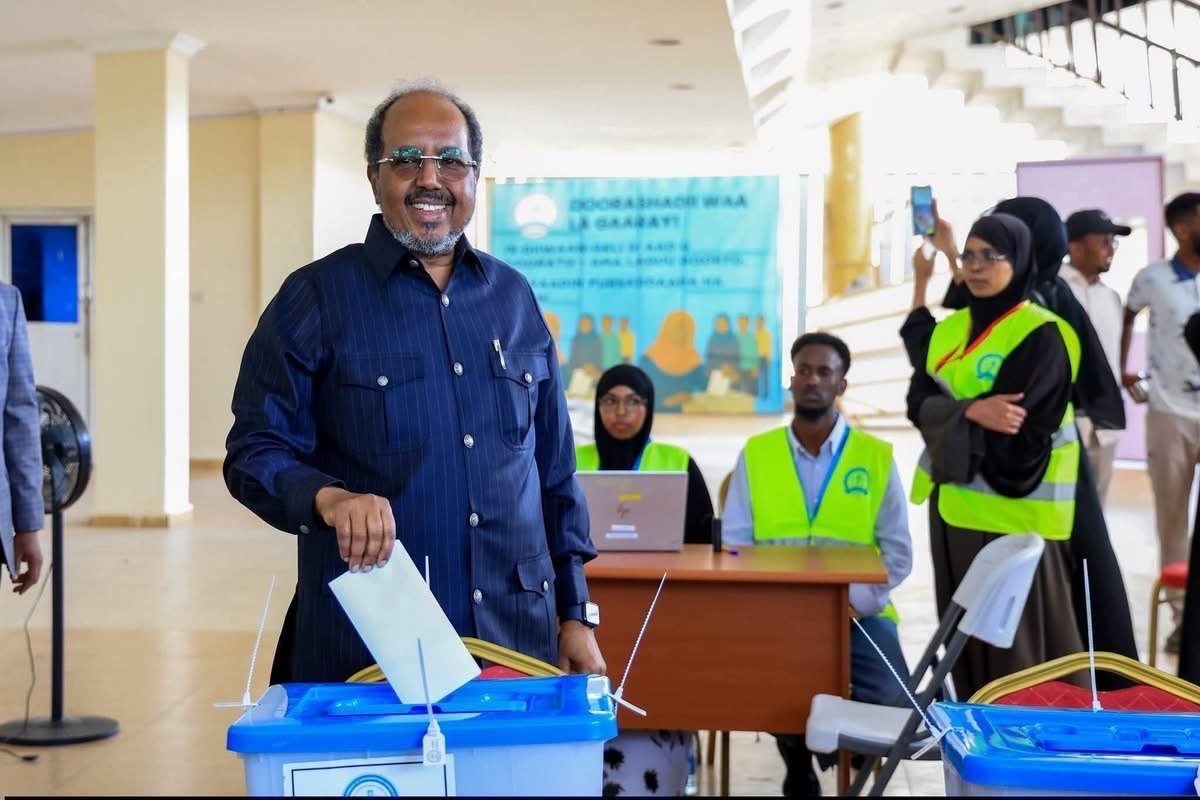
Somalia’s political debate over the upcoming electoral process is intensifying, with growing questions about whether the country can deliver a genuinely free, fair and inclusive election amid continuing political disputes between the Federal Government and several Federal Member States.
President Hassan Sheikh Mohamud and the electoral commission established by his administration have maintained that Somalia is moving toward an electoral process in which citizens will have the opportunity to freely choose their preferred political representatives.
However, critics have questioned how those assurances can be reconciled with allegations that the Federal Government is seeking to influence political outcomes in several Federal Member States, particularly Galmudug, Hirshabelle and South West State.
The controversy has raised a fundamental question: If voters are genuinely free to choose their leaders, what role should the President and the Federal Government play in influencing or promoting particular political candidates?
For supporters of a credible electoral system, the principle is straightforward: voters should be able to make their choices without political pressure or undue interference from those in power. Candidates should have a fair opportunity to compete, while electoral institutions should operate transparently and independently.
The current debate is therefore about more than individual candidates. It concerns the credibility of Somalia’s wider electoral system and whether political competition will ultimately be determined by voters or shaped through political negotiations and alliances before citizens cast their ballots.
Particular concerns have emerged over the Federal Government’s political involvement in the affairs of Federal Member States. Critics argue that if the central government is perceived to favor particular candidates or political groups, it could undermine public confidence in the electoral process.
Government supporters, however, could argue that political engagement between the Federal Government and Federal Member States is a normal part of Somalia’s political system and does not necessarily constitute electoral interference.
The distinction is therefore crucial.
A government can engage in political dialogue, support reconciliation and communicate with political actors. But concerns arise when citizens believe that the outcome of an election is being shaped before they have had a meaningful opportunity to make their own choice.
This has prompted another question: Is Somalia developing an electoral model in which citizens are formally given the right to vote while political outcomes are heavily influenced beforehand through political arrangements?
Such concerns are particularly sensitive in a country where public trust in political institutions remains fragile and disagreements between the Federal Government and Federal Member States have repeatedly produced political tensions.
A credible election requires more than polling stations and an official voting date. It requires confidence that the rules are fair, candidates can compete on a level playing field, voters can make independent choices, and electoral institutions can operate without undue political influence.
The electoral commission therefore carries significant responsibility. To earn public confidence, it must demonstrate transparency, neutrality, accountability and institutional independence throughout the electoral process.
Ultimately, the central issue is not whether a president or political party can support a preferred candidate. Political leaders routinely endorse candidates and political platforms. The more important question is whether government institutions or public resources are being used to influence the choices available to voters.
The Somali public therefore deserves clear answers:
Who ultimately chooses Somalia’s leaders—the voters or political power brokers?
If the election is genuinely free and fair, citizens should be able to determine the outcome through a credible and transparent process rather than being presented with a political outcome that appears to have been decided in advance.
Somalia’s political leaders now face an important test. They must demonstrate that the country’s electoral process is designed not to protect the interests of individuals or political factions, but to strengthen democratic participation, political stability, accountability and national unity.