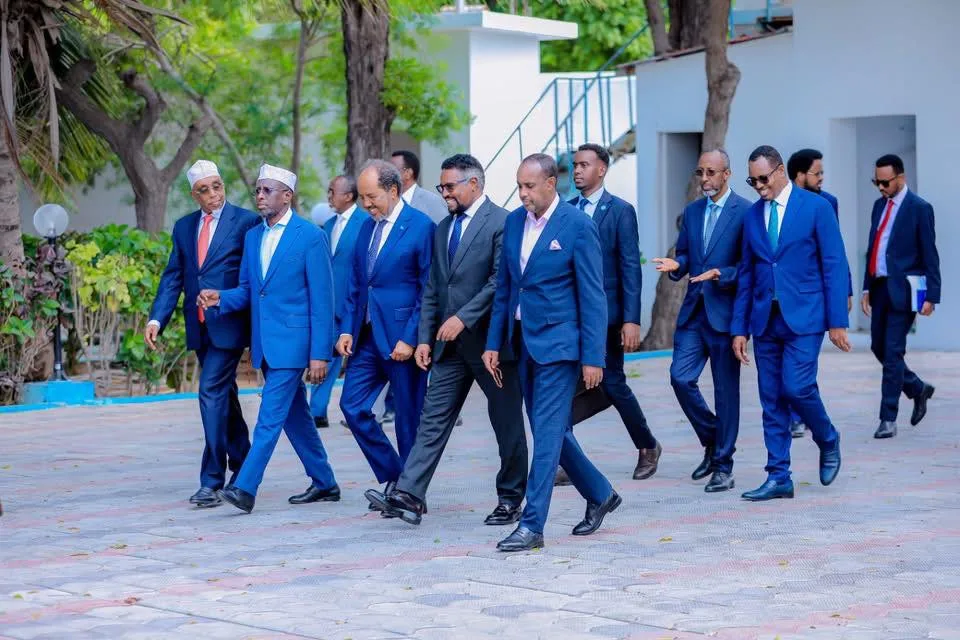
MOGADISHU — A political dialogue that was expected to take place in Mogadishu on September 7 between the Federal Government of Somalia and opposition groups has failed to materialize, raising fresh concerns over the country’s increasingly tense political environment.
The meeting had been viewed as an opportunity for the government and its political opponents to sit together and address outstanding disagreements, particularly over the country’s political transition, elections and constitutional issues.
However, the expected talks did not take place, and there is currently no clear indication of a breakthrough or comprehensive agreement between the two sides.
The development has raised a broader question about Somalia’s political future: If Somali political leaders cannot bring themselves together, and if international partners have been unable to successfully facilitate a meeting, what alternative path remains?
Growing Need for Somali-Led Dialogue
Political observers argue that the failure of the meeting should not be allowed to bring the dialogue process to an end. Instead, the government and opposition could agree on another date and establish a clear framework for negotiations.
A Somali-led process involving the Federal Government, opposition groups, Federal Member States and other key political stakeholders could provide a platform for addressing the disagreements without allowing them to escalate into a wider political or security crisis.
Among the major issues likely to require attention are the electoral process, constitutional reforms, relations between the Federal Government and Federal Member States, political participation and the broader rules governing Somalia’s transition.
What Role Should the International Community Play?
International partners have traditionally played an important role in supporting political dialogue in Somalia. However, continued disagreement between Somali political actors has also highlighted the limits of external mediation.
Rather than dictating a political settlement, international partners could focus on supporting a process agreed upon by Somali stakeholders, including providing technical assistance, mediation support and guarantees where necessary.
The responsibility for reaching a lasting political agreement, however, ultimately rests with Somalia’s political leadership.
A Critical Moment for Somalia
The failure of the September 7 meeting comes at a sensitive time for Somalia, where political disagreements could have wider consequences if they are not addressed through dialogue.
The immediate priority is to prevent political differences from developing into confrontation and to ensure that communication between the government and opposition remains open.
The key question now is not simply why the September 7 meeting failed to take place, but whether Somalia’s political leaders are prepared to return to the negotiating table and find a compromise before the current tensions deepen further.
A renewed, inclusive and Somali-led dialogue may offer the clearest path toward reducing political tensions and preserving stability.