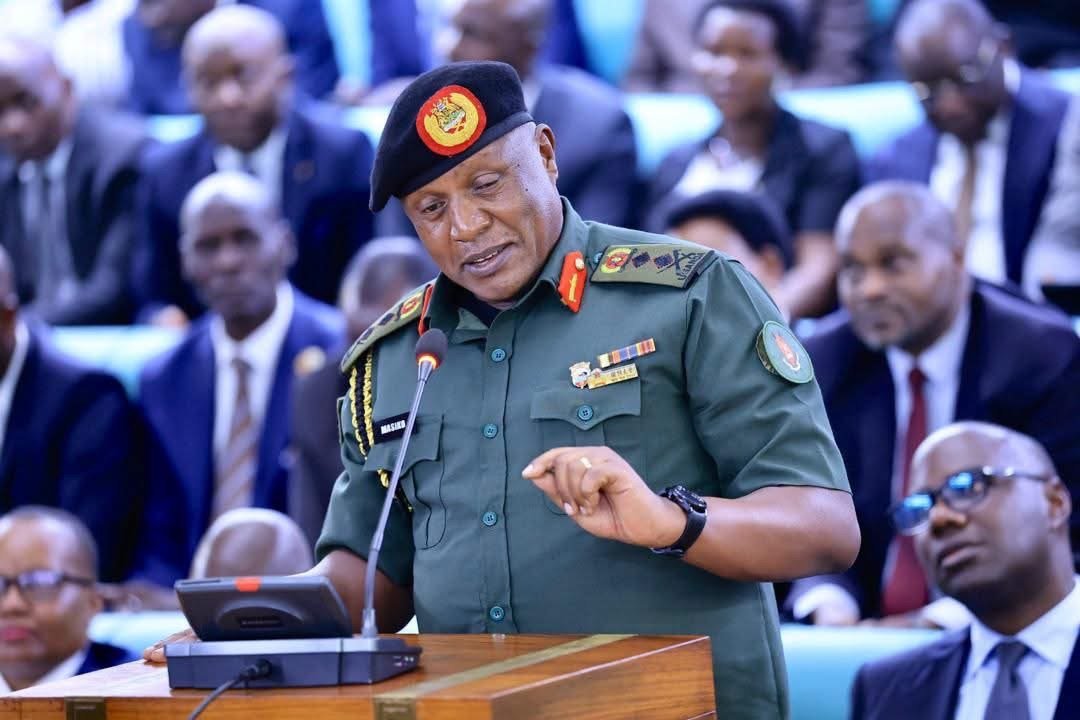
KAMPALA — UPDF Representative Maj. Gen. Henry Masiko has described Uganda’s planned deployment of the Uganda People’s Defence Forces (UPDF) to the Gaza Strip as a matter of national honour and pride, emphasizing Uganda’s longstanding contribution to peacekeeping and security operations across Africa.
Speaking about the reported deployment, Maj. Gen. Masiko said Uganda should be proud of its willingness to contribute troops to an international mission aimed at protecting civilians, confronting security threats, and supporting stability in a conflict-affected environment.
“It is an honour and a source of national pride for Uganda to deploy a UPDF contingent to protect the Gaza Strip,” Masiko said.
He stressed that the mission should not be viewed as a symbolic deployment, but as a serious security responsibility requiring discipline, professionalism, courage, and readiness to respond to threats.
“We are not going there to dance. We are going there to confront threats against society and humanity. We should be proud of this,” he said.
Masiko’s remarks come as Uganda continues to highlight the role of the UPDF in regional peace and security. Over the years, Ugandan forces have participated in peace support, stabilization, and counter-insurgency operations in several African countries, including South Sudan, Somalia, and the Democratic Republic of Congo (DRC).
In Somalia, Ugandan forces have played a significant role in African Union-led security operations against Al-Shabaab and in supporting the Somali government’s efforts to strengthen national security institutions.
In South Sudan, Uganda has previously deployed forces in support of regional security and stability, particularly during periods of political and armed conflict. Uganda has also contributed to broader regional diplomatic and security efforts aimed at preventing further instability in the country.
In the Democratic Republic of Congo, Uganda has participated in joint military operations targeting armed groups operating in eastern DRC, particularly along areas affected by cross-border insecurity. The UPDF has also been involved in regional efforts intended to improve security and protect communities affected by armed violence.
These deployments have given Uganda considerable experience in operating in complex security environments and have strengthened the UPDF’s profile as one of the African militaries frequently involved in regional security operations.
Masiko said Uganda’s experience in peace support and security operations has helped develop the capabilities required to operate in challenging environments. He suggested that the country’s participation in international missions demonstrates Uganda’s willingness to contribute to wider efforts to protect civilians and restore stability.
The reported Gaza deployment would represent a major expansion of Uganda’s international security engagement beyond Africa and could place the UPDF in a highly sensitive and politically complex environment.
The Gaza mission would also require clear rules of engagement, coordination with other international forces, and a strong focus on civilian protection and humanitarian security.
For Uganda, the deployment is being presented as part of its broader commitment to international peace and security. For the UPDF, it would be another test of its ability to operate in a complex conflict environment while maintaining military professionalism and discipline.
However, the precise mandate, timeline, size of the Ugandan contingent, rules of engagement, and command structure for any Gaza deployment would depend on the final international arrangements and official agreements governing the mission.