By Chief Editor, Horn Africa News
Introduction
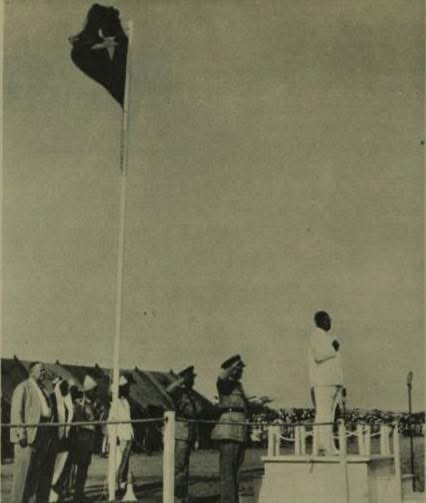
On July 1, 1960, Somalia entered a new political era as the former British Somaliland Protectorate and the Italian-administered Trust Territory united to form the independent Somali Republic. The event marked the culmination of decades of anti-colonial struggle and was widely celebrated as a defining victory for Somali nationalism and self-determination.
Yet more than six decades later, historians, analysts, and political observers continue to debate a central question: was Somalia institutionally and politically prepared for independence at the time?
High expectations at independence
At independence, optimism ran high across Somali society. The newly established republic carried strong hopes of building a modern and stable nation-state capable of overcoming colonial fragmentation.
Key national expectations included:
- Establishing a functioning and just government
- Building national unity beyond clan divisions
- Expanding education, healthcare, and public services
- Pursuing the unification of Somali-inhabited territories in the Horn of Africa
The early post-independence years were defined by strong nationalist sentiment, with many believing Somalia could quickly emerge as a model democratic state in Africa.
Emerging structural challenges
Despite this optimism, the new state faced immediate institutional and political weaknesses that would shape its development for decades.
Clan-based politics
One of the most persistent challenges was the growing influence of clan identity in political life. While clan structures had long served as social systems, they increasingly shaped political competition in the new republic. This contributed to:
- Fragmentation of political alliances
- Patronage-based distribution of state resources
- Weak development of national political parties
Weak state institutions
Somalia inherited limited administrative infrastructure from the colonial period. The transition to independence was rapid, leaving the new government with limited capacity to govern effectively.
Key constraints included:
- A shortage of trained civil servants and professionals
- Weak judicial and administrative systems
- Limited state presence outside major urban centres
These gaps made it difficult to build strong and stable national institutions.
Governance concerns and corruption
In the years following independence, allegations of corruption and misuse of public office began to surface. While Somalia initially maintained a parliamentary democratic system, concerns gradually increased over:
- Electoral irregularities
- Patronage networks within government
- Weak accountability mechanisms
Over time, these issues contributed to declining public trust in state institutions.
Political instability
By the late 1960s, political rivalry had intensified significantly. Multiple parties emerged, but many were widely perceived as representing clan or regional interests rather than national ideology.
This period was marked by frequent changes of government and growing instability within the political system.
The 1969 military coup
Following the assassination of President Abdirashid Ali Sharmarke on October 15, 1969, the Somali National Army seized power in a coup on October 21, led by Major General Mohamed Siad Barre.
The military government justified its takeover as a response to corruption, clanism, and political dysfunction. Parliament was dissolved, the constitution suspended, and political parties banned, bringing Somalia’s first decade of parliamentary democracy to an end.
Collapse of the state in 1991
After years of military rule and growing armed opposition, Somalia’s central government collapsed in 1991 following the outbreak of civil war.
The collapse led to:
- The breakdown of central government institutions
- Large-scale displacement of civilians
- The collapse of national security and public services
- The rise of competing armed factions controlling territory
Many analysts argue that the roots of the collapse can be traced to unresolved governance and institutional weaknesses that originated in the post-independence period.
A counter-narrative
However, not all analysts agree that Somalia was unprepared for independence. Some argue that Somalis, like all colonised peoples, had a legitimate right to self-determination and statehood.
From this perspective, Somalia’s post-independence difficulties were driven less by lack of readiness and more by broader internal and external factors, including:
- Weak political leadership and governance failures
- Cold War geopolitical rivalries in the Horn of Africa
- Regional instability and security pressures
- Economic underdevelopment inherited from colonial rule
This interpretation emphasises that Somalia’s state failure was the result of a combination of domestic challenges and external pressures.
Conclusion
The question of whether Somalia was ready for independence in 1960 remains open and continues to generate debate among scholars and policymakers.
What is clear, however, is that the young republic faced significant structural, political, and social challenges from its earliest years.
The Somali experience continues to offer wider lessons on state-building, particularly the importance of strong institutions, inclusive governance, rule of law, and national cohesion beyond clan identity.
As Somalia continues its ongoing efforts toward reconstruction and stability, the legacy of independence remains both a source of national pride and a subject of reflection on the long and complex path of state formation.