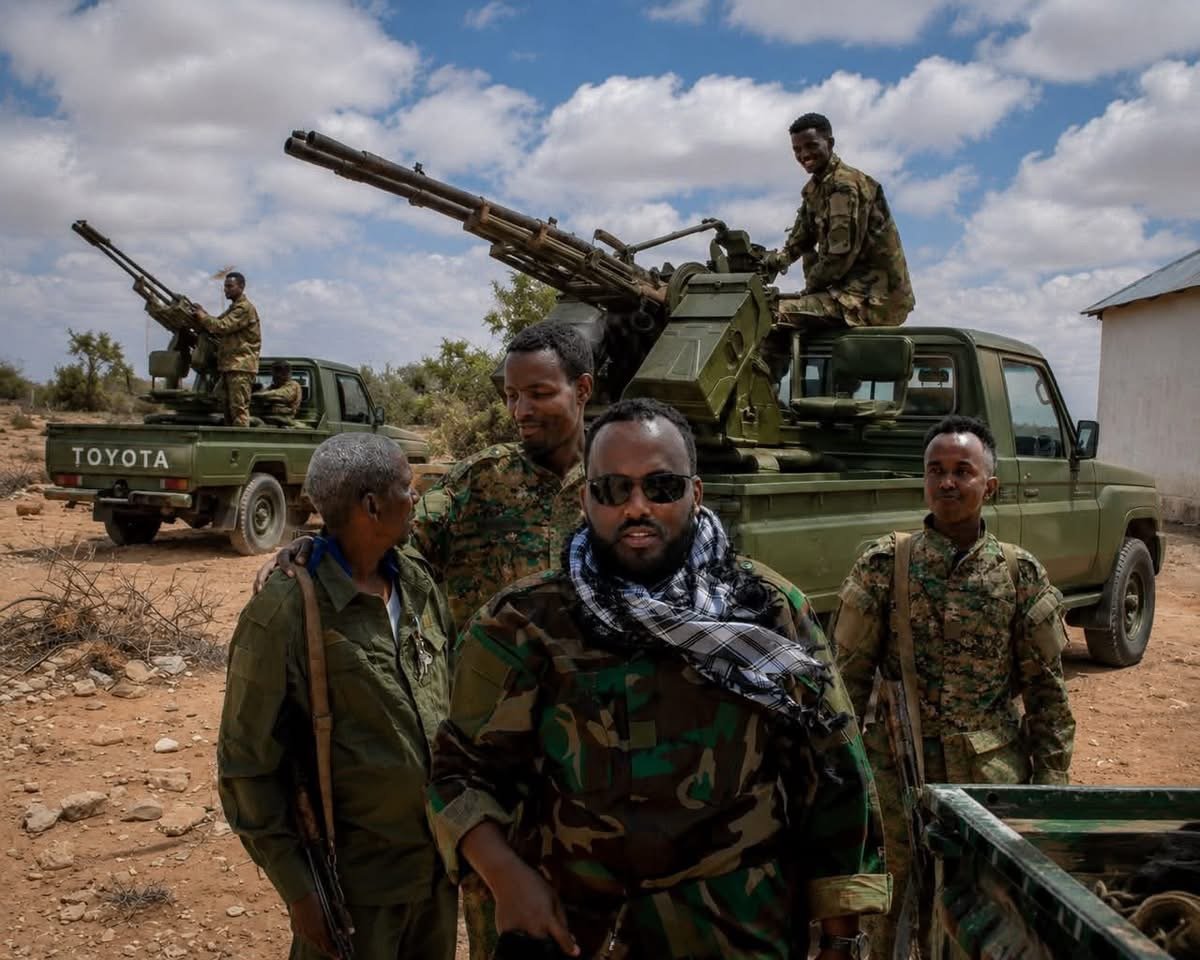
MOGADISHU — As is widely known, many of the Puntland forces who joined the Federal Government have had various grievances over the years. Some complained about unpaid salaries and other working conditions, while others were linked to political figures who had been removed from government positions and subsequently expressed dissatisfaction with the Puntland administration. In many cases, the Puntland authorities were able to address or resolve these issues.
However, the grievances surrounding the forces based at Istanbul Camp are different and, according to members of the community, go much deeper. At the heart of the issue is a long-standing political dispute involving the soldiers and the wider community they come from, particularly the question of political representation within Puntland.
Since the establishment of Puntland, the community has repeatedly raised concerns about what it considers an inadequate share in the political system, especially in terms of representation in government institutions and decision-making bodies.
The issue has reportedly been raised on numerous occasions with successive Puntland administrations and with traditional elders representing other communities in Puntland. Despite these discussions, however, the community maintains that a lasting political solution has yet to be reached.
On at least two occasions, proposals were reportedly presented to the Puntland Parliament calling for the Constitution to be reopened or amended to increase the community’s political representation. Supporters of the proposals argued that the community has a significant presence across several areas of Puntland, including parts of Mudug, Nugaal and Bari, and therefore deserves greater political representation.
Although those proposals did not pass, there were reportedly promises and commitments that the issue would be reviewed at a later stage. According to the community’s position, however, those commitments have not produced a meaningful or lasting outcome.
Today, a significant section of the community and some of its forces reportedly believe that they have not received what they consider their fair political rights or an appropriate share in Puntland’s political system.
This perception has contributed to growing frustration among some members of the community, who argue that political grievances cannot be addressed through temporary measures or administrative arrangements alone. They believe that a lasting solution requires genuine political dialogue, fair representation and a clear agreement on power-sharing.
From their perspective, there should be no political arrangement that forces a community to remain within a system in which it believes its interests are not adequately represented. Some therefore argue that they have the right to align themselves with whichever political authority they believe can better protect their interests, whether that is the Federal Government of Somalia or another administration.
The issue, therefore, should not be viewed solely as a dispute involving soldiers at Istanbul Camp. It reflects a broader political grievance that has existed for years and involves questions of representation, power-sharing, political inclusion and trust between communities and Puntland’s leadership.
If the Puntland leadership is genuinely committed to preserving unity, stability and political cohesion, it needs to move beyond temporary solutions and address the underlying political grievances through meaningful dialogue.
A sustainable solution would require the Puntland authorities, traditional elders, political leaders and representatives of the concerned community to sit together and openly discuss the issues of political representation, constitutional arrangements, power-sharing and the implementation of previous commitments.
Puntland’s unity and stability can ultimately be strengthened through fairness, equal political participation, dialogue and the fulfillment of legitimate political commitments—not by ignoring grievances that have remained unresolved for years.
A grievance that is left unaddressed today can become tomorrow’s political crisis. Addressing the concerns of all communities through dialogue and a credible political process would therefore be essential to maintaining Puntland’s unity and preventing further tensions.