MOGADISHU — Somalia has warned that countries undermining its sovereignty could face “serious repercussions,” in one of its strongest diplomatic responses yet to growing international engagement with Somaliland, following Israel’s controversial move to appoint an ambassador to the breakaway region.
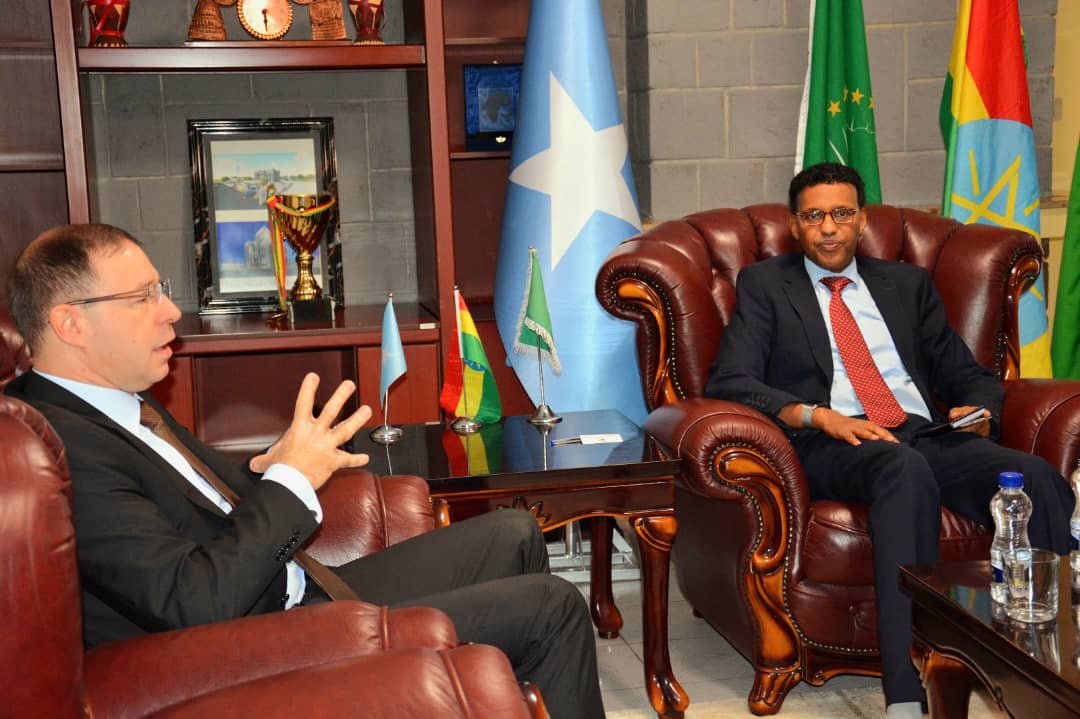
Somalia’s ambassador to Ethiopia and the African Union, Abdullahi Warfaa, said Friday that any foreign government interfering in Somalia’s internal affairs risks consequences that could extend to strategic maritime considerations.
“Any country interfering in Somalia’s internal affairs and compromising its territorial integrity and sovereignty will face repercussions,” Warfaa wrote on X, adding that such measures could include “potential restrictions on access to the Bab-el-Mandeb Strait.”
His comments come days after Israel reportedly appointed a diplomatic representative to Somaliland, a move Mogadishu views as a direct challenge to its sovereignty.
Somalia’s foreign ministry has already condemned the move in unusually strong terms, calling it “a direct breach of Somalia’s sovereignty, unity and territorial integrity.” The government maintains that Somaliland — which declared independence in 1991 following the collapse of the Somali state — remains internationally recognized as part of Somalia.
No country formally recognizes Somaliland as an independent state, despite its relative stability and functioning institutions compared to much of southern Somalia.
Warfaa’s reference to the Bab-el-Mandeb Strait signals an attempt to elevate the dispute beyond diplomacy, pointing to one of the world’s most critical maritime corridors. The narrow strait, located between Djibouti and Yemen, links the Red Sea to the Gulf of Aden and carries a substantial share of global trade, including oil shipments between Europe, Asia and the Middle East.
Analysts caution, however, that Somalia’s ability to enforce restrictions there is limited. The strait lies outside Somalia’s territorial waters and is governed by international maritime law, with multiple regional and global actors involved in maintaining freedom of navigation.
Experts say any attempt to restrict access would face significant legal, military and diplomatic obstacles. Control over international waterways depends on cooperation among coastal states and broader international frameworks, rather than unilateral action.
The latest dispute highlights growing tensions between Somalia and countries deepening ties with Somaliland, particularly in the Horn of Africa — a region already shaped by shifting alliances and geopolitical competition.
Observers say the issue reflects a broader struggle over recognition, sovereignty and influence, as external powers expand their footprint in the region through security, trade and diplomatic engagement. For Somalia’s federal government, the stakes remain high, as any perceived erosion of its territorial integrity could set a precedent for further fragmentation.
Warfaa’s remarks underscore Mogadishu’s determination to push back, even as analysts point to the limits of its leverage in a complex and rapidly evolving geopolitical landscape.