
NAIROBI — Kenyan media personality Lynn Ngugi has sparked public debate after questioning why many businesses in Nairobi’s Eastleigh area continue to rely heavily on cash-based transactions, despite the country’s growing shift toward digital and mobile payments.
Ngugi raised the issue during a public discussion on business practices and financial inclusion, suggesting that the continued dominance of cash in some trading hubs raises questions about transparency, efficiency, and access to modern financial systems.
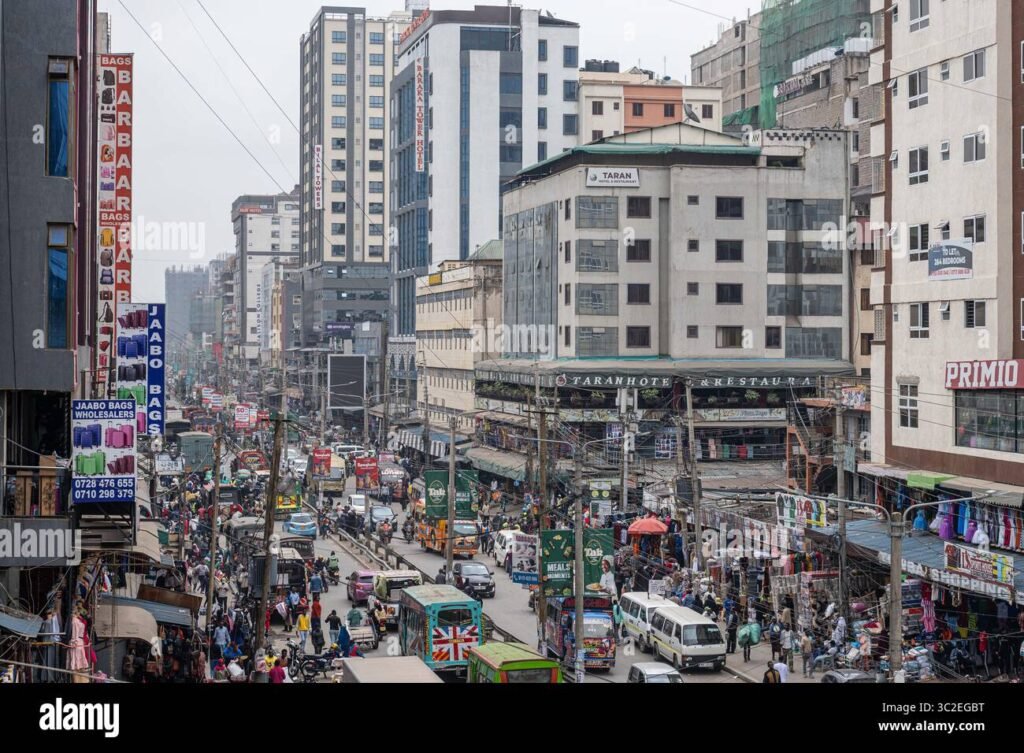
Eastleigh, a major commercial district in Nairobi known for its vibrant retail and wholesale trade, has long been associated with fast-moving cash-based businesses, where goods ranging from clothing to electronics are traded in large volumes, often outside formal banking systems.
Her comments come at a time when Kenya is widely regarded as one of the global leaders in mobile money adoption, particularly through platforms such as M-Pesa. However, analysts note that cash remains deeply embedded in informal trade networks, especially in densely populated commercial zones like Eastleigh.
Ngugi’s remarks have reignited discussions about whether businesses should be required to accept digital payments or whether cash remains essential for flexibility, speed, and trust in informal markets.
Some traders argue that cash transactions allow for quicker settlements and reduced transaction costs, especially for small-scale and wholesale traders operating on thin margins. Others say reliance on cash can limit financial transparency and make it harder for businesses to access formal credit and banking services.
The debate also touches on broader issues of financial inclusion and regulation, as governments across Africa encourage the transition toward cashless economies while balancing concerns about taxation, privacy, and infrastructure access.
While no formal policy changes have been announced, the discussion highlights the ongoing tension between Kenya’s advanced digital financial ecosystem and the persistence of traditional cash economies in key trading hubs.
For now, Eastleigh remains a symbol of that dual reality — a modern commercial powerhouse where digital innovation and cash-based trade continue to coexist side by side.