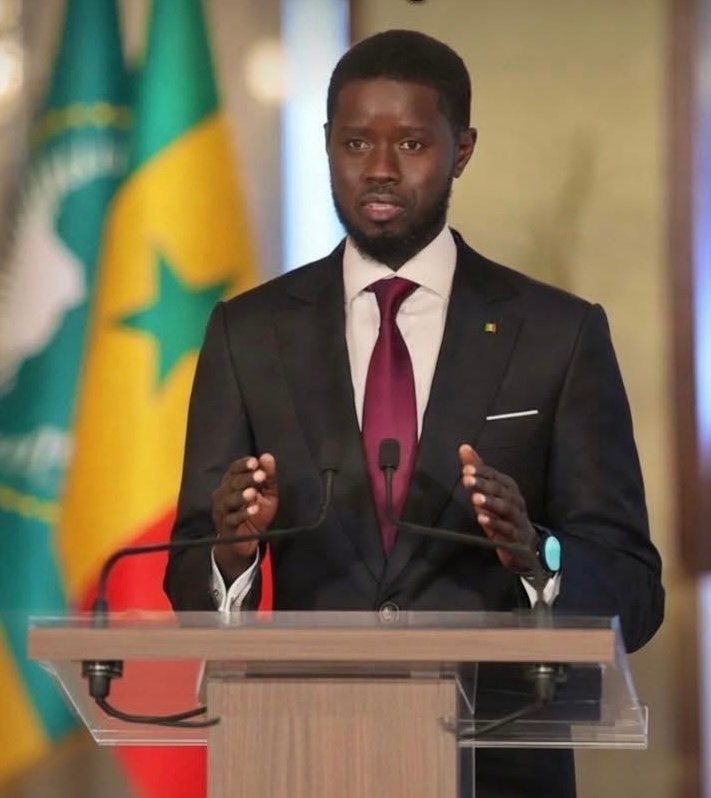
DAKAR — Senegal’s President Bassirou Diomaye Faye is pressing ahead with an anti-corruption and governance reform agenda as his administration seeks to distinguish itself from previous governments.
Faye, elected in March 2024, rose to power after a politically tense period marked by protests, opposition crackdowns, and his own detention over allegations linked to critical social media activity targeting the judiciary. His election ushered in a generational shift in Senegalese politics.
Before assuming office, Faye publicly declared his assets, a move his administration presented as part of a broader commitment to transparency in public life.
Since taking office, the government has launched reviews of major contracts in the oil, gas and mining sectors, with authorities saying the aim is to secure greater national benefit from Senegal’s natural resources.
Officials say the reforms are intended to strengthen public finances, improve governance, and address long-standing concerns over corruption and the management of strategic industries.
The presidency has framed the agenda as an institutional, rules-based approach focused on accountability and legal reform rather than political confrontation.
However, observers note that the success of the reforms will depend on the government’s ability to maintain institutional pressure, implement regulatory changes, and withstand resistance from entrenched economic interests.
The administration has not yet released detailed outcomes of the ongoing contract reviews, leaving the scale and impact of the initiative unclear.
Faye’s presidency is widely viewed as a test case for governance reform in West Africa, a region where several countries continue to grapple with corruption, weak institutions, and questions of public trust in government.