By Horn Africa News Editorial Team
MOGADISHU — After decades of unrealized potential, Somalia’s ambitions to become an energy-producing nation are entering a new phase, with renewed attention focused on the Hol Hol oil well in the Khadun area of the Sool region.
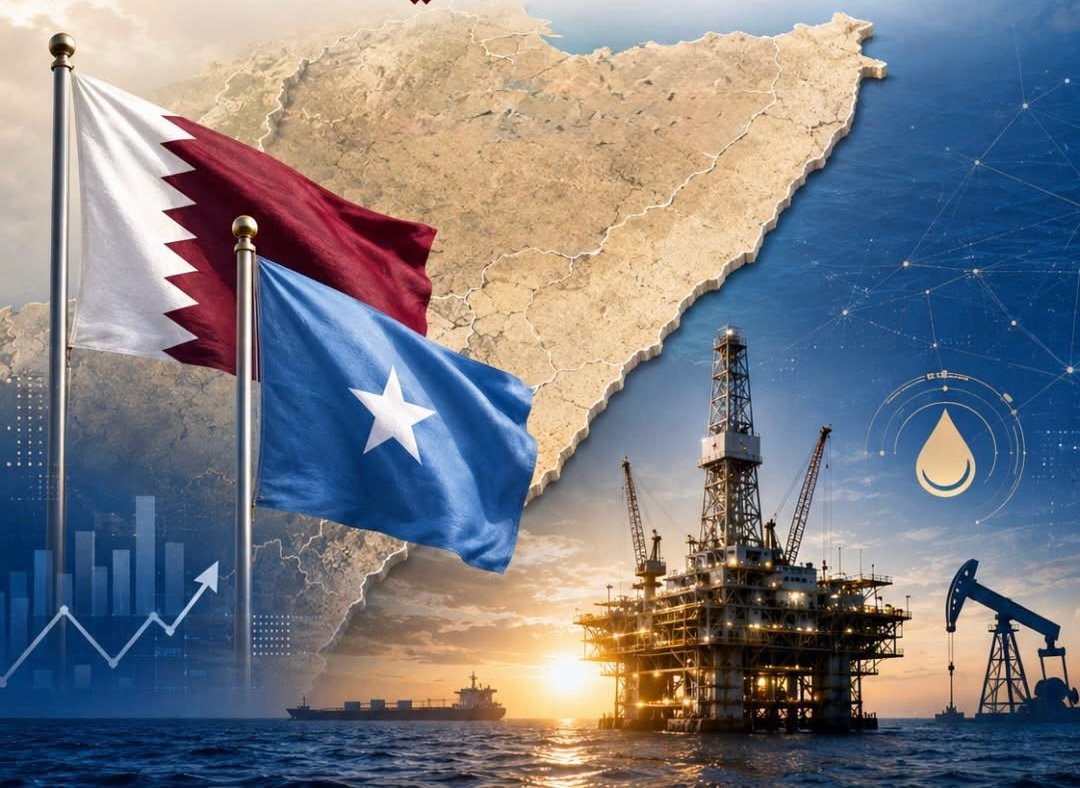
The project, led by Gulfsom Energy, a Somali-Qatari partnership, represents one of the country’s most significant attempts in recent years to move from oil exploration toward possible commercial production. For Somalia, a country with vast natural resource potential but a long history of political instability, the Hol Hol project has become a symbol of economic hope and a test of whether resource wealth can be transformed into national development.
The planned drilling operations come as the federal government accelerates efforts to attract investment into the energy sector, including offshore exploration projects such as the Curad-1 well being developed in cooperation with Turkey.
A Historic Search for Oil
The story of Hol Hol is not new. Somalia’s search for oil dates back to the late 1970s and 1980s, when the former government launched major exploration campaigns and attracted international energy companies.
Global firms including Conoco, Chevron, Shell, BP and ENI obtained exploration rights in different parts of Somalia, with the Nugaal Basin — where Hol Hol is located — identified as one of the country’s most promising geological areas.
Experts have long considered Somalia’s basins to have significant hydrocarbon potential due to geological similarities with oil-producing regions across the Red Sea and the Arabian Peninsula.
However, progress was repeatedly delayed by political disagreements, uncertainty over investment agreements, production-sharing arrangements and decades of conflict that weakened state institutions and discouraged major investors.
A New Somali-Qatari Partnership
The Hol Hol project returned to the spotlight following a 2024 agreement between the Somali federal government and Gulfsom Energy, granting the company development rights under a production-sharing agreement.
The partnership reflects Somalia’s growing effort to work with international investors while ensuring that natural resources contribute to national economic growth.
Officials from the Ministry of Petroleum and Mineral Resources have said preparations are underway for drilling activities, describing the project as an opportunity to create jobs, stimulate local economies and strengthen Somalia’s energy sector.
The government has also emphasized the importance of establishing stronger legal frameworks to regulate natural resources, prevent uncontrolled exploitation and ensure that revenues are managed transparently.
The Economic Promise
The potential importance of Hol Hol extends beyond oil exploration. Somalia is believed to have significant untapped natural resource wealth, with some estimates suggesting possible oil reserves running into tens of billions of barrels, although commercial viability can only be confirmed through successful exploration and appraisal.
If successful, oil production could transform Somalia’s economy by creating new revenue streams, supporting infrastructure development, improving energy security and reducing dependence on foreign assistance.
However, discovering oil is only the beginning. Many resource-rich countries have shown that natural wealth does not automatically lead to prosperity. Strong institutions, transparent revenue management and responsible investment policies are essential to ensuring that resources benefit ordinary citizens.
Security and Political Challenges
Despite optimism surrounding the project, significant challenges remain.
Security threats, particularly from militant groups such as Al-Shabaab, continue to pose risks to major economic projects and foreign investments. Protecting drilling sites, workers and infrastructure will be critical to the success of Hol Hol.
The location of the project in the Sool region also adds political sensitivity, as the area has been affected by competing territorial and administrative claims involving Puntland and Somaliland.
Observers warn that disagreements over resource ownership, revenue sharing and political authority could become obstacles unless managed through dialogue and clear legal agreements.
International Expertise and the Road Ahead
Although Gulfsom Energy represents Somali and Qatari investment, large-scale drilling operations require advanced technology, technical expertise and international cooperation.
The involvement of experienced energy companies and specialists will be important in ensuring that exploration follows global safety and environmental standards.
Somalia’s broader energy strategy also includes offshore exploration initiatives, reflecting the government’s ambition to position the country as an emerging energy destination in the Horn of Africa.
Hol Hol: A Test of Somalia’s Resource Future
The Hol Hol project represents more than an oil exploration campaign. It is a test of Somalia’s ability to move from decades of expectations toward practical economic transformation.
Success will depend not only on what lies beneath the ground, but also on what happens above it — the strength of institutions, political cooperation, security conditions and the ability to manage national resources responsibly.
For many Somalis, the hope is that oil will not become another source of competition, but a foundation for development, employment and a stronger economy for future generations.
The coming years will determine whether Hol Hol becomes the beginning of Somalia’s energy future or another chapter in the long search for its natural wealth.