
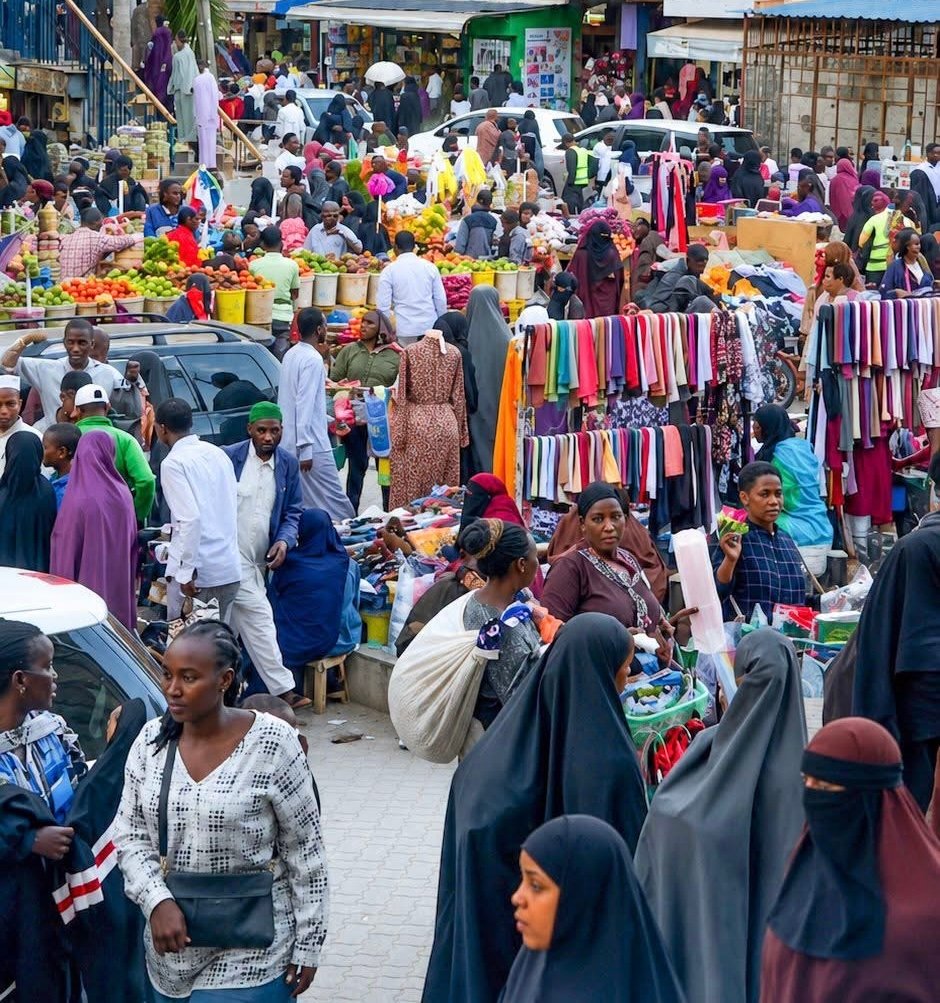
Source: Abdullahi Salah
NAIROBI — Along the busy Jaam Street in Nairobi’s Eastleigh neighbourhood, hundreds of young people gather every day, searching for ways to earn a living through small-scale businesses and informal work as they face rising living costs and limited employment opportunities.

For many of these young entrepreneurs, self-employment has become a path to survival. Without access to stable jobs or significant financial support, they rely on their own determination and creativity to generate income and support themselves and their families.
The streets of Eastleigh have become a centre of small trading activities, where young people sell a wide range of affordable goods to passing customers. Some traders purchase small quantities of items, including clothing accessories and other low-cost products, before reselling them for a small profit.
One trader explained that some young people begin with limited stock, sometimes buying around 20 pieces of goods, and selling them individually in the busy market. Their daily income depends on customer demand, competition and the overall business environment.
Many traders say they earn between 500 and 800 Kenyan shillings per day, equivalent to approximately $5 to $6, depending on sales. Although the earnings are modest, they help cover essential expenses such as food, transport, rent and other daily needs.
“I work hard because I want to depend on myself and build my own future,” one young trader said, describing the challenges and determination required to survive in Nairobi’s competitive informal economy.
Eastleigh, known as one of Nairobi’s busiest commercial districts, has long been a hub for entrepreneurship, attracting thousands of young people involved in retail, street trading, delivery services and other informal businesses.
However, many young entrepreneurs continue to face major obstacles, including limited access to capital, lack of business opportunities, rising costs and uncertainty about long-term financial stability.
Economic observers say the growing number of young people entering informal businesses reflects both the challenges of unemployment and the resilience of a generation seeking solutions. They argue that better access to affordable financing, skills training and employment opportunities could help small traders expand into more sustainable businesses.
Across Kenya and many parts of Africa, youth unemployment remains a major concern. Yet in places like Eastleigh, young entrepreneurs continue to show determination by creating their own opportunities and contributing to the local economy despite difficult conditions.