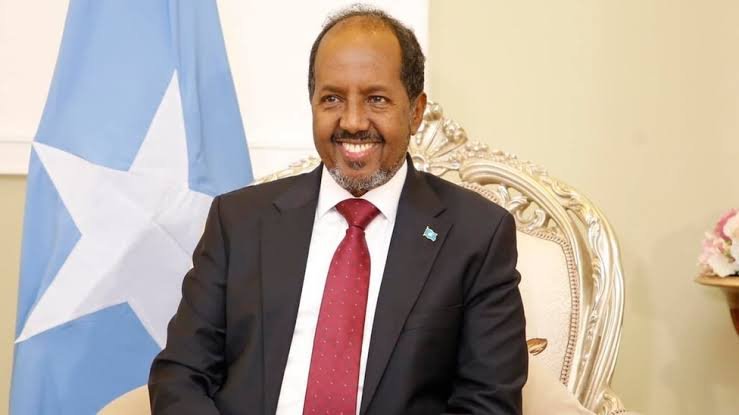
MOGADISHU – Somali President Hassan Sheikh Mohamud has invited opposition political groups and civil society representatives to a five-day national consultative forum in Mogadishu, scheduled for November 14–18, 2026, as political tensions intensify over the country’s disputed federal electoral process.
The proposed talks are aimed at building political consensus on the electoral framework ahead of parliamentary and presidential elections scheduled for 2027, amid growing disagreements between the Federal Government of Somalia and opposition groups over the election timetable and decision-making process.
According to a statement attributed to the Somali Presidency on Monday, invitations have been extended to several political organizations, including the Nabad iyo Nolol Party, the Somali Future Council, the National Unity Forum and the Civil Society Coalition.
The presidency said the consultations would provide an opportunity for political stakeholders to engage in constructive dialogue, address outstanding disagreements and work toward a shared understanding of the country’s electoral arrangements.
Opposition Rejects Electoral Timetable
The invitation comes amid mounting criticism of the electoral timetable announced earlier this month by Somalia’s National Independent Electoral and Boundaries Commission.
Under the announced schedule, elections for both houses of the Federal Parliament are expected to take place on April 15, 2027, followed by a presidential election on May 15, 2027.
However, several opposition groups have rejected the timetable, arguing that the electoral arrangements were announced without sufficient consultation or a comprehensive political agreement among Somalia’s key stakeholders.
The Somali Future Council has been among the groups calling for renewed negotiations, insisting that the country’s electoral future should be determined through an inclusive political process rather than unilateral decisions.
Opposition representatives have warned that proceeding with elections without broad political agreement could deepen divisions, undermine public confidence in electoral institutions and create additional challenges for Somalia’s federal governance system.
Disagreements Over Federalism and Constitutional Reforms
The electoral dispute reflects wider disagreements over constitutional reforms, the distribution of political authority and the relationship between Somalia’s Federal Government and its federal member states.
Puntland President Said Abdullahi Deni has recently criticized the federal leadership’s approach to constitutional and electoral matters, warning that decisions made without broad consultation could undermine the political agreements that have supported Somalia’s federal system.
Speaking during the opening of the 59th session of the Puntland Parliament in Garowe on October 25, Deni accused President Hassan Sheikh Mohamud’s administration of departing from the consensus-based political arrangements that have historically guided Somalia’s electoral transitions.
His remarks highlighted continuing concerns among some federal and opposition leaders about the legitimacy and inclusiveness of the proposed electoral framework.
Somalia has relied heavily on negotiated political agreements and indirect electoral arrangements during previous national elections, reflecting longstanding security, institutional and political challenges.
The federal government’s efforts to advance electoral reforms have consequently generated debate over how to establish a more representative electoral system while maintaining political stability and cooperation among federal institutions.
November Talks Could Offer Opportunity for Political Compromise
The proposed November consultative forum could provide an important opportunity for the federal government, opposition organizations and civil society representatives to address their differences before the 2027 electoral process advances further.
Among the central issues likely to dominate discussions are the electoral timetable, the role of federal member states, constitutional provisions governing national elections and the need for an electoral framework acceptable to the country’s major political stakeholders.
The participation of opposition groups could help determine whether the forum develops into a broader political negotiation capable of producing a mutually acceptable agreement.
However, it remains unclear whether all invited organizations will attend or whether the government is prepared to consider adjustments to the existing electoral timetable.
The outcome may also depend on whether the consultations include representatives of federal member states and other influential political actors whose participation could be important to securing a nationwide agreement.
Political Stability Ahead of 2027 Elections
The dispute comes at a sensitive period for Somalia as the country continues to confront security challenges, political disagreements and the ongoing process of strengthening its federal institutions.
Political analysts have long emphasized that broad participation and agreement among key stakeholders are important to maintaining confidence in Somalia’s electoral process.
Failure to resolve the current disagreements could complicate preparations for the 2027 elections and further strain relations between the federal government and opposition groups.
At the same time, successful consultations could provide an opportunity to reduce political tensions, clarify electoral procedures and establish a framework for more inclusive national elections.
For now, attention is expected to turn toward the November 14–18 forum in Mogadishu, where the willingness of government and opposition representatives to negotiate will be closely watched.
Whether the proposed talks produce a political breakthrough or leave existing disagreements unresolved remains uncertain.
Reporting: Mogadishu, Somalia | October 26, 2026