Source: HornafricaNews.com
BELEDWEYNE — Somalia’s history can only be fully understood by looking back at the people, communities and political relationships that contributed to the formation of the Somali state.
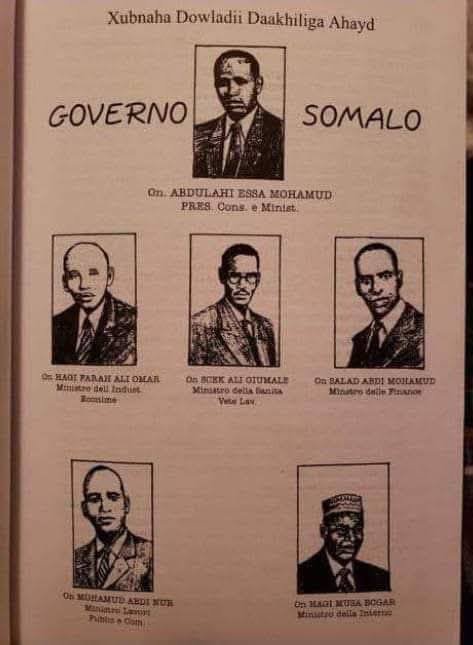
Before Somalia achieved full independence, the country’s political landscape was shaped by a combination of the struggle for independence, community mobilisation, political movements and competition over national representation. Politicians of that era faced the difficult task of building the country’s first state institutions, creating a functioning political system and bringing together a society emerging from colonial rule and political fragmentation.
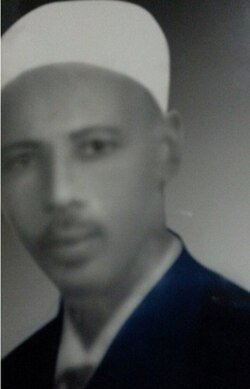
Within that history, Hiiraan and Beledweyne occupied an important place. The region produced politicians who went beyond local politics and played roles at the national level. Among them was Sheikh Ali Jimale Baraale, a prominent political figure with a strong base in Beledweyne who became involved in Somalia’s early civilian governments.
The political history of Ali Jimale also intersects with that of Abdullahi Issa Mohamud, one of the leading figures of Somalia’s independence movement and the country’s first prime minister.
The two men belonged to a generation of Somali politicians who helped guide the country into a new political era. Yet the nature of their political relationship — including an account concerning Abdullahi Issa’s parliamentary representation in Beledweyne — remains an issue that requires further examination of historical records.
The Generation That Built the Somali State
Abdullahi Issa Mohamud was one of the most prominent figures in Somali politics during the period of colonial rule and the transition toward independence.
In 1956, he became prime minister of Somalia’s first internal government, at a time when the country was moving through a transitional period between the UN Trusteeship administration and independence.
The government faced an enormous task: establishing the foundations of a modern state, including a parliament, executive institutions, public administration and a political system capable of governing the country.
But state-building was not an undertaking limited to political leaders in the capital. National politics depended heavily on political representation and support from regions and districts across the country.
As a result, relationships between local political leaders and national figures became an important part of Somalia’s emerging political system.
Sheikh Ali Jimale and the Rise of Politics in Hiiraan
Sheikh Ali Jimale Baraale was among the prominent politicians from Hiiraan who emerged from the nationalist political movement before independence.
Historical accounts of his political career indicate that he began his political activities through the Beledweyne branch of the Somali Youth Club, which later became the Somali Youth League (SYL).
Between 1946 and 1955, he reportedly held leadership positions within the organisation’s Beledweyne branch on several occasions. He also represented Hiiraan in the Territorial Council before being elected to parliament in 1956, representing Beledweyne.
His political career did not remain confined to local representation. He held several ministerial positions, including responsibilities related to health, labour and livestock, demonstrating the extent to which his political influence reached the national government.
Ali Jimale therefore represented a political bridge between two levels of Somali politics: a strong local base in Hiiraan and an expanding role in national affairs.
Beledweyne and National Politics
During Somalia’s early state-building period, Beledweyne was more than a regional centre. It was also a point where local and national politics intersected.
Parliamentary representation was central to Somalia’s emerging political system, with districts and regions providing politicians with a route into national decision-making.
The political career of Ali Jimale illustrates how a politician rooted in a local constituency could rise to national prominence.
This context is also important when examining the historical account surrounding Abdullahi Issa and parliamentary representation from Beledweyne.
Abdullahi Issa and the Beledweyne Parliamentary Seat
Historical accounts and recollections suggest that Abdullahi Issa at one point faced difficulties concerning his political representation in Mudug, particularly in Hobyo.
According to this account, Sheikh Ali Jimale provided political support to Abdullahi Issa and may have helped facilitate his parliamentary representation through Beledweyne.
However, this particular claim should be treated with caution.
The assertion that Ali Jimale directly helped Abdullahi Issa secure the Beledweyne parliamentary seat requires confirmation through official historical records, including parliamentary lists, election records and government archives from the period.
There is, however, separately documented historical information indicating that Abdullahi Issa returned to parliament after the March 1964 general election as a representative from Beledweyne under the SYL.
That documented fact makes the political relationship between the two men a subject worthy of further historical research. It does not, by itself, establish that Ali Jimale was responsible for securing the earlier parliamentary representation.
The distinction is important: the electoral representation is a documented historical fact, while the circumstances and individuals involved in securing that representation require additional evidence.
Ali Jimale and the 1961 Presidential Election
Ali Jimale’s national political standing was particularly evident during Somalia’s 1961 presidential election.
The election was contested by then-President Aden Abdulle Osman “Aden Adde” and Sheikh Ali Jimale Baraale.
The result was exceptionally close, with Aden Adde defeating Ali Jimale by a margin of just one vote, according to historical accounts.
The outcome illustrates that Ali Jimale was not simply a regional politician from Hiiraan. He had sufficient national political support to mount a serious challenge for Somalia’s highest office.
The 1961 election therefore remains an important episode for understanding both Ali Jimale’s political stature and the role played by politicians from Hiiraan in Somalia’s national political competition.
After the 1961 Election: Opposition and a New Political Party
The presidential defeat did not end Ali Jimale’s political career.
In 1963, he led a group of 20 members of parliament involved in the formation of the Somali National Congress (SNC), which emerged as an opposition political organisation competing with the dominant SYL.
The development reflected a broader evolution in Somalia’s political system, as political competition increasingly extended beyond a single dominant party.
Other prominent Somali political figures, including Mohamed Haji Ibrahim Egal, were also associated with the political movement surrounding the SNC.
Ali Jimale therefore remained a significant figure across several stages of Somalia’s early political history — from the nationalist movement and state-building to ministerial office, the presidential contest and organised opposition politics.
Why This History Matters
Revisiting this history is not simply about remembering political figures or events that occurred decades ago.
It also helps explain how Somalia’s political system was formed.
The early Somali state emerged through a combination of political cooperation, competition, negotiations and relationships among leaders from different regions and communities.
Hiiraan and Beledweyne were part of that process, producing political figures whose influence extended well beyond the region.
The story of Ali Jimale and Abdullahi Issa is particularly relevant because it illustrates how local political networks and national politics could intersect. If future research uncovers official documentation confirming that Ali Jimale played a role in facilitating Abdullahi Issa’s parliamentary representation from Beledweyne, it would provide an important example of how political alliances and personal relationships shaped representation during Somalia’s formative years.
Until such evidence is established, however, the account should be presented as a historical claim requiring further verification, rather than as an undisputed fact.
The Political Legacy of Sheikh Ali Jimale
Taken together, the documented episodes of his career place Sheikh Ali Jimale Baraale among the notable figures in Somalia’s early political history.
His legacy can be viewed through several stages:
- His participation in the nationalist political movement;
- his leadership and political activity in Beledweyne and Hiiraan;
- his parliamentary representation;
- his ministerial positions;
- his participation in the 1961 presidential election; and
- his role in the formation of the Somali National Congress.
These developments demonstrate that Ali Jimale’s political career extended beyond a single region. He was part of the generation that guided Somalia from colonial administration and political transition toward an independent state and a multiparty political system.
The History of the Hawadle and Hiiraan: What Still Requires Research?
The political history of Hiiraan and the role played by its political leaders still require extensive research based on original historical documents.
Researchers should examine parliamentary archives, electoral records, political-party correspondence, government documents and the personal memoirs of political leaders who lived through that period.
In particular, the relationship between Ali Jimale and Abdullahi Issa, as well as the account surrounding the Beledweyne parliamentary seat, deserves further investigation using documentary evidence beyond oral histories and sources that have not been independently verified.
Such research is important for ensuring that Somalia’s history is documented separately from contemporary political disputes, while distinguishing between established facts, historical recollections and issues that remain unresolved.
Conclusion
Somalia’s history before and immediately after independence was a complex process involving politicians, nationalist figures and communities from across the country.
Sheikh Ali Jimale Baraale was among the politicians from Hiiraan who moved beyond local politics to become a minister, parliamentarian, presidential candidate and national political leader.
Abdullahi Issa Mohamud, meanwhile, was one of the central figures in the development of modern Somali politics and became the country’s first prime minister.
Their political histories intersect during one of the most important periods in Somalia’s history — the transition from colonial rule to an independent Somali state.
The account that Ali Jimale helped Abdullahi Issa secure parliamentary representation through Beledweyne remains in need of documentary confirmation. However, the fact that Abdullahi Issa later represented Beledweyne in parliament makes the political relationship between the two figures worthy of further historical investigation.
Ultimately, the history of Hiiraan and Somalia cannot be understood through the story of one city, one community or one political figure alone. It was shaped by competition and cooperation, local and national politics, and a generation of leaders attempting to establish a modern Somali state.
Revisiting that history through official records and historical archives can help today’s generation better understand where Somalia’s political institutions came from and how the relationships of its early political leaders helped shape the country’s state-building process.