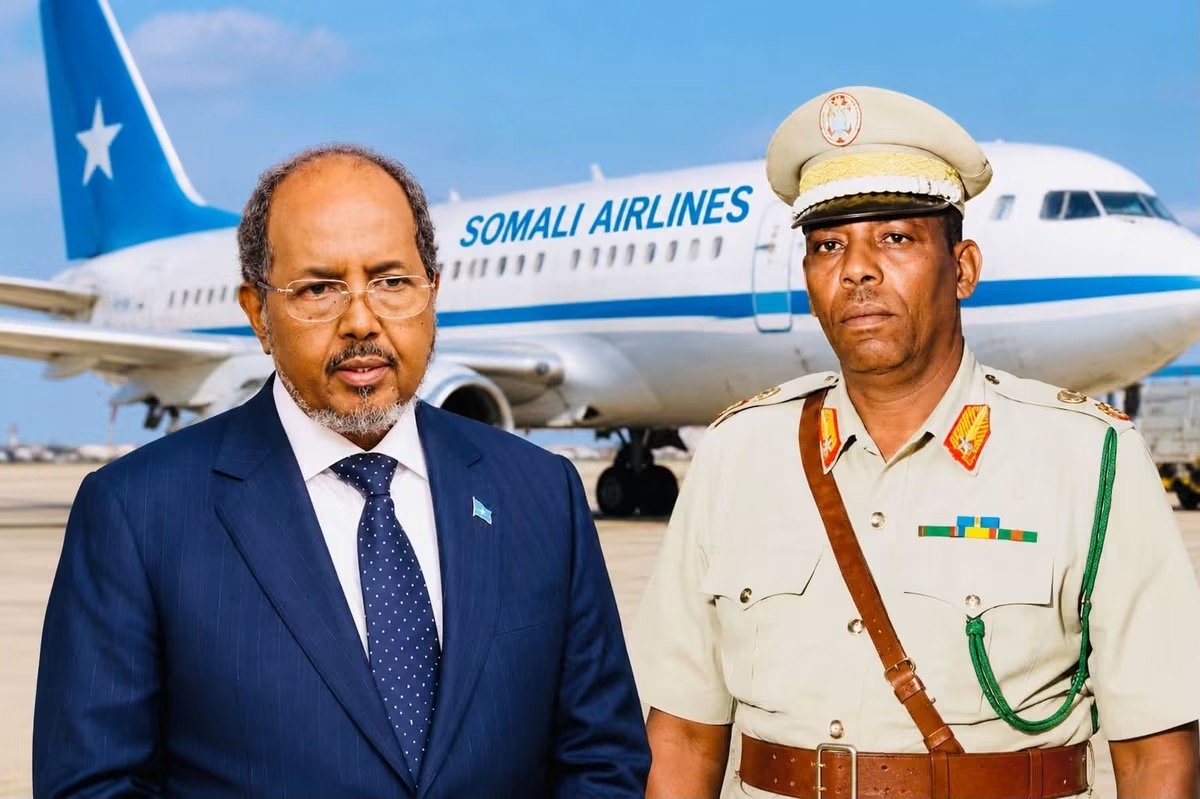
NAIROBI — A growing political debate in Mogadishu is focusing on how Somalia’s former and current leaders are viewed, following a commentary published on Facebook by journalist Abdiaziz Ahmed Barrow.
In his post, Barrow compared public perceptions of former President General Mohamed Siad Barre and current President Hassan Sheikh Mohamud, highlighting sharply different views surrounding their political records and legacies.
Supporters of the late General Mohamed Siad Barre point to his 21 years in power and highlight developments during his administration, including the expansion of national infrastructure, the establishment of a national army, state-supported education and efforts to promote Somali nationalism and state institutions. His supporters argue that his administration pursued a broader national vision and played a significant role in building state institutions.
Critics of the Barre government, however, have characterized his rule as authoritarian and have pointed to political repression and human-rights abuses during his time in power. His legacy remains deeply contested among Somalis, with different communities holding significantly different views of his government and its policies.
The discussion also extends to the current administration of President Hassan Sheikh Mohamud, who has served as president during two separate terms.
Critics of Hassan Sheikh argue that his administration has faced difficulties in extending effective government authority across the country and have raised concerns about aspects of his political record, including allegations of injustice, governance disputes, relations between the federal government and member states, and disagreements surrounding the electoral process.
His supporters, meanwhile, describe him as a democratic political leader and point to his experience in government and efforts to develop Somalia’s political institutions and democratic processes.
Barrow’s commentary raises a broader question about whether Somali political debates are sometimes influenced by clan, regional and political loyalties when evaluating the records of national leaders.
The contrasting views demonstrate how differently Somalia’s political history can be interpreted. While some focus on state-building and national institutions, others place greater emphasis on political freedoms, human rights, security and the manner in which power was exercised.
The debate remains part of a wider national discussion over Somalia’s political history, the legacy of past governments and the performance of contemporary leadership.
Rather than producing a single interpretation, the discussion highlights continued divisions in how Somali society evaluates its political leaders and the country’s experience of governance.