ADDIS ABABA — The conflict in northern Ethiopia has entered a potentially sensitive phase, with developments involving the Tigray region, the Tigray People’s Liberation Front (TPLF) and neighboring Eritrea raising questions about whether the confrontation could develop into a broader regional crisis.
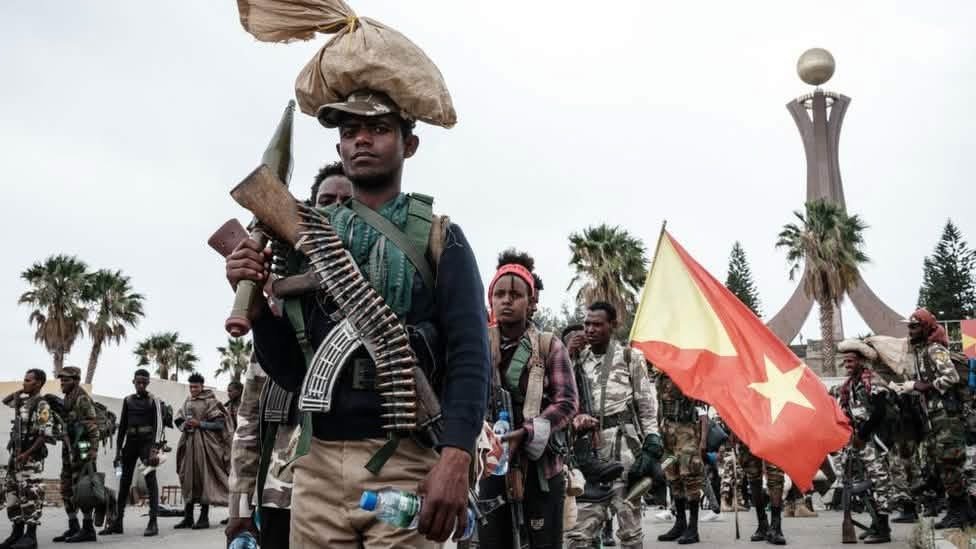
Reports and political assessments have focused on the possibility of changes in the military position of the TPLF and the direction in which its forces could move. However, battlefield claims about troop movements and the precise location of TPLF forces should be treated cautiously unless independently verified.
The situation is particularly sensitive because relations between Ethiopia and Eritrea have deteriorated significantly in recent years. Addis Ababa and Asmara have exchanged serious accusations, while tensions surrounding the Tigray conflict have remained a major source of concern in the Horn of Africa.
TPLF’s Changing Military Position
If the TPLF loses control of major urban centers and territory, its military strategy could potentially shift away from conventional warfare toward more dispersed operations.
Such a transition could involve smaller mobile units operating from difficult terrain rather than attempting to hold major cities against better-equipped government forces.
Some reports have suggested that elements associated with the TPLF could move toward areas close to the Eritrean border. The exact location, size and intentions of any such movements remain unclear and require independent verification.
If armed TPLF elements were to establish themselves close to or across the Eritrean border, however, the development could significantly complicate the security calculations of both Addis Ababa and Asmara.
Ethiopia-Eritrea Relations
Relations between Ethiopia and Eritrea remain one of the most important factors shaping the security environment in northern Ethiopia.
The two countries fought a devastating border war from 1998 to 2000 before restoring diplomatic relations in 2018. Their relationship later deteriorated again amid disagreements surrounding the Tigray war and broader regional security issues.
Ethiopia has repeatedly raised concerns about Eritrea’s military activities and alleged involvement in the Tigray conflict. Eritrea has rejected accusations that it is responsible for destabilizing Ethiopia.
The continued tension means that any significant movement of armed forces toward the border could be interpreted through a much wider strategic lens.
The Risk of Cross-Border Escalation
One of the most sensitive scenarios would arise if TPLF forces attempted to operate from territory inside Eritrea.
For Ethiopia, the presence of an armed opposition force operating from a neighboring country could be viewed as a serious security threat. For Eritrea, allowing such forces to operate from its territory could create pressure from Addis Ababa and increase the possibility of direct confrontation.
At the same time, an Ethiopian military operation across an international border would carry significant regional and diplomatic consequences.
This creates a difficult strategic dilemma for both governments.
Eritrea would have to consider whether allowing TPLF elements to remain near or inside its territory would serve its security interests or create a new confrontation with Ethiopia.
Ethiopia, meanwhile, would have to weigh the risks of allowing an armed opposition movement to reorganize against the risks associated with any cross-border military response.
Abiy Ahmed’s Strategic Challenge
For Prime Minister Abiy Ahmed, the immediate challenge would be preventing the TPLF from rebuilding its military capacity while avoiding a wider confrontation with Eritrea.
One possible approach would be to strengthen government control over territory inside Tigray, reinforce border security and rely on political and diplomatic pressure rather than immediately expanding military operations across the border.
The effectiveness of such an approach would depend partly on whether TPLF forces could establish secure areas from which they could reorganize and conduct further operations.
If a prolonged insurgency developed, the conflict could become considerably more difficult to resolve than a conventional confrontation over major towns and territory.
Isaias Afwerki’s Dilemma
Eritrean President Isaias Afwerki would face a similarly complicated calculation.
Allowing TPLF fighters to reorganize in or near Eritrea could potentially provide Asmara with additional leverage against Addis Ababa. However, an armed TPLF presence could also create a security problem of its own.
Eritrea would have to consider whether the presence of TPLF forces could eventually become difficult to control or trigger Ethiopian military action.
Any perception that Eritrean territory was being used as a base for attacks against Ethiopia could also strengthen arguments within Addis Ababa for stronger security measures along the border.
Sudan and Egypt
The conflict cannot be viewed entirely through the Ethiopia-Eritrea relationship.
Sudan and Egypt also have important strategic interests in the region.
Ethiopia and Egypt remain divided over the Grand Ethiopian Renaissance Dam (GERD), while Sudan’s prolonged internal conflict has created additional instability along Ethiopia’s western border.
There have also been allegations concerning external support for different armed groups in the region. Such accusations are politically sensitive, and claims that Sudan or Egypt are directly supporting TPLF forces should not be treated as established facts without independent evidence.
Nevertheless, developments in Tigray could have implications for the wider security environment involving Ethiopia, Sudan and Egypt.
Military Movements Under Scrutiny
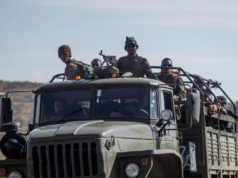
Reports of additional Ethiopian military deployments toward the north, as well as movements of logistical equipment, have attracted attention.
Some reports have referred to equipment potentially suitable for temporary bridge construction and other military engineering activities. However, the purpose of such equipment cannot be established solely from its movement.
Military deployments can serve multiple purposes, including border reinforcement, logistical preparation, defensive operations or broader contingency planning.
Therefore, the movement of troops and equipment should not by itself be interpreted as proof that Ethiopia has decided to enter Eritrean territory.
Three Possible Directions
The northern conflict could develop along several broad paths.
First, the confrontation could remain primarily within Tigray, with Ethiopian forces attempting to consolidate territorial control while TPLF elements reorganize through dispersed or insurgent-style operations.
Second, the TPLF could attempt to establish positions close to the Eritrean border, creating a more complicated security environment without necessarily producing direct conflict between Ethiopia and Eritrea.
Third, if armed operations were launched from Eritrean territory and Ethiopia responded militarily across the border, the conflict could develop into a direct interstate confrontation.
The third scenario would represent a major escalation, with consequences extending well beyond Tigray.
The Importance of Diplomacy
Regional and international actors have strong incentives to prevent Ethiopia and Eritrea from returning to direct war.
A new interstate conflict could destabilize an already fragile Horn of Africa, increase displacement, disrupt trade and create additional pressure on neighboring Sudan and Djibouti.
For that reason, diplomatic engagement between Addis Ababa and Asmara could become increasingly important if military tensions continue to rise.
The central question is whether the parties can prevent the Tigray conflict from becoming a catalyst for a broader confrontation.
For now, reports of TPLF movements toward the Eritrean border remain an area requiring careful monitoring and independent verification. The direction of the conflict will depend not only on developments inside Tigray, but also on how Ethiopia, Eritrea and other regional actors respond to any changes along the border.