BELEDWEYNE — Political tensions in Somalia’s Hiiraan region are deepening as disagreements over the Hirshabelle electoral process increasingly draw in local politicians, traditional elders, community representatives and the Federal Government.
The dispute, which initially centered on the organization and legitimacy of the Hirshabelle elections, has developed into a wider political confrontation over representation, consultation and the role of Hiiraan in determining the future leadership of Hirshabelle State.
Several Hiiraan political figures and community representatives have criticized the electoral process, arguing that major political decisions affecting the region should be based on consultation and agreement among local stakeholders. They have questioned whether the current process has secured sufficient political and public consensus.
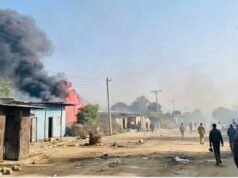
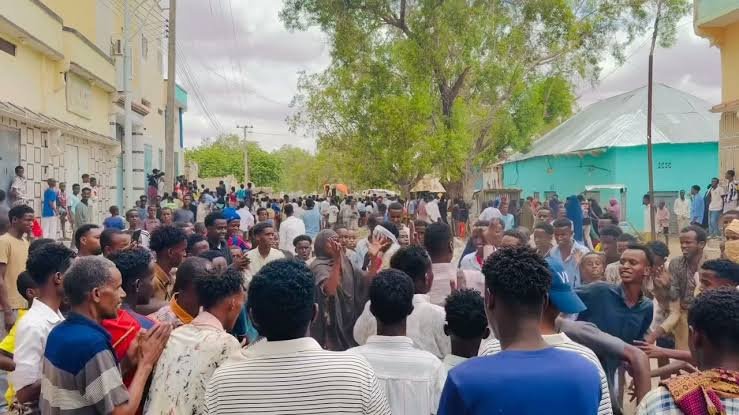
The disagreement has been particularly visible in Beledweyne, the administrative capital of Hiiraan, where demonstrations and political gatherings have been reported amid growing opposition to the electoral arrangements.
Protesters and their supporters have described the process as lacking adequate consultation, while supporters of the Federal Government maintain that the electoral process is part of efforts to establish representative institutions and advance Somalia’s broader political transition.
A Growing Challenge for Hassan Sheikh Mohamud
The dispute is also creating a difficult political environment for President Hassan Sheikh Mohamud, whose administration has made electoral reform and the expansion of political participation central elements of its political agenda.
The President now faces competing demands. Federal authorities want the electoral process to move forward, while influential figures in Hiiraan are calling for further dialogue before the process is completed.
Political opponents argue that proceeding without an agreement with major local stakeholders could increase tensions between the Federal Government and sections of the Hiiraan population.
Government supporters, however, argue that repeated delays and disagreements could prevent the country from making progress toward a more representative electoral system.
The disagreement therefore cannot be reduced simply to a contest between individual politicians. It has become a broader debate over who should determine the political future of Hirshabelle and what level of local consensus is required before an election can be considered legitimate.
Hirshabelle Leadership at the Center of the Dispute
The political contest has also focused attention on the leadership of Hirshabelle State.
The position of Hirshabelle president has become particularly sensitive because of the long-running debate over the distribution of political power between Hiiraan and Middle Shabelle.
Some Hiiraan politicians and elders have argued that the region has not received adequate political representation within Hirshabelle. They have called for arrangements that would give Hiiraan a stronger voice in the state’s leadership and institutions.
Supporters of the existing political structure argue that Hirshabelle is a federal member state and that its political institutions should continue to operate within the constitutional framework governing Somalia’s federal system.
These competing positions have made the electoral process increasingly difficult to separate from the larger debate over the future structure of Hirshabelle.
From Political Disagreement to Public Mobilization
What began largely as negotiations among political actors has increasingly moved into the public sphere.
Demonstrations in Beledweyne have provided a visible expression of dissatisfaction with the electoral process. Participants have called for greater consultation and have objected to what they describe as decisions being made without sufficient participation from the local population.
The demonstrations have also increased pressure on political leaders to respond to public concerns rather than treating the issue solely as an internal dispute among politicians.
If political disagreements continue while the electoral process moves forward, there is a possibility that the dispute could become more difficult to resolve through conventional negotiations.
Federal Government Faces a Delicate Balance
The Federal Government now faces the challenge of balancing two competing objectives: maintaining the momentum of the electoral process while preventing political disagreements in Hiiraan from escalating further.
A decision to proceed without addressing the concerns raised by local political actors could deepen mistrust, while delaying the process could create new disputes over electoral timelines and political arrangements.
The situation also carries implications beyond Hirshabelle. Somalia’s federal political system depends heavily on negotiations among the Federal Government, federal member states, political parties, traditional leaders and local communities.
Disputes over elections therefore often become debates about the broader balance of power between Mogadishu and the federal member states.
Calls for Dialogue
Against this backdrop, political stakeholders in Hiiraan are increasingly calling for dialogue and a negotiated settlement.
A political agreement involving the Federal Government, Hirshabelle authorities, Hiiraan politicians, traditional elders and other relevant stakeholders could help address concerns over representation and participation.
The central question is now whether the parties can reach sufficient agreement to allow the electoral process to proceed without further escalation.
For President Hassan Sheikh Mohamud, the developments in Hiiraan represent a significant political challenge. The outcome will depend not only on the conduct of the elections, but also on whether the different political and community actors believe that their concerns have been heard and incorporated into the process.
For Hiiraan, the dispute is no longer simply about who wins an election. It is increasingly about political representation, local participation, federalism and the process through which the region’s political future is determined.