MOGADISHU — President Hassan Sheikh Mohamud’s recent diplomatic engagements in the Horn of Africa have drawn criticism from some Somali commentators, who question the direction and consistency of his foreign policy.
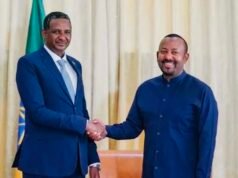
The criticism follows the president’s September 29 working visit to Addis Ababa, where he met Ethiopian Prime Minister Abiy Ahmed to discuss bilateral relations, regional security and cooperation. Somalia’s government described the visit as part of efforts to strengthen relations and regional stability.
The latest debate intensified after Hassan Sheikh said Somalia does not oppose Ethiopia obtaining commercial access to the sea, provided that any arrangement is negotiated between the two countries and remains under Somali sovereignty. He said Somalia could potentially allow Ethiopia to use two or three Somali ports for imports and exports.
Critics have interpreted the rapid sequence of diplomatic engagements as evidence of an unclear foreign-policy direction. One Somali political commentator described the president’s approach as changing rapidly, saying:
“Hassan’s policy is astonishing. Yesterday he was in Ethiopia, today he signed an agreement that harms us, and tomorrow he is leaving again. He has turned the country’s foreign policy into a muddle.”
The statement is a political criticism rather than an independently established assessment. No evidence was found in the sources reviewed showing that Hassan Sheikh signed a new agreement during the period described that formally ceded Somali sovereignty or territory to Ethiopia.
In fact, the publicly reported position of the Somali government remains that any Ethiopian maritime access must operate under Somalia’s sovereignty. The framework is linked to the Ankara Declaration, which calls for mutually beneficial commercial arrangements while reaffirming the sovereignty and territorial integrity of both countries.
Regional Diplomacy Under Pressure
The president’s diplomacy comes at a particularly sensitive moment for the Horn of Africa. Ethiopia is facing renewed conflict in Tigray, while relations between Addis Ababa and Eritrea have sharply deteriorated. The African Union has urged the countries involved to exercise restraint amid concerns that the crisis could expand beyond Ethiopia’s borders.
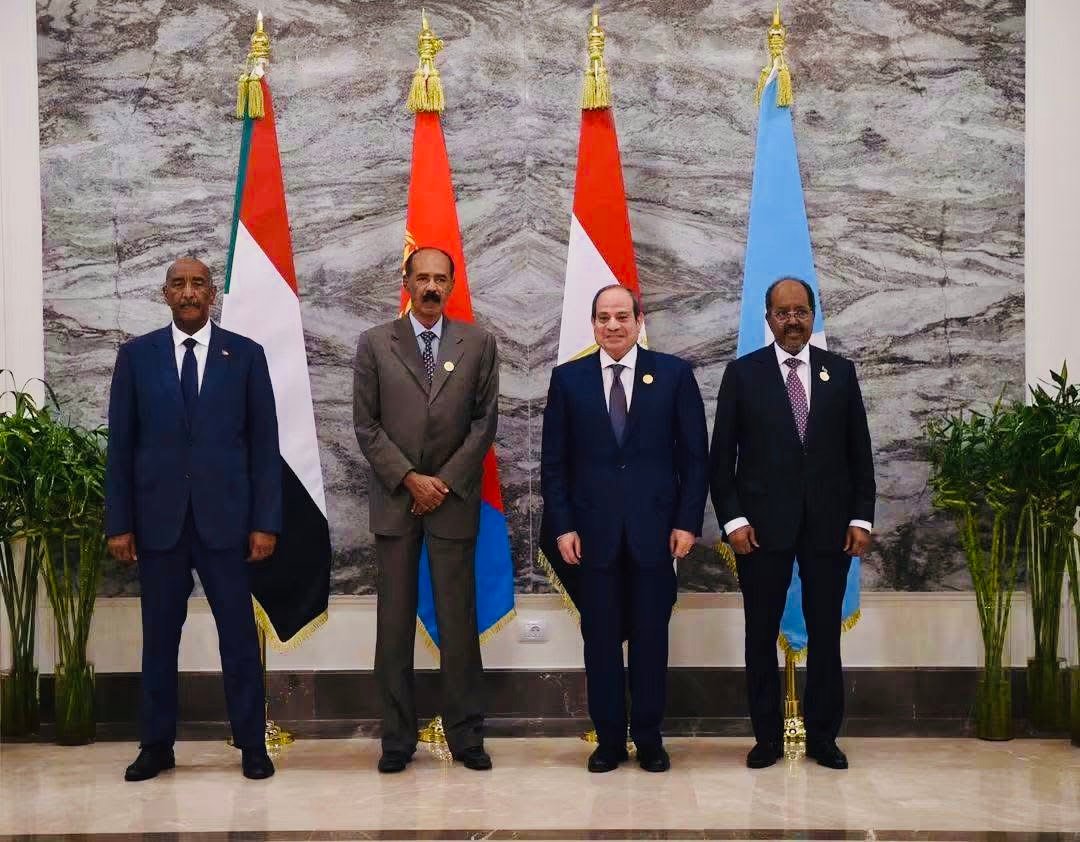
Somalia is simultaneously strengthening its relations with Ethiopia while maintaining close security and diplomatic ties with Egypt and other regional partners. On October 3, Hassan Sheikh met Egyptian President Abdel Fattah el-Sisi, with the two sides discussing bilateral relations and security and stability in the Horn of Africa, Gulf of Aden, Bab el-Mandeb and Red Sea.
The competing diplomatic relationships have placed Somalia at the center of a rapidly changing regional environment, where maritime access, security partnerships and the political crisis in Ethiopia are increasingly interconnected.
For President Hassan Sheikh’s government, the challenge will be to demonstrate that its diplomatic outreach can protect Somalia’s sovereignty while also maintaining working relationships with neighboring states and major regional powers.