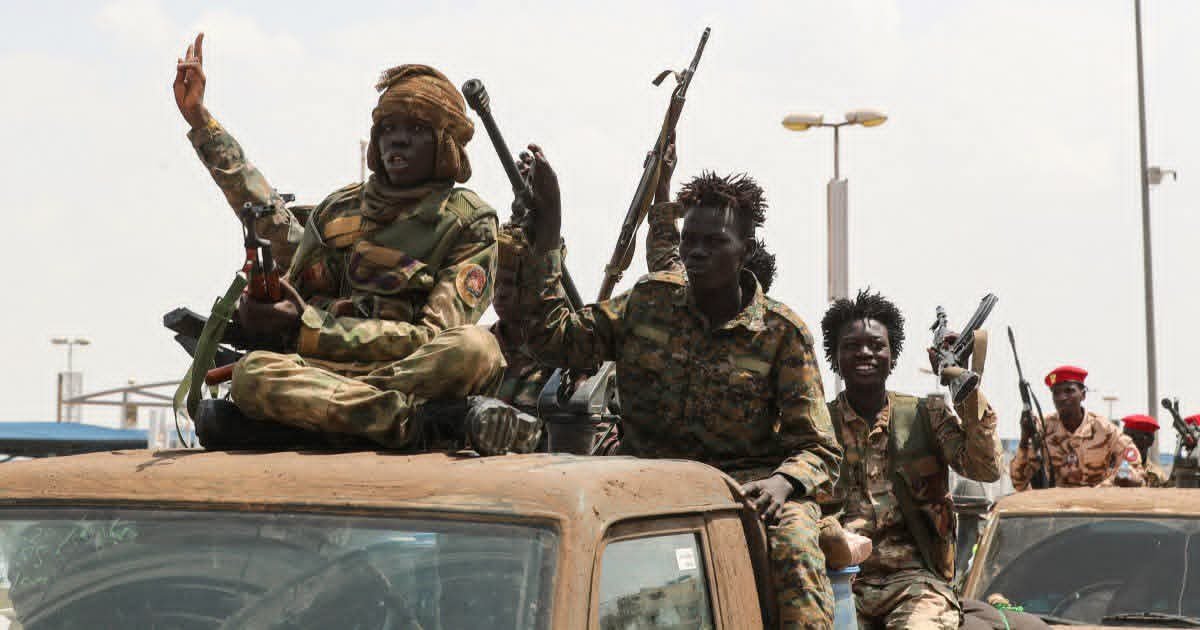
GENEVA — The United Nations Human Rights Council has strongly condemned attacks against civilians in Sudan, particularly airstrikes and drone attacks targeting civilian areas, and called on the warring parties to immediately end the conflict.
The 47-member council on Monday adopted a resolution extending the mandate of the independent international fact-finding mission investigating alleged human rights violations and abuses in Sudan.
The resolution was supported by 28 countries, while 10 voted against and nine abstained.
The council called for an immediate, comprehensive and unconditional ceasefire, as well as the establishment of an independent mechanism to monitor compliance with any ceasefire agreement.
It also called for the restoration of essential infrastructure and basic services that have been severely damaged by the war.
Growing civilian casualties
The Human Rights Council expressed particular concern over indiscriminate attacks against civilians, including airstrikes and drone operations that have reportedly caused large numbers of civilian casualties and damaged hospitals, schools and other critical facilities.
According to UN figures cited in the discussion, drone attacks alone killed more than 1,100 people during the first five months of 2026.
The figures underscore the growing risks faced by civilians as fighting continues between the Sudanese Armed Forces (SAF) and the paramilitary Rapid Support Forces (RSF).
War enters its fourth year
The conflict erupted in April 2023 following a power struggle between the Sudanese army and the RSF.
More than three years of fighting have resulted in tens of thousands of deaths and forced more than 13 million people to flee their homes, creating one of the world’s largest displacement crises.
Millions of Sudanese are also facing severe food insecurity, limited access to healthcare and the collapse of essential public services.
Concern over foreign involvement
The Human Rights Council also raised concerns about external involvement in the conflict, including illicit financial networks, weapons transfers and the presence of foreign fighters.
UN officials have repeatedly warned that the flow of weapons and external support to the warring parties risks prolonging the conflict and making a negotiated political settlement more difficult.
El Fasher and allegations of mass atrocities
The independent UN fact-finding mission has previously raised serious concerns over developments in El Fasher, a major city in Sudan’s Darfur region.
Investigators reported that civilians were subjected to prolonged restrictions on access to food and medicine during the siege of the city. They also documented allegations of mass killings, ethnically motivated violence and sexual violence.
The investigators said the pattern of violence reported during the assault on El Fasher contained elements that they characterized as genocidal, underscoring the severity of the humanitarian situation in Darfur.
Calls for a political solution
The latest resolution comes as Sudan’s war enters its fourth year with no clear military solution in sight.
The UN Human Rights Council said the conflict cannot be resolved through military means and urged the warring parties to return to a political process.
The council also called for greater international efforts to protect civilians, facilitate humanitarian access and hold perpetrators of serious violations accountable.
For millions of Sudanese civilians, however, the immediate priority remains an end to the fighting, the restoration of basic services and safe access to food, medicine and humanitarian assistance.