
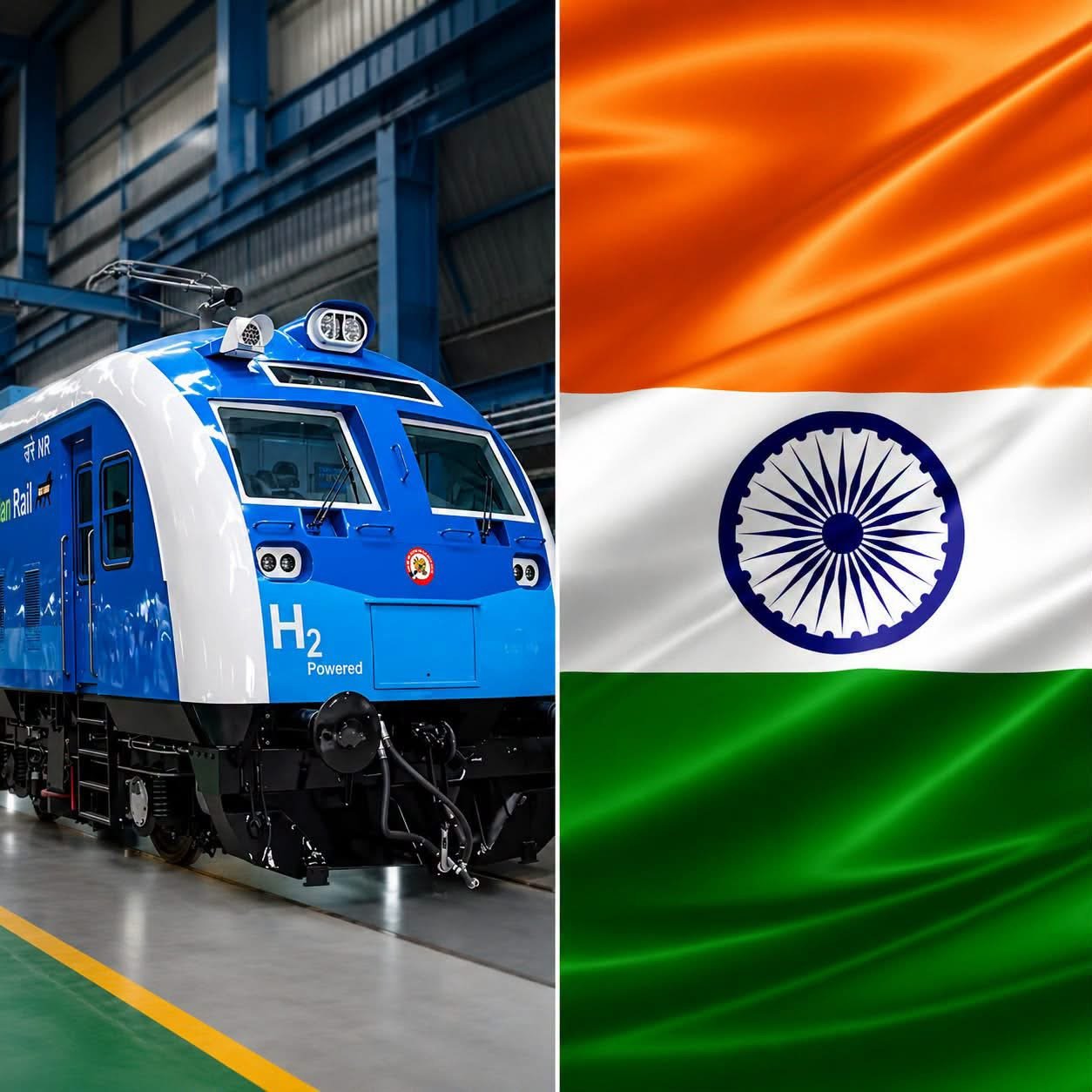
NEW DELHI — India is preparing to launch its first hydrogen-powered, zero-emission passenger train, marking a significant milestone in the country’s efforts to transform its transportation sector and reduce reliance on conventional fossil fuels.
The hydrogen-powered train is expected to begin operations on the Jind–Sonipat route in Haryana, becoming one of India’s first major railway projects to use hydrogen fuel technology. The train has the capacity to carry up to 2,600 passengers, offering a cleaner alternative to traditional diesel-powered locomotives.
Unlike diesel trains, which release carbon emissions and contribute to air pollution, hydrogen trains generate electricity through hydrogen fuel cells, producing mainly water vapor as a byproduct. The technology is designed to reduce greenhouse gas emissions and support India’s long-term goal of expanding environmentally sustainable transport.
Indian officials have described the project as part of a broader strategy to modernize the country’s massive railway network, one of the largest in the world. The government has been investing heavily in railway electrification, renewable energy, and green technologies as part of its efforts to achieve cleaner growth.
The introduction of hydrogen-powered trains is expected to have environmental benefits, particularly in regions where air pollution remains a major public health concern. By reducing the use of diesel fuel, the technology could help lower emissions from the transport sector and improve air quality.
The project also reflects India’s growing interest in developing a hydrogen economy. The country has launched initiatives aimed at increasing the production and use of green hydrogen, which is produced using renewable energy sources such as solar and wind power.
Energy experts say hydrogen trains could become especially useful on railway routes where full electrification is difficult, costly, or technically challenging. They point out that hydrogen technology provides an alternative solution for reducing emissions while maintaining efficient rail services.
However, analysts also highlight several challenges, including the high cost of hydrogen production, the need for specialized refueling infrastructure, and the importance of ensuring that hydrogen is produced from clean energy sources to maximize environmental benefits.
India’s move follows similar efforts by countries such as Germany, China, and Japan, which have been testing hydrogen-powered rail technology as part of global efforts to reduce transport emissions.
The launch of the Jind–Sonipat hydrogen train will serve as a test case for India’s future expansion of clean railway technology. If successful, the project could lead to the introduction of more hydrogen-powered trains across additional routes, supporting India’s ambition to build a greener and more sustainable transportation system.
The initiative represents a broader shift in global transportation, where governments are increasingly looking beyond traditional fuels and investing in cleaner technologies to address climate change and energy security challenges.