
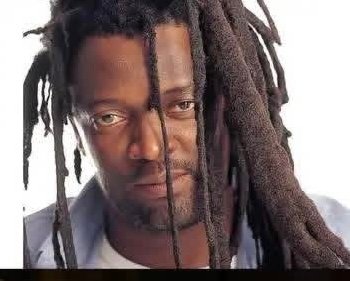
PRETORIA – South African reggae legend Lucky Dube, one of Africa’s most successful and internationally celebrated musicians, was tragically killed on October 18, 2007, in Johannesburg during an attempted carjacking that shocked the country and the global music community.
Dube, who had built a worldwide reputation through his powerful reggae music and messages of peace, justice, and social change, had just dropped off two of his children at a relative’s home in Rosettenville, Johannesburg, when armed criminals approached him while he was driving his luxury Chrysler 300C.
According to court records, the attackers attempted to hijack his vehicle. During the incident, Dube was shot twice and lost control of the car, which later crashed into a tree. Despite efforts to save him, the 43-year-old musician died at the scene.
The killing sparked widespread grief across South Africa and beyond, with fans, fellow musicians, and leaders mourning the loss of an artist whose music had become a symbol of hope and resistance.
During the 2009 murder trial, a key state witness told the court that one of the attackers had admitted he did not recognize Dube and mistakenly believed he was a Nigerian national. The attacker reportedly said he “did not see it was him (Lucky Dube),” suggesting that the criminals were targeting him based on assumptions rather than his identity as a famous musician.
Evidence presented during the trial showed that the suspects were primarily interested in stealing the expensive vehicle and were unaware that their victim was one of Africa’s biggest music stars. They reportedly learned who they had killed only after seeing television news coverage of the incident.
Three men — Sifiso Mhlanga, Mbuti Mabe, and Julius Gxowa — were later convicted of Dube’s murder and other related crimes in 2009. The court sentenced each of them to life imprisonment.
Born in 1964, Lucky Dube began his music career as a young performer and later became a pioneer of African reggae. His songs, including messages against violence, oppression, and inequality, earned him international recognition and millions of fans across Africa, Europe, and other parts of the world.
More than a decade after his death, Lucky Dube’s music continues to inspire new generations. His legacy remains closely associated with unity, social justice, and the belief that music can be a powerful force for positive change.