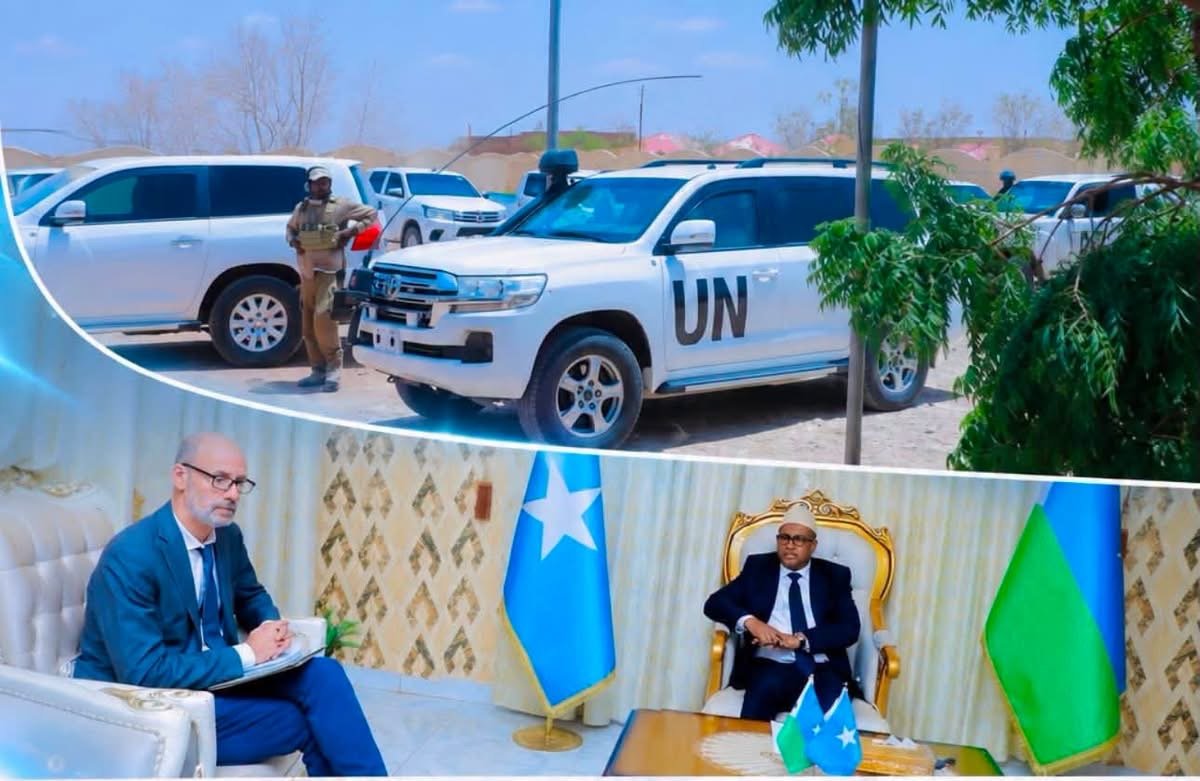
LASANOD — The emergence of the Northeast State Administration reflects a growing political and social movement driven by the aspirations, determination and collective efforts of communities seeking to establish a representative and functioning regional administration.
Supporters of Northeast State argue that state-building is not simply about creating institutions or drawing administrative boundaries. They say it is a process built through public participation, political organization, community solidarity and a shared vision for the future.
From its early stages, the administration faced political challenges and uncertainty. Despite these difficulties, supporters maintained their commitment to establishing institutions capable of representing the interests and priorities of the local population.
The development of Northeast State has been closely linked to local mobilization and public support. Community leaders and political actors have emphasized the importance of unity and cooperation in maintaining the administration and strengthening its institutions.
The process has also involved navigating political disagreements, competing interests and opposition from different actors. Supporters say the ability to distinguish between political differences, legitimate interests and broader challenges has been important to the administration’s development.
For a considerable period, some observers and international stakeholders viewed the area primarily through the lens of political disputes and instability.
There were questions over whether the emerging administration would be able to survive political pressure, consolidate its institutions and establish itself as a sustainable political entity.
Supporters of Northeast State argue that some of these assessments underestimated the determination of the local population and the strength of the social forces behind the administration.
Developments in the region have since presented a more complex picture.
The continued political organization and community participation have helped Northeast State develop its administrative structures and strengthen its political presence.
Its supporters say the experience demonstrates that political realities cannot always be determined by external expectations or assumptions.
The experience of Northeast State also highlights a broader lesson about institution-building: institutions become sustainable when communities participate in them, support them and continuously work to strengthen them.
Supporters say the administration’s development is the result of years of perseverance, unity, political mobilization and a desire among communities to have a greater role in determining their political future.
While political disagreements remain, the emergence of Northeast State has become an important development in the evolving political landscape of Somalia.