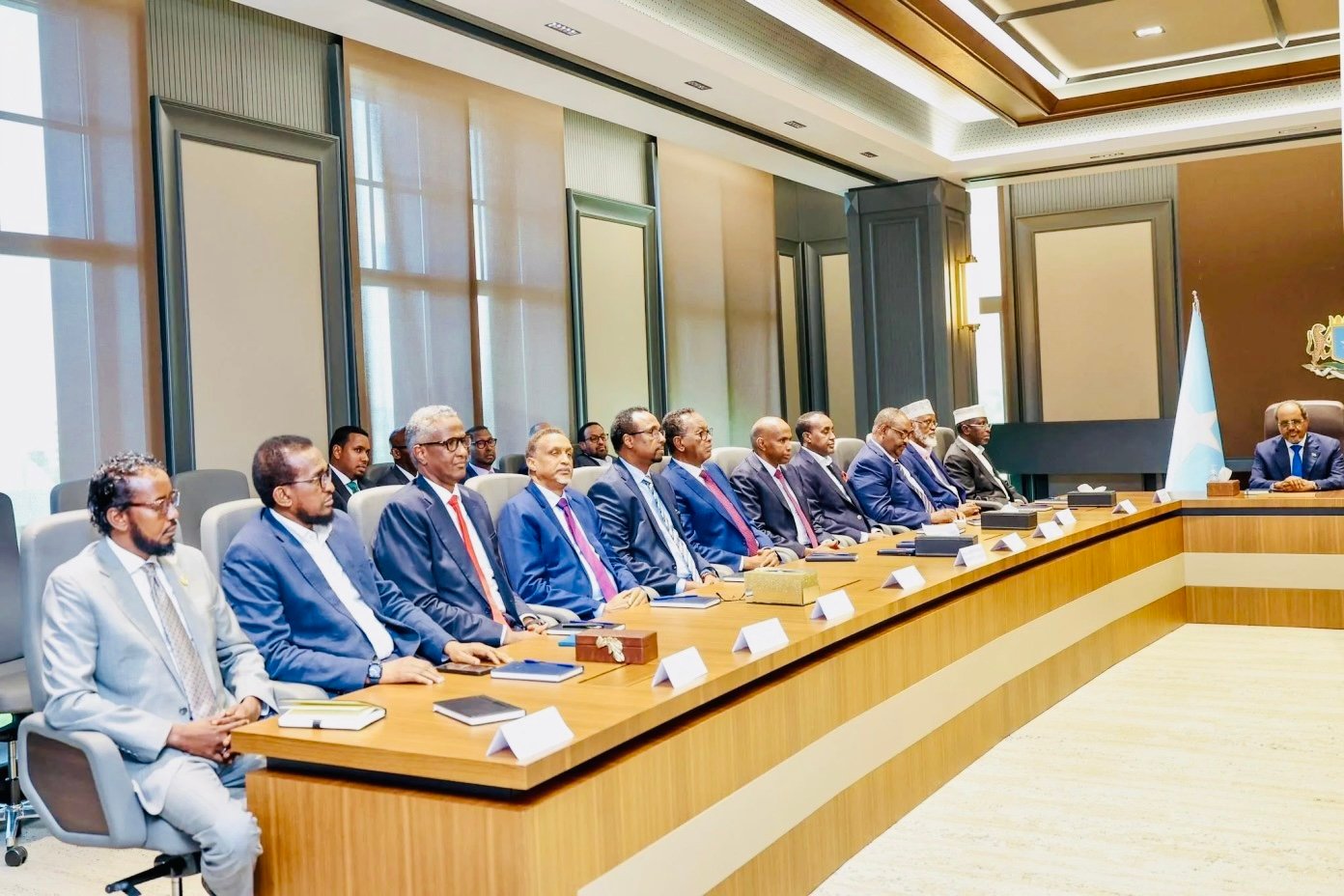
MOGADISHU — A key Somali opposition bloc said on Tuesday it has yet to decide whether to attend a consultative meeting called by President Hassan Sheikh Mohamud, underscoring deepening political tensions ahead of a critical electoral deadline.
The Somali Future Council said it remained skeptical of the initiative and was still reviewing the invitation to participate in the May 10 meeting in Mogadishu, a gathering the presidency has described as crucial for determining the country’s political direction.
“We are still considering how to respond. We believe the president may not be sincere and could have other intentions, but no final decision has been made,” said Abdirahman Dheere, a former lawmaker speaking on behalf of the group.
Mr. Dheere indicated that mistrust between the opposition and the government remains a major obstacle, pointing to what he described as a lack of transparency in previous political processes and disagreements over how future elections should be organized. He added that the council has been holding a series of internal consultations aimed at consolidating a unified opposition position.
According to Dheere, the council is working on an alternative electoral framework that it intends to present publicly in the coming days. While details remain limited, opposition figures have previously criticized proposals that could centralize control of elections, arguing instead for a more inclusive, consensus-based model involving federal member states and broader stakeholder participation.
The presidency, however, has framed the proposed May 10 talks as part of wider consultations with political leaders, civil society actors, and regional representatives. Officials say the meeting is intended to address key national priorities, including the electoral model, constitutional issues, and the overall political transition as the country approaches a sensitive period.
Somalia’s electoral process has long been a source of contention, with disagreements often centering on whether to maintain an indirect, clan-based system or transition toward a one-person, one-vote model. Efforts to reform the system have repeatedly faced delays due to security challenges, logistical constraints, and political disputes among federal and regional actors.
International partners, including the United Nations, the United Kingdom, and the European Union, have welcomed the initiative and urged all sides to engage constructively. In recent statements, they emphasized the importance of dialogue and compromise to avoid a political vacuum and ensure a credible and peaceful transition.
Diplomatic sources say there are growing concerns within the international community about the lack of agreement on an electoral framework, warning that continued delays could undermine stability in a country still facing security threats from armed groups and ongoing humanitarian challenges.
The current political uncertainty is heightened by the approaching end of President Mohamud’s term on May 15. With no consensus yet reached on the timing, structure, or legal framework for the next elections, analysts warn that Somalia could face a constitutional and political impasse if stakeholders fail to agree on a clear path forward.
For many observers, the May 10 meeting is seen as a critical test of whether Somalia’s political leaders can bridge their differences and avoid a repeat of past crises, where delayed elections and contested processes led to prolonged instability.