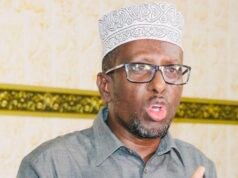
STOCKHOLM — Sweden’s 2026 parliamentary election has highlighted the growing political participation of citizens of Somali origin, with Somali-born politician Mursal Isa poised to enter the country’s 349-member Riksdag after the Green Party secured a parliamentary seat in Dalarna.
Isa, who arrived in Sweden from Somalia in 2003, is at the top of the Green Party’s list in Dalarna. The party’s return to the Riksdag from the constituency means Isa is in line for the seat, although the final outcome depends on the preferential vote count.
His political journey reflects the participation of Sweden’s Somali community in the country’s public institutions. After arriving in Sweden, Isa became involved in community work, adult education and politics and later took on political responsibilities at the regional level in Dalarna.
If confirmed, his election would add another Somali-born voice to Sweden’s national political landscape.
He would also join a political tradition already represented by Leila Ali Elmi, a Green Party politician born in Ethiopia to Somali parents, who has served in the Swedish Parliament since 2018.
The development comes as Sweden undergoes a significant political transition following the September 13 parliamentary election. The final count gave the centre-left opposition 176 seats in the 349-member Riksdag, compared with 173 seats for the parties supporting the outgoing conservative-led government.
Prime Minister Ulf Kristersson subsequently resigned, and Sweden’s parliamentary speaker has begun the process of consultations on forming a new government. Opposition leader Magdalena Andersson has been asked to explore the possibility of forming a government.
The election campaign was dominated by major national issues, including immigration, integration, crime, the economy and Sweden’s future political direction. Immigration and integration were particularly significant issues in communities with large populations of people with migrant backgrounds.
For Sweden’s Somali community, the growing presence of politicians with Somali backgrounds represents a shift toward greater participation in the country’s formal political institutions.
Their involvement also provides a channel through which issues affecting immigrant communities can be raised in national political debates, while elected politicians remain accountable to the broader Swedish electorate rather than to any single ethnic or community group.
Sweden’s electoral system allows citizens to participate in parliamentary politics through political parties and elections. The Riksdag has 349 seats, and candidates can be elected through party lists as well as personal preference votes.
The new Riksdag is scheduled to take office on September 28, 2026, beginning the new four-year parliamentary period.
The developments involving Somali-origin politicians come against a wider transformation in Sweden’s political landscape, where immigrant communities are increasingly visible not only as voters but also as participants in political parties, local government and national institutions.
For many members of Sweden’s Somali community, the emergence of politicians such as Mursal Isa represents a significant moment in their participation in the country’s democratic process.