MOGADISHU — Somalia’s growing political dispute between the Federal Government and opposition leaders is unfolding against the backdrop of renewed international attention, with the United Nations Security Council expected to hold a private meeting in November focusing on the African Union Support and Stabilization Mission in Somalia (AUSSOM).
According to the November 2026 forecast by Security Council Report, the Council is expected to discuss AUSSOM’s operations, funding challenges and future in Somalia. The meeting comes at a particularly sensitive moment, as the country continues to face political disagreements over constitutional amendments, electoral arrangements and the relationship between the Federal Government and opposition forces.
Political disagreements raise international concerns
The political standoff between President Hassan Sheikh Mohamud’s administration and opposition groups, operating under the Somali Future Council, remains unresolved despite several rounds of negotiations.
Major disagreements include constitutional changes, the presidential term, the electoral framework and the need for an inclusive political agreement.
The African Union Commission has previously expressed concern over the failure of negotiations between the two sides, urging Somali political leaders to return to meaningful dialogue and reach a compromise in the interest of national stability.
The continuing disagreement has raised questions about the country’s political direction and the ability of its institutions to maintain a unified approach to national priorities.
AUSSOM’s future and funding challenges
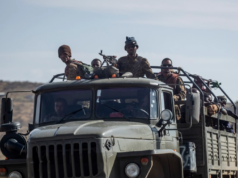
Beyond the political dispute, the Security Council is expected to examine the operational and financial challenges facing AUSSOM, which plays a central role in supporting Somali security forces in the fight against Al-Shabaab.
The mission is also facing significant funding constraints, raising concerns about its long-term sustainability and the possibility of a security gap if international support is not maintained.
Under Security Council Resolution 2809 (2025), AUSSOM’s authorisation runs until 31 December 2026, with the mission authorised to deploy up to 11,826 uniformed personnel, including police officers.
The November discussions could therefore prove important in shaping international decisions on the mission’s resources, operational arrangements and future mandate.
Somalia faces a critical political and security moment
The timing of the expected meeting is particularly significant because Somalia is navigating political tensions while continuing military operations against Al-Shabaab.
International partners have repeatedly emphasised that security progress requires political stability, functioning institutions and cooperation between federal and regional authorities.
There are also concerns that prolonged political disagreements could complicate coordination between the Federal Government, federal member states and international security partners.
For Somalia, the challenge is not limited to maintaining military operations. It also involves reaching a political understanding capable of strengthening national institutions and ensuring that the country’s security transition proceeds without major disruptions.
What comes next?
The November Security Council meeting is expected to provide an important opportunity for international representatives to assess AUSSOM’s situation and the broader challenges facing Somalia.
Although the meeting is specifically focused on the African Union mission, Somalia’s political crisis remains an important part of the wider environment in which international security operations are taking place.
The central question facing Somali leaders and international partners is whether political dialogue can produce a sustainable agreement before unresolved disagreements begin to undermine security coordination and the country’s broader state-building efforts.
As Somalia approaches another important phase in its political and security transition, the international community will be watching closely to see whether its leaders can overcome their differences and establish a common national direction.