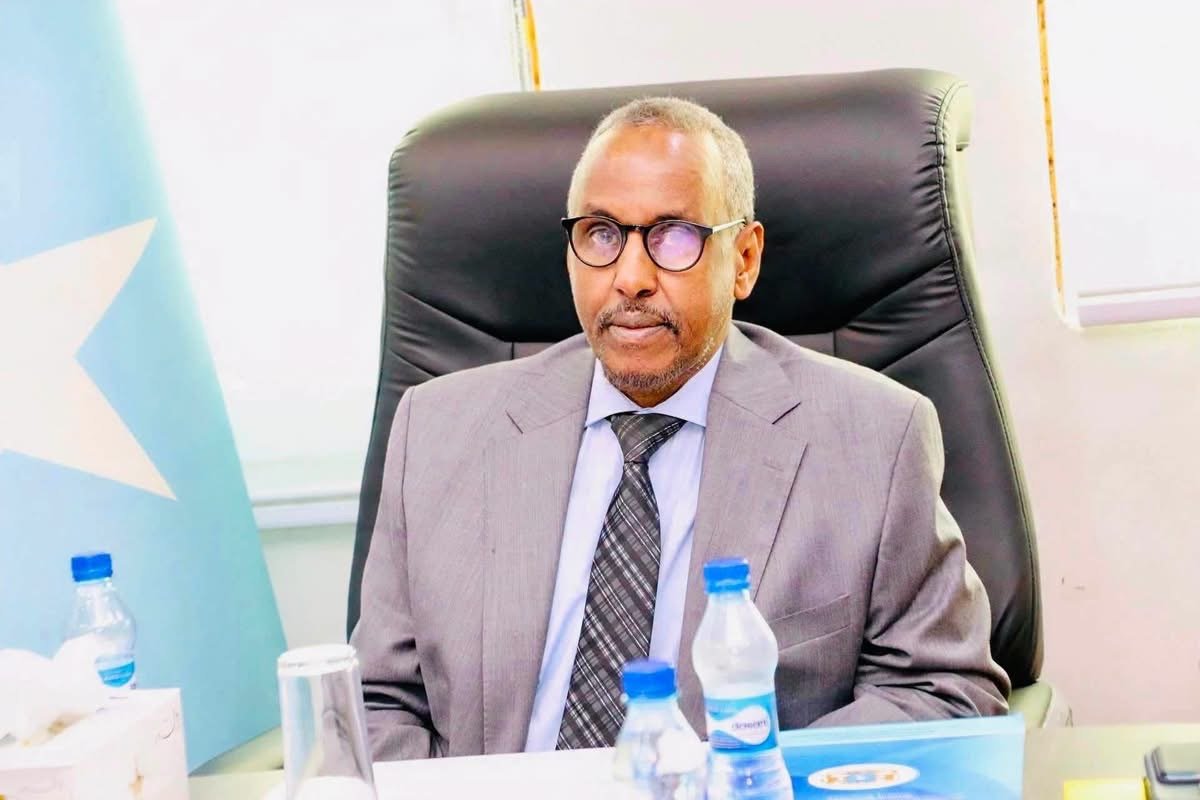
MOGADISHU — The Election Committee for the Speaker of Somalia’s House of the People has officially issued certificates of candidacy to two lawmakers, Abdulqadir Mohamed Nur (Jaamac) and Abdulqadir Omar Macallin (Daada), as the race for the parliamentary leadership enters a decisive stage.
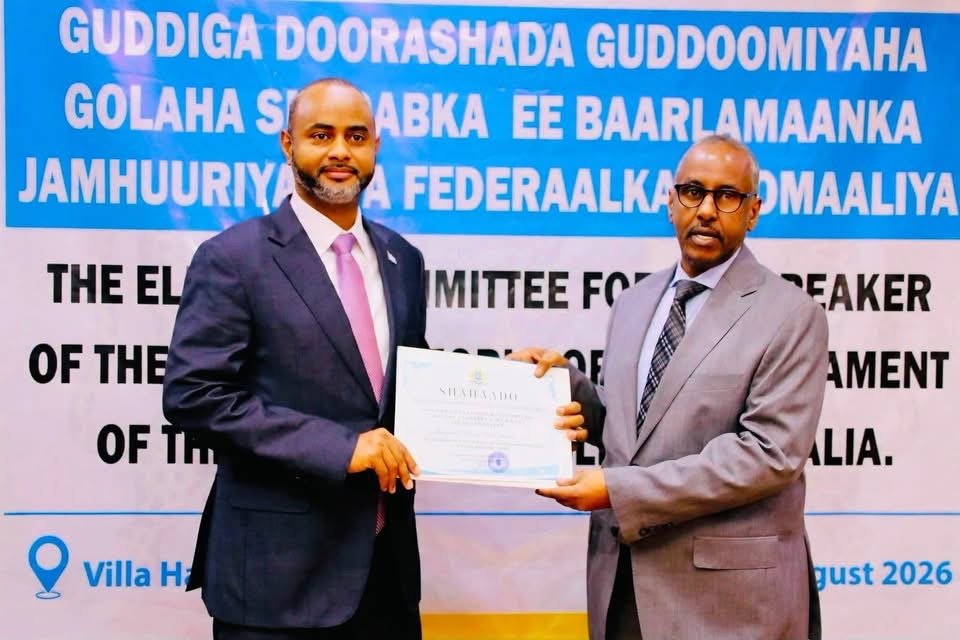
The certificates were issued on Saturday, August 8, 2026, during a meeting of the election committee at its office in Villa Hargeysa.

The committee confirmed that both candidates had completed the required registration procedures, submitted the necessary documentation and fulfilled the eligibility requirements for the speakership contest.
The election is scheduled to take place on Monday, August 10, 2026, according to the timetable previously announced by the committee.
Candidate registration opened on August 5 and closed on August 6, while the issuance of candidate certificates was scheduled for August 8. The election itself is set for August 10.
Candidate Requirements
Under the election rules, candidates must be sitting members of the House of the People and at least 35 years old, alongside other requirements established by the election committee.
Candidates are also required to declare their assets and, if elected, renounce any other nationality in accordance with the applicable rules.
The registration fee is set at $30,000 for male candidates and $15,000 for female candidates, with the fees described as non-refundable.
The election committee consists of nine members and elected MP Abdirizak Omar Mohamed as its chairman during its inaugural meeting on August 3.
The committee was appointed by Acting Speaker Sacdiya Yaasin Haaji Samatar to oversee the election process. Samatar assumed the acting speakership following the resignation of former Speaker Sheikh Aden Mohamed Nur (Madobe), who left the position after becoming President of South West State.
Political Competition
The speakership election is taking place at a politically sensitive moment for Somalia’s federal institutions.
The position has remained vacant since Madobe’s resignation, with Sacdiya Yaasin Haaji Samatar serving as acting Speaker. Her appointment marked a historic moment as she became the first woman to preside over Somalia’s House of the People.
The race has attracted considerable political attention, with several political figures reportedly considering or pursuing the position.
State Minister for Interior Saadad Mohamed Nur (Caliyow) previously resigned from his government position to pursue the speakership, while reports have also indicated political support from Villa Somalia for Abdulqadir Mohamed Jaamac.
With Jaamac and Daada now officially certified, the competition has entered a more formal stage. However, the possibility of additional candidates remains, as the election committee has reportedly continued processing applications.
The incoming Speaker will inherit a significant parliamentary agenda, including debates over constitutional reforms, electoral arrangements, security, governance and the relationship between Somalia’s federal institutions and member states.
Concerns Over the Election Process
Despite the formal progress made by the election committee, the speakership contest has also attracted criticism over the cost and structure of the electoral process.
The registration fee of $30,000 for male candidates and $15,000 for female candidates has been criticized as potentially excluding lawmakers who may have the political qualifications but lack access to substantial financial resources.
Critics argue that such high fees could reinforce the perception that senior political positions are more accessible to wealthy candidates or politicians backed by powerful political networks.
The short electoral timetable has also raised questions. With registration opening on August 5, closing on August 6 and the election scheduled for August 10, candidates have limited time to campaign, consult lawmakers and present their platforms.
Another major issue is Somalia’s clan-based political power-sharing system. Critics argue that the continued use of the 4.5 formula can place significant emphasis on clan representation when determining access to senior political positions, potentially limiting competition based on qualifications, experience and policy priorities.
Supporters of the current system, however, argue that clan-based power-sharing remains an important mechanism for maintaining political balance and preventing the exclusion of major Somali communities from national institutions.
The election committee’s formal procedures provide a framework for the contest, but the credibility of the process will ultimately depend on whether lawmakers are able to make their choices freely and whether candidates can compete on relatively equal terms.
The international community and Somali civil society are likely to closely follow the election, particularly given the importance of the Speaker’s position and the broader political transition facing Somalia.
The next Speaker will be expected to lead Parliament through potentially consequential debates on constitutional reform, elections, security and governance while maintaining the independence and credibility of the House of the People.
The August 10 vote will therefore be more than a contest between individual lawmakers. It will also serve as an important test of Somalia’s parliamentary procedures, political inclusivity and ability to conduct competitive leadership elections within its federal system.