MOGADISHU — The decision of Somali federal government to extend political recognition to the Khaatumo administration while withholding similar status from the Hiiraan region has reignited debate over the country’s federal model and the criteria used to establish new regional states.
The move has highlighted what analysts describe as the uneven and politically driven nature of Somalia’s state-building process, where constitutional provisions remain loosely defined and open to interpretation.
Since adopting federalism in 2004, Somalia has established several member states, including Puntland, Jubbaland, Galmudug, and South West State. These entities hold formal representation in national institutions. However, the framework for creating new states has never been fully codified, leaving recognition decisions largely dependent on political consensus in Mogadishu.
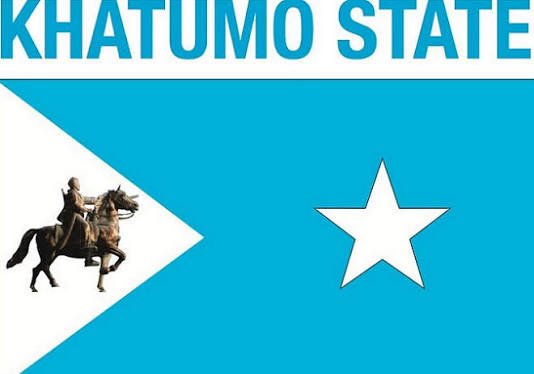
Khaatumo’s recognition followed a major shift in the Sool region in 2023, when local forces expelled Somaliland troops from Laascaanood after months of fighting. The ensuing vacuum allowed local elders and political actors to push for formal alignment with the federal government.
Federal authorities, including Prime Minister Hamza Abdi Barre, moved quickly to endorse the administration politically, despite the absence of a completed constitutional process. The decision effectively brought Khaatumo into Somalia’s federal framework.
Analysts say the move carries both political and strategic significance, strengthening Mogadishu’s position in a disputed territory and challenging claims by Somaliland, which declared independence in 1991 but is not internationally recognised.
By contrast, Hiiraan region in central Somalia has not received comparable recognition, despite recurring calls from some local leaders for a separate federal state. Hiiraan remains part of Hirshabelle, a regional administration that has faced internal political tensions over governance and power-sharing.
Local grievances in Hiiraan include allegations of marginalisation and unequal resource distribution. However, efforts to formalise a separate state have not gained traction at the federal level.
Observers point to several factors behind the differing outcomes, including security dynamics, political feasibility, and concerns that further fragmentation in central Somalia could destabilise the already fragile federal arrangement.
Some analysts also suggest that recognising Hiiraan could trigger similar demands in other regions, complicating Somalia’s efforts to maintain a manageable federal structure.
The contrasting cases have fuelled criticism that Somalia’s federalisation process lacks clear legal benchmarks and transparency, with decisions often shaped by shifting political priorities rather than established criteria.
Government officials and supporters argue that each case must be assessed individually, taking into account local conditions, security realities, and broader national interests.
Despite this, the absence of a clearly defined framework for state formation continues to raise questions about consistency and long-term stability.
For now, Khaatumo moves forward under federal recognition, while Hiiraan’s status remains unchanged—underscoring the complexities of Somalia’s ongoing state-building process.