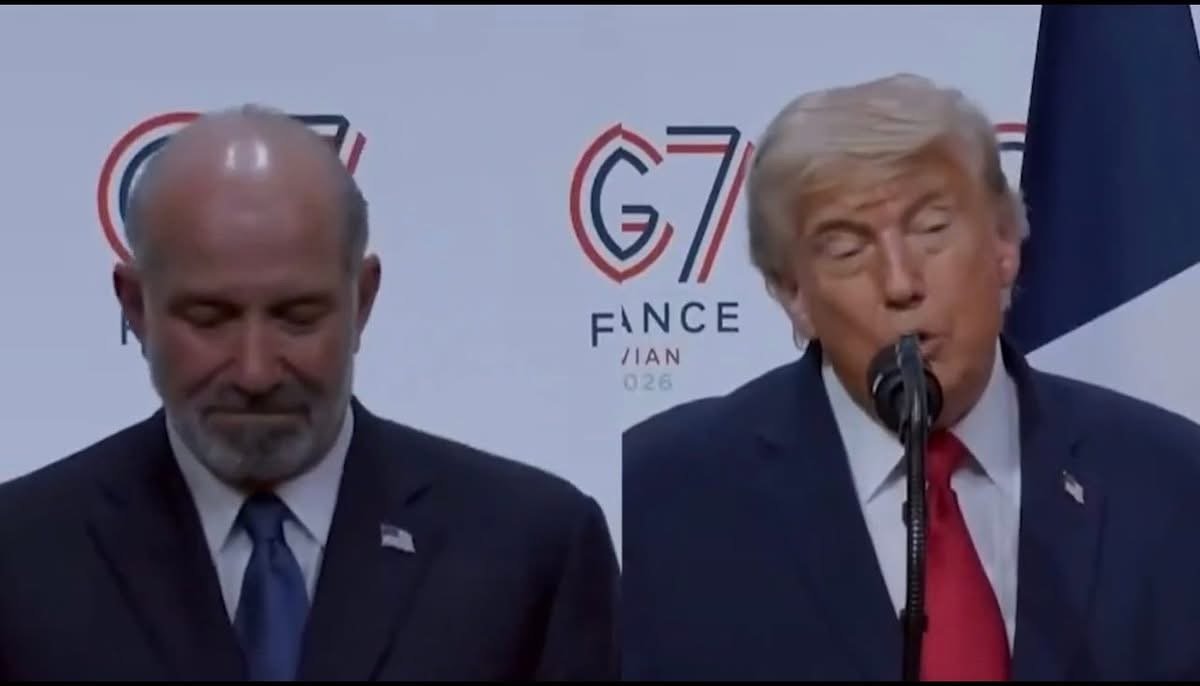
WASHINGTON — U.S. President Donald Trump has said Israel “cannot fight the entire region forever,” in remarks that highlight growing debate over Israel’s long-term security strategy and the future of U.S. backing in Middle East conflicts.
The comments, widely circulated on social media, were made in the context of ongoing tensions involving Israel and Iran and renewed discussion about nuclear deterrence in the region.
In the same discussion, U.S. Secretary of Commerce Howard Lutnick appeared visibly uncomfortable as Trump pointed to Israel’s strategic position, saying the country benefits from strong security guarantees, including the fact that it is “not going to be nuked,” according to footage shared online.
The exchange has reignited debate over the balance of power between Israel and Iran, with analysts pointing to Iran’s larger population and territorial depth as key factors shaping regional deterrence calculations.
The remarks come amid long-standing tensions between Israel and Iran, which have been defined by nuclear concerns, proxy conflicts, and deep political hostility. Israeli Prime Minister Benjamin Netanyahu has repeatedly warned for decades that Iran could seek nuclear weapons capability, while Tehran insists its nuclear program is for peaceful purposes.
Analysts remain divided over whether Iran’s nuclear ambitions are primarily deterrent-driven or represent a potential offensive threat, while Israel is widely believed to maintain an undeclared nuclear arsenal.
The discussion also reflects broader political sensitivities in Washington, where U.S. support for Israel remains strong across party lines but where differences occasionally emerge over strategy and escalation risks.
U.S. Vice President JD Vance also recently criticized hardline elements within Israel’s political system, questioning whether military force alone can resolve its security challenges and urging clearer long-term strategic thinking.
The remarks underscore growing debate in Washington over how far the United States should support military approaches in the region versus diplomatic containment strategies.